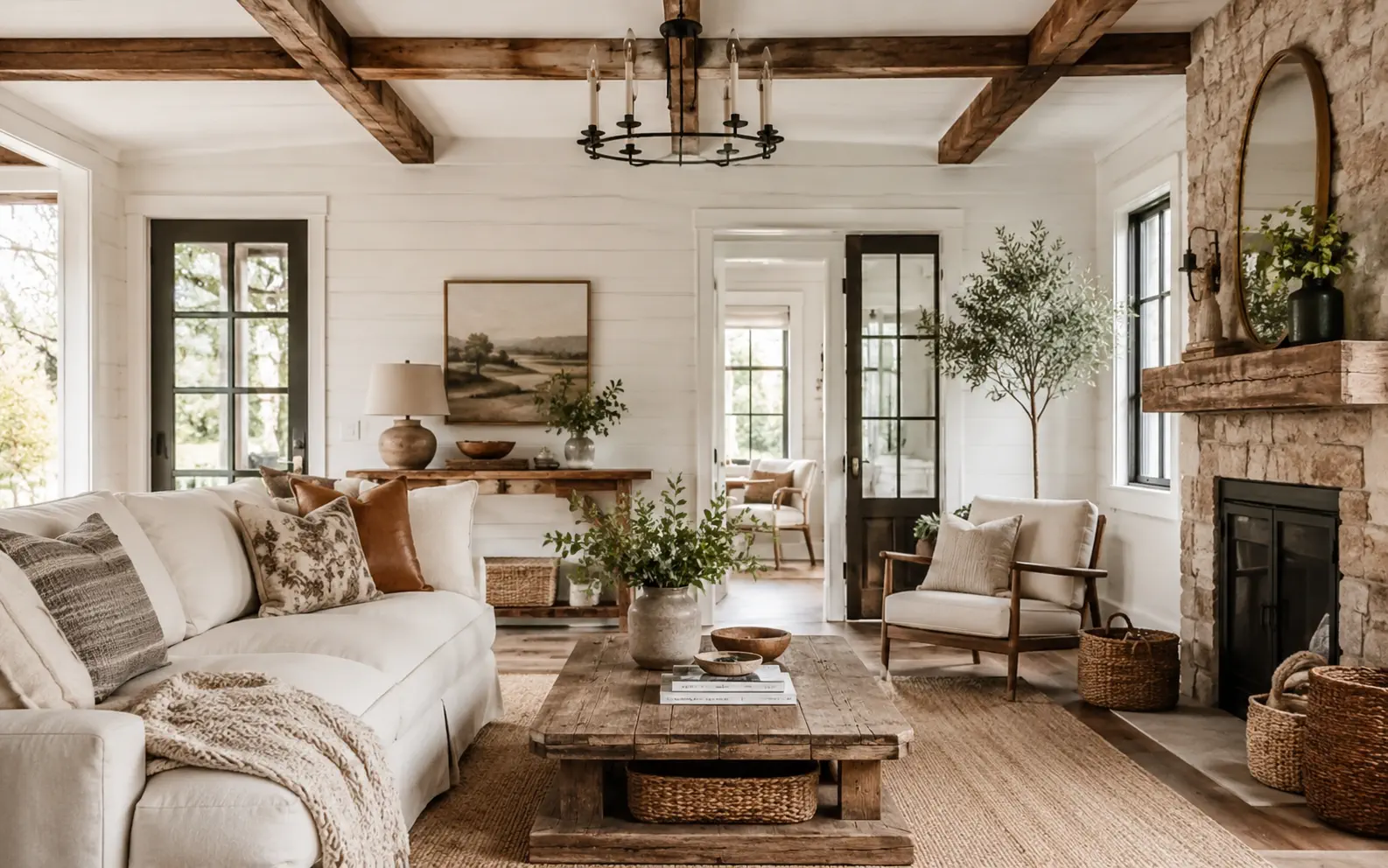
Farmhouse style interior design has become one of the most loved looks in modern homes, and for good reason: it is warm, welcoming and unpretentious, mixing rustic character with everyday practicality. It is the style of scrubbed timber tables, deep sinks, soft whites and pieces that look like they have been in the family for years. This guide covers what defines farmhouse interior design, the palette and materials that carry it, how modern farmhouse differs from the traditional version, and how to get the look room by room without turning your home into a stage set.
Farmhouse is one of several closely related rustic looks, so if you are still deciding which direction suits you, browse the wider guide to the types of interior design styles or download the free interior design styles guide for a side-by-side comparison.
What is farmhouse style interior design?
Farmhouse style takes its cues from working rural homes: practical, hard-wearing spaces built around family life rather than display. Translated into interiors, that becomes a look defined by natural materials, gentle neutral colours, comfortable furniture and a slightly worn, collected quality that makes a room feel lived-in from day one.
What separates farmhouse from other rustic styles is its softness. Where industrial design celebrates hard, raw surfaces, farmhouse warms everything up — pale painted walls, timber that has been sanded and loved, textiles you want to touch. And where traditional design leans formal and symmetrical, farmhouse is deliberately relaxed. Nothing is too precious to use.
The defining features of farmhouse design
A few recurring signatures make a room read instantly as farmhouse:
- Natural, tactile materials — timber above all, plus stone, ceramic, wicker and linen.
- A soft, neutral base — warm whites and creams that keep rooms light and calm.
- Visible texture and age — reclaimed or distressed wood, shiplap panelling, exposed beams.
- Practical, generous furniture — a big table, a deep sofa, plenty of open storage.
- Vintage and handmade pieces — a mix of old finds and simple new items, rather than a matched set.
- Utilitarian details — apron-front sinks, simple hardware, galvanised metal, open shelving.
The overall effect should feel gathered rather than decorated: a room where each piece has an obvious use.
Palette, materials and textures
The farmhouse palette is built on warm neutrals — soft whites, creams, greiges and putty tones — which keep spaces bright and let the materials do the talking. Accents stay muted and drawn from nature: sage and olive greens, dusty blues, soft blacks for contrast, and the honeyed browns of timber. Bold, saturated colour is rare; when colour appears, it usually arrives through textiles, plants or a painted cabinet rather than every wall.
Materials matter more here than in almost any other style, because texture is the decoration. Look for timber in several forms (planked walls, chunky beams, worn tabletops), natural stone or butcher-block surfaces, ceramic and enamel in the kitchen, woven baskets and rattan for storage, and generous amounts of linen and cotton in curtains, slipcovers and bedding. Matte and honest finishes suit farmhouse far better than anything high-gloss.
Furniture, decor and the finishing touches
Farmhouse furniture is chosen for comfort and use. Think a sturdy, unfussy dining table with mismatched or simple chairs, a deep sofa in a washable slipcover, spindle or ladder-back seating, and a mix of open shelves and freestanding cupboards instead of sleek built-ins. Pieces do not need to match — a slightly collected look is the point.
Decor stays simple and useful: earthenware jugs, wooden bowls, woven baskets, glass jars, plain framed prints, and plenty of greenery or cut branches. Lighting leans towards simple pendants, lantern shapes, metal shades and warm bulbs. Add softness with layered textiles — a chunky throw, linen cushions, a striped runner — and resist the urge to fill every surface. Farmhouse is warm but never cluttered.
Modern farmhouse vs traditional farmhouse
The two versions of farmhouse are worth telling apart, because most homes today lean modern.
Traditional farmhouse is closer to its rural origins: more genuinely rustic, with visible age, patterned textiles, more colour and more collected clutter. It feels older, cosier and slightly more country.
Modern farmhouse keeps the palette, timber and warmth but cleans up the lines. Walls are crisper, surfaces are less busy, black metal accents appear, and the furniture is simpler and more streamlined — a farmhouse feeling delivered with contemporary restraint. If you love the look but want it to feel current, modern farmhouse is usually the answer.
Both share the same DNA; the difference is how much rusticity and pattern you dial in.
Getting the farmhouse look room by room
Kitchen. The heart of farmhouse style. An apron-front sink, open shelving or glass-front cabinets, timber or butcher-block worktops, simple hardware and a big central table do most of the work.
Living room. Comfort first: a slipcovered sofa, a timber coffee table, woven baskets for storage, layered textiles and a few vintage pieces. Keep walls light and let texture add interest.
Bedroom. Soft white linens, a simple timber or metal bed frame, a woven rug and a handful of sentimental objects. Farmhouse bedrooms feel calm and uncluttered.
Bathroom and entry. Simple tile, black or aged-brass fittings, plenty of hooks and baskets, and a practical bench or console. These utilitarian rooms suit farmhouse naturally.
Common farmhouse mistakes to avoid
Two mistakes flatten the style. The first is buying the look in one shopping trip — a room full of brand-new "farmhouse" signs and identical distressed finishes reads as a theme, not a home. Farmhouse depends on a genuine mix of old and new, gathered over time. The second is too much clutter: the collected quality can tip into busy very quickly, so edit hard and leave breathing space.
It also helps to remember the underlying fundamentals — balance, scale, texture and light — which are what make any style work. The guide to the elements of interior design covers those building blocks, and once you know which style is yours, a consistent, well-photographed body of work is what turns taste into a professional portfolio. Designers can build a designer website and get started free to present it.
Frequently asked questions
What is farmhouse style interior design?
Farmhouse style interior design draws on practical rural homes: natural materials (especially timber), a warm neutral palette of whites and creams, comfortable generous furniture, visible texture like shiplap and exposed beams, and a mix of vintage and handmade pieces. The result is warm, welcoming and lived-in rather than formal or precious.
What is the difference between modern and traditional farmhouse?
Traditional farmhouse is more genuinely rustic — older, cosier, with more pattern, colour and collected clutter. Modern farmhouse keeps the same palette, timber and warmth but cleans up the lines: crisper walls, simpler furniture, black metal accents and less visual busyness. Modern farmhouse is the version most current homes lean towards.
What colours work in farmhouse interior design?
Build on warm neutrals — soft whites, creams, greige and putty — then add muted accents drawn from nature such as sage or olive green, dusty blue, soft black for contrast, and the honey-brown tones of natural timber. Bold saturated colour is rare, and usually arrives through textiles or a painted cabinet rather than whole walls.
How do I get the farmhouse look without it feeling fake?
Avoid buying the entire look in one shopping trip — a room of identical new distressed pieces reads as a theme rather than a home. Mix genuinely old finds with simple new items, prioritise natural materials and texture over decorative signage, and edit hard so the collected feeling never tips into clutter.