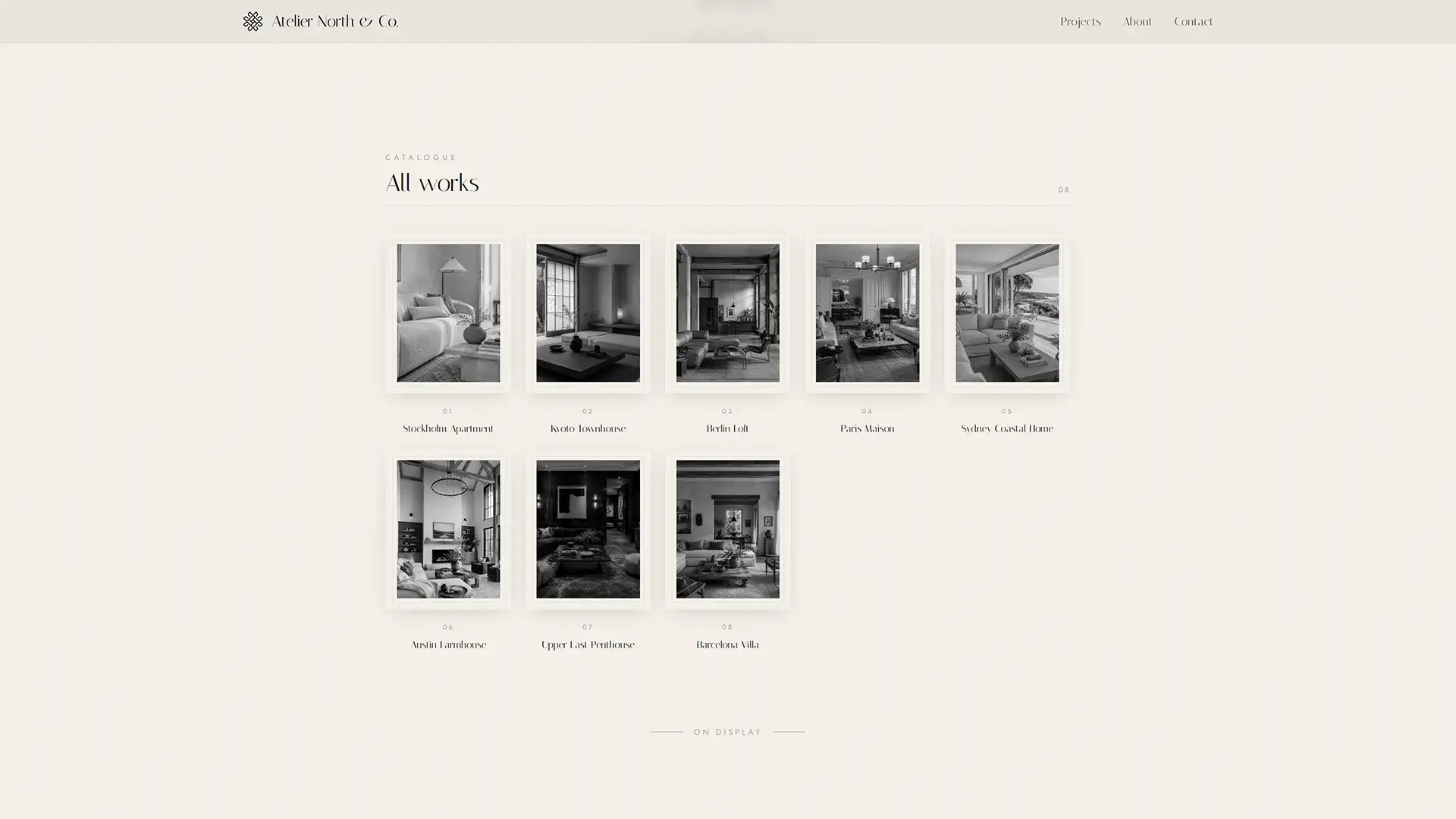
The fastest way to build a portfolio that wins clients is to study ones that already do. Below you
will find real interior design portfolio examples — every layout is a live gallery on the
platform, not a static mockup. You can open any demo, explore the projects inside exactly as a
prospective client would, and then build your own version with the
interior design website builder. Before you scroll down to the
examples, this short guide explains what to actually look for, so you copy what works rather than just
what looks nice.
Why studying examples is the best place to start
A blank page is intimidating; a great example is instructive. When you look at a portfolio that feels
polished and professional, you are seeing dozens of small decisions — about order, spacing,
photography and storytelling — resolved well. Reverse-engineering those decisions is far quicker than
discovering them by trial and error. The goal is not to imitate someone else's aesthetic but to absorb
the underlying structure that makes strong portfolios work, then express it through your own taste and
projects. For the full strategy behind that structure, see our pillar on the
interior design portfolio; for the build process, the step-by-step
guide to making one.
What to look for in a great portfolio example
As you browse the examples below, pay attention to these elements rather than just the prettiness of
the rooms:
- The opening. Notice how the strongest portfolios lead with a single confident image and their
best project. The first thing you see sets the quality bar — and the best examples never waste that
moment.
- Curation. Count the projects. You will rarely see twenty; you will usually see eight to twelve,
each strong. Restraint is a deliberate choice, not a limitation.
- Storytelling. Look at how each project is described. The best examples pair photography with a
short narrative — the brief, the challenge, the approach, the result — instead of leaving images to
speak alone.
- Consistency. A coherent portfolio uses a consistent grid, a consistent photographic feel and a
consistent way of writing project meta. That coherence is what reads as "professional."
- Whitespace and flow. See how the strongest examples let the work breathe and guide your eye
smoothly from project to project toward an obvious way to get in touch.
- The contact path. A good example makes enquiring effortless. Notice how the best portfolios keep
a contact route always within reach.
Different styles of portfolio — and which suits you
There is no single "correct" portfolio layout. The examples span several distinct personalities, and
the right one for you depends mostly on your photography and the clients you want:
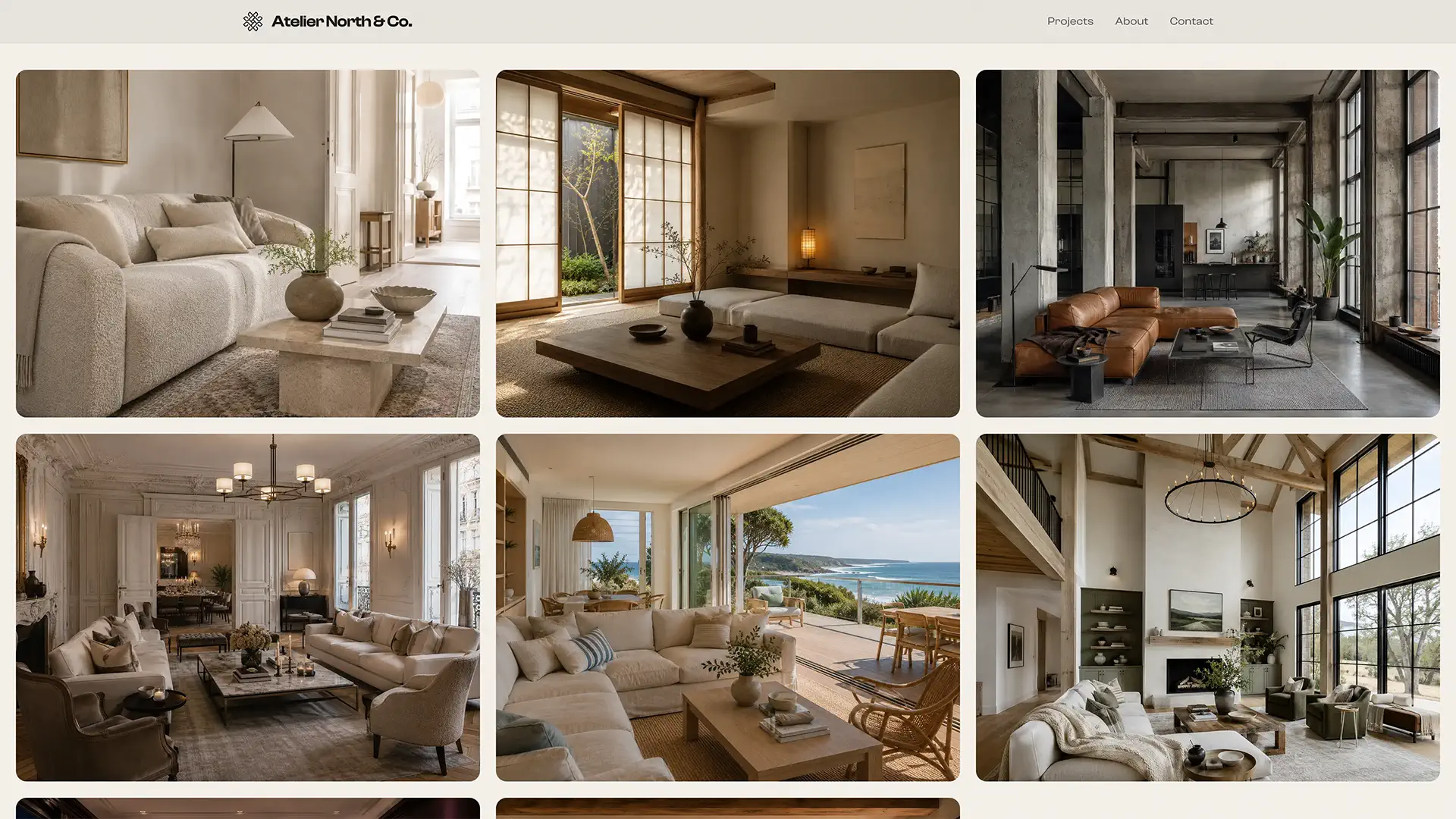
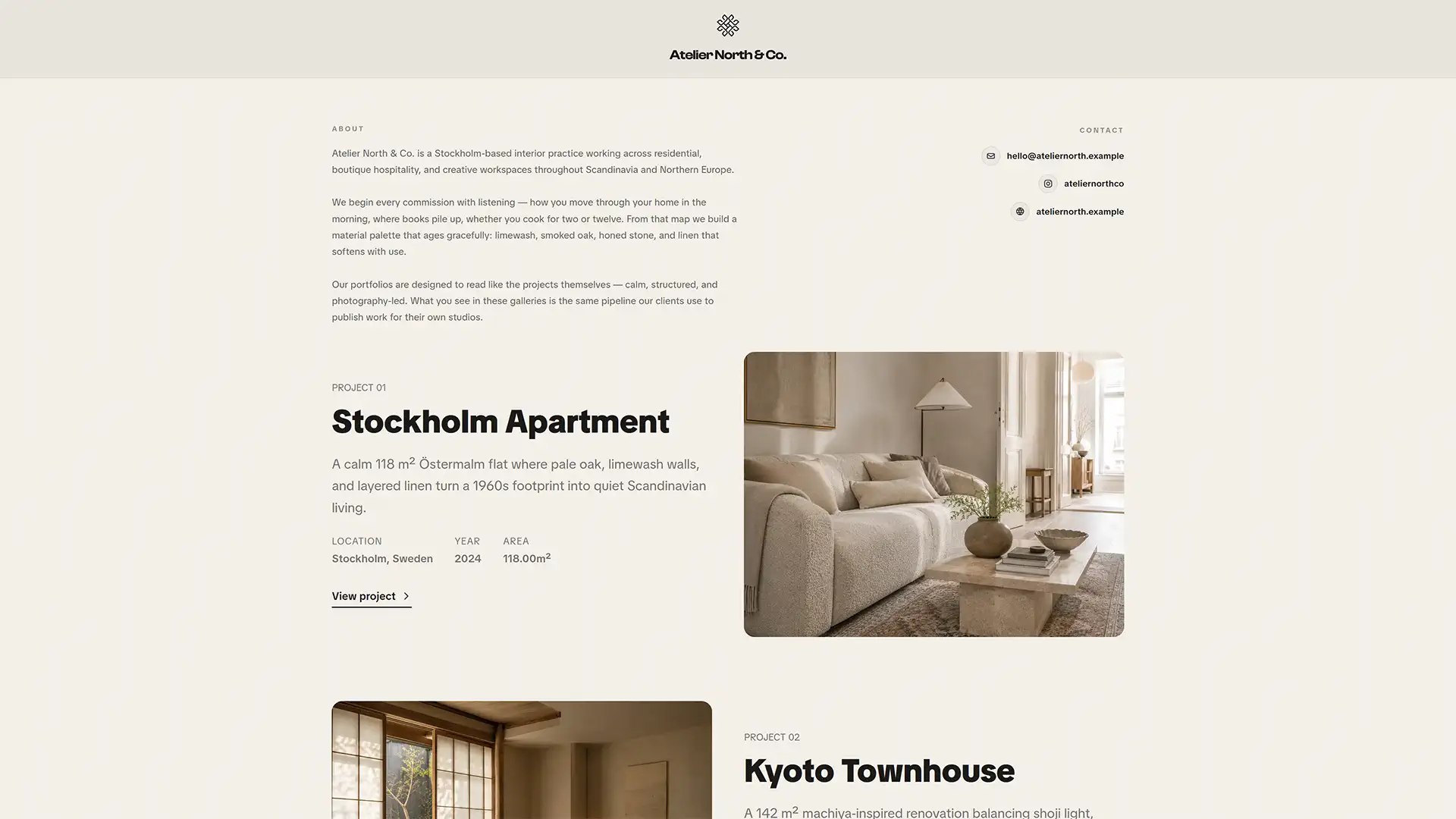
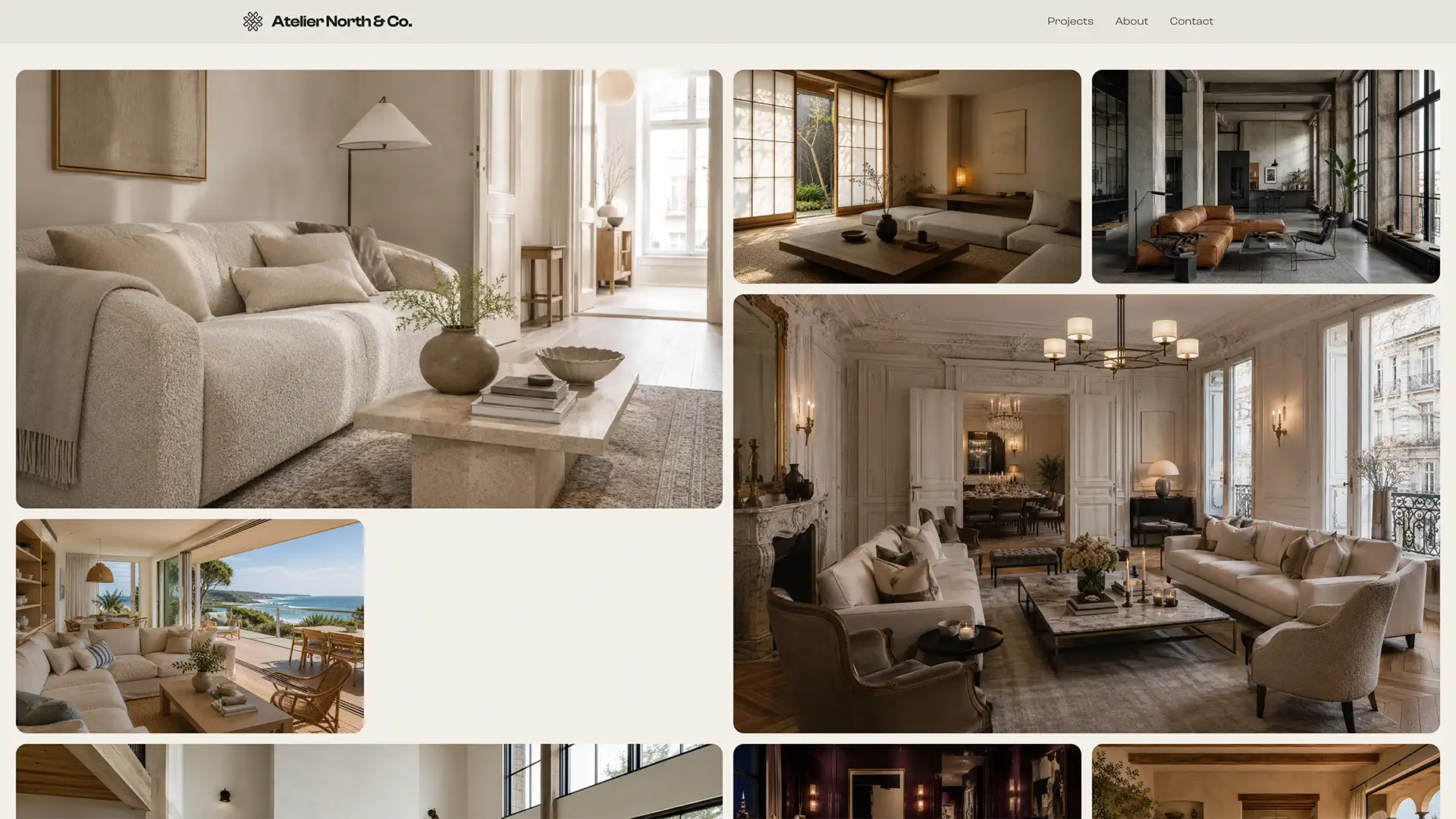
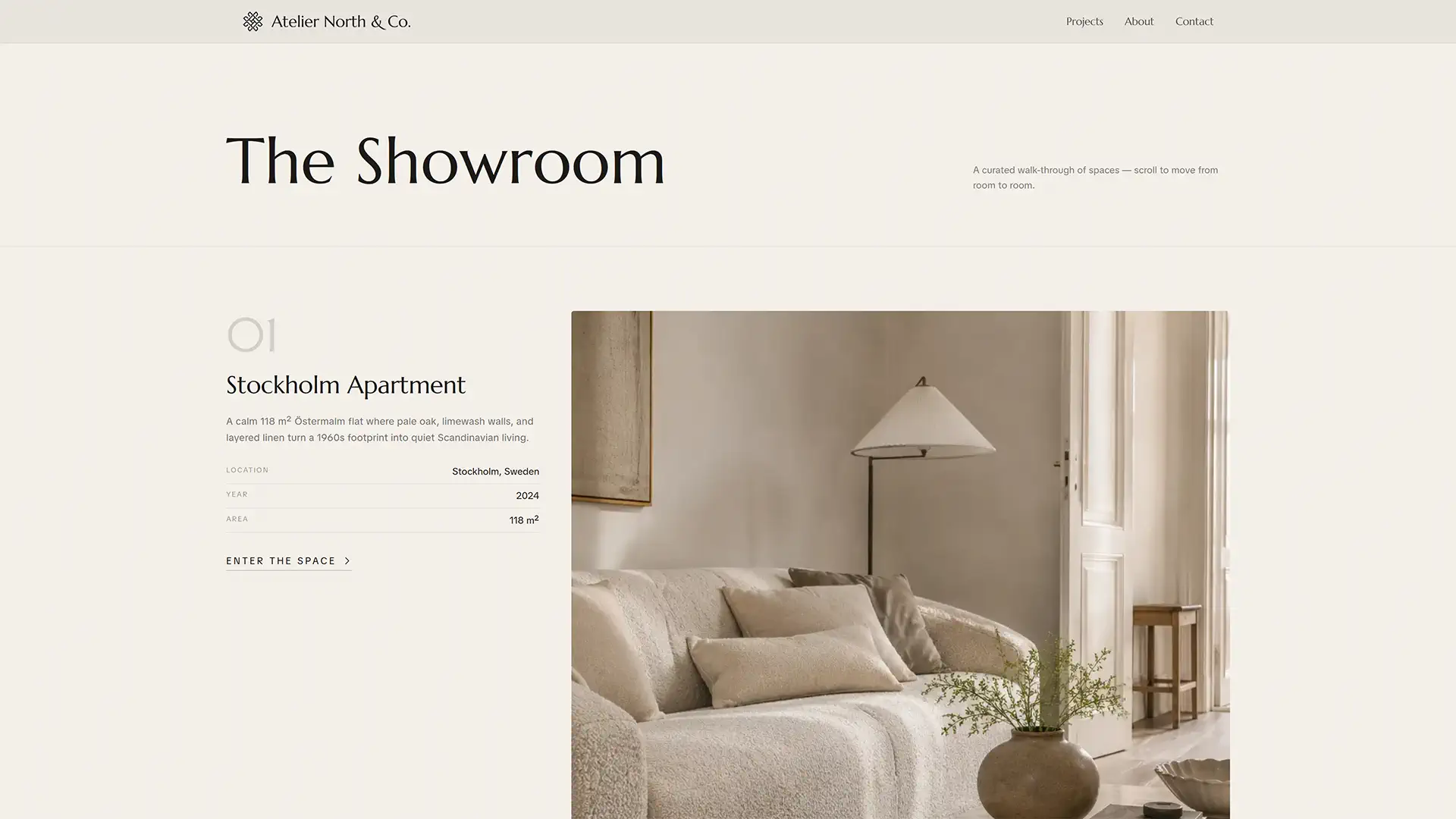
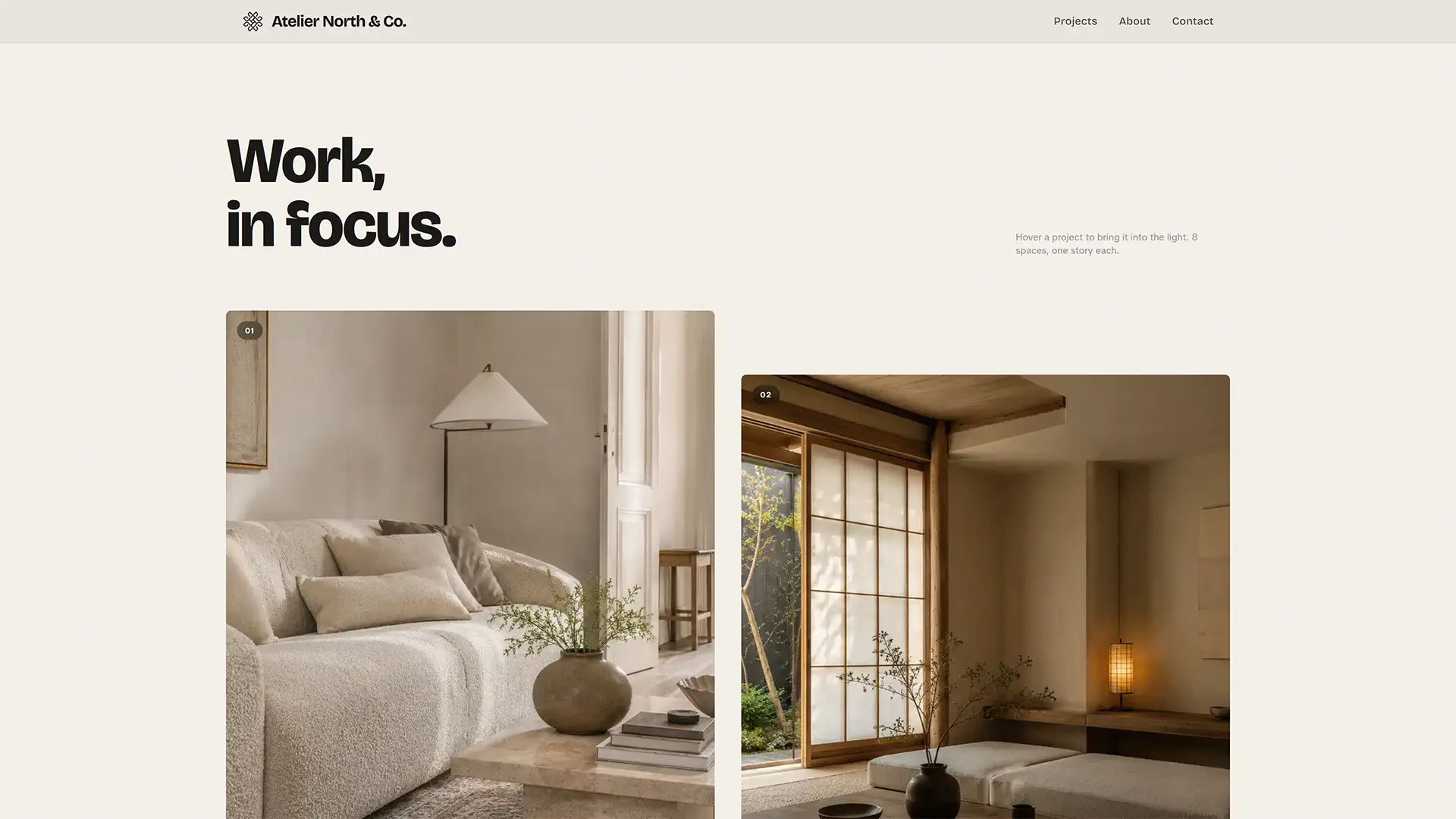
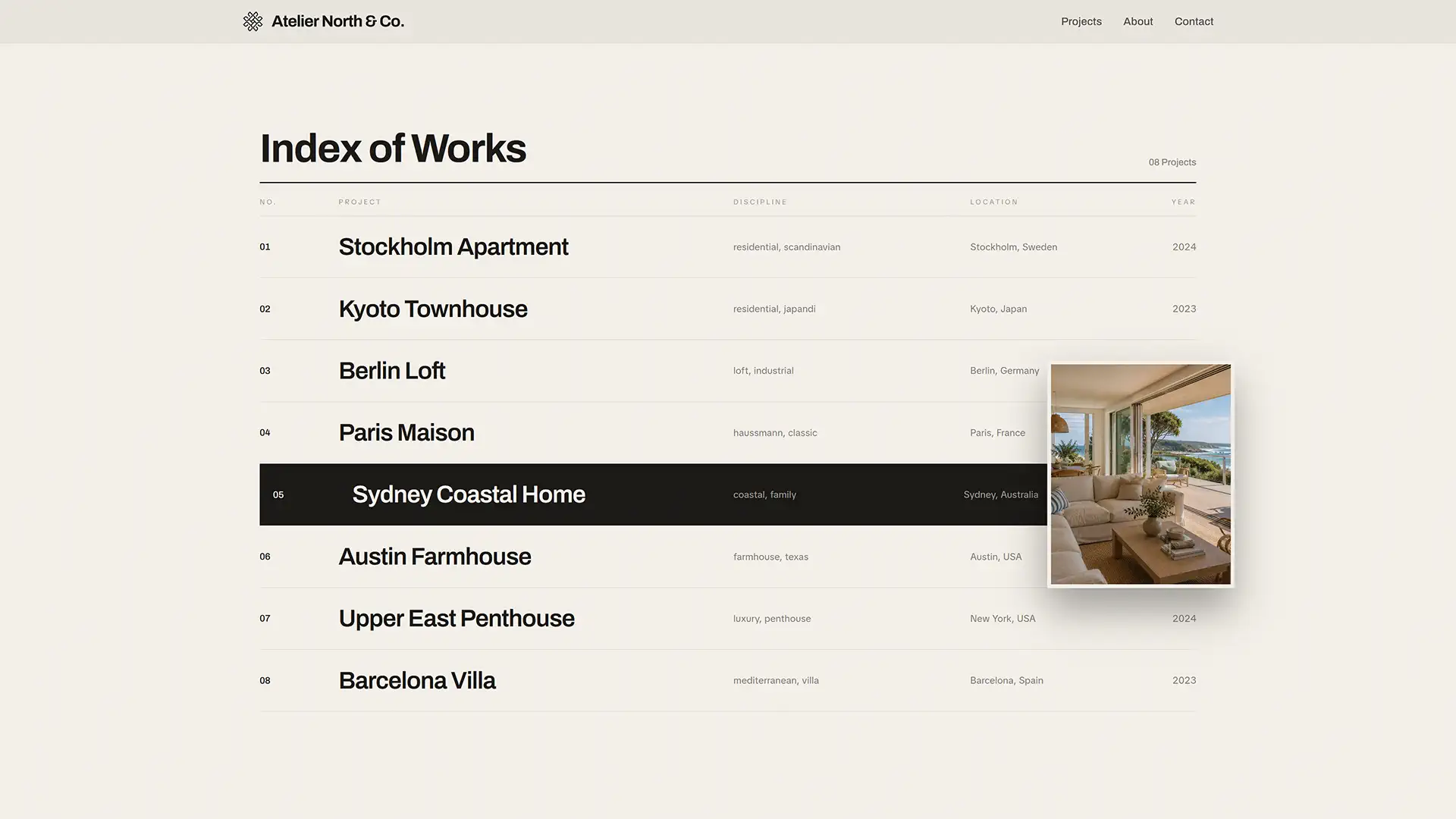
- Minimal grid. Clean, gallery-like and calm. Ideal for cohesive, light-filled residential work
where consistency is the message.
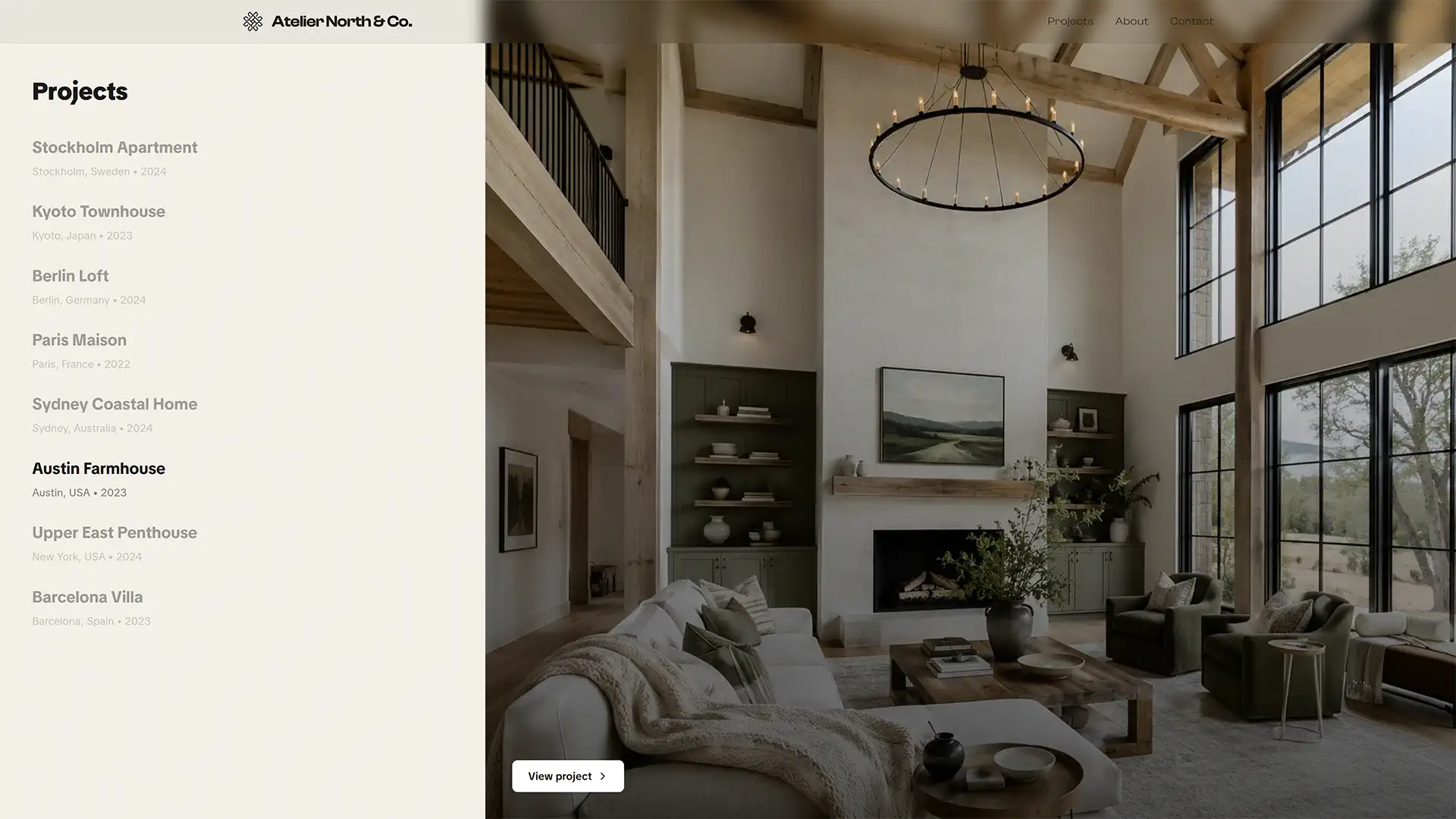
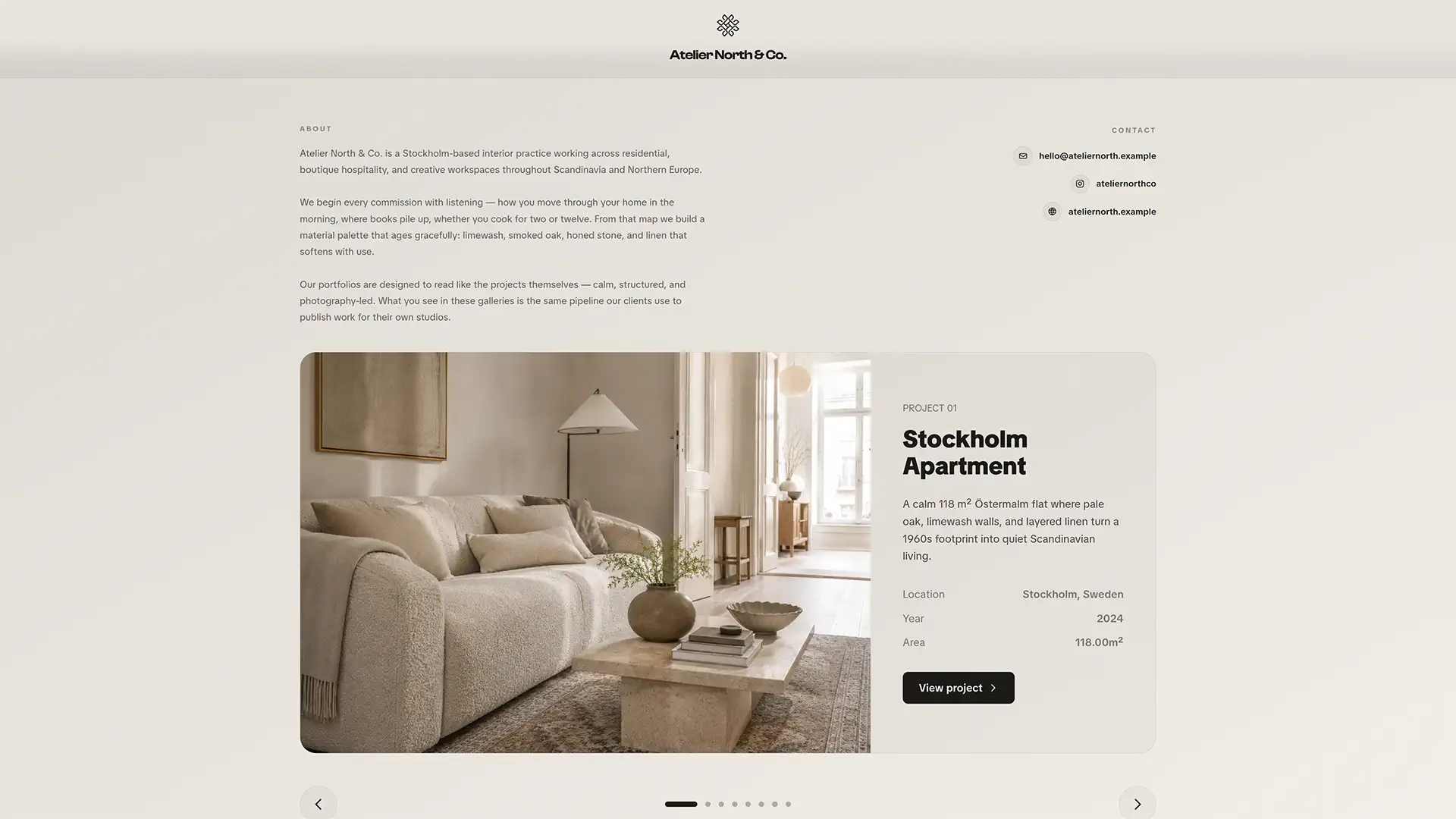
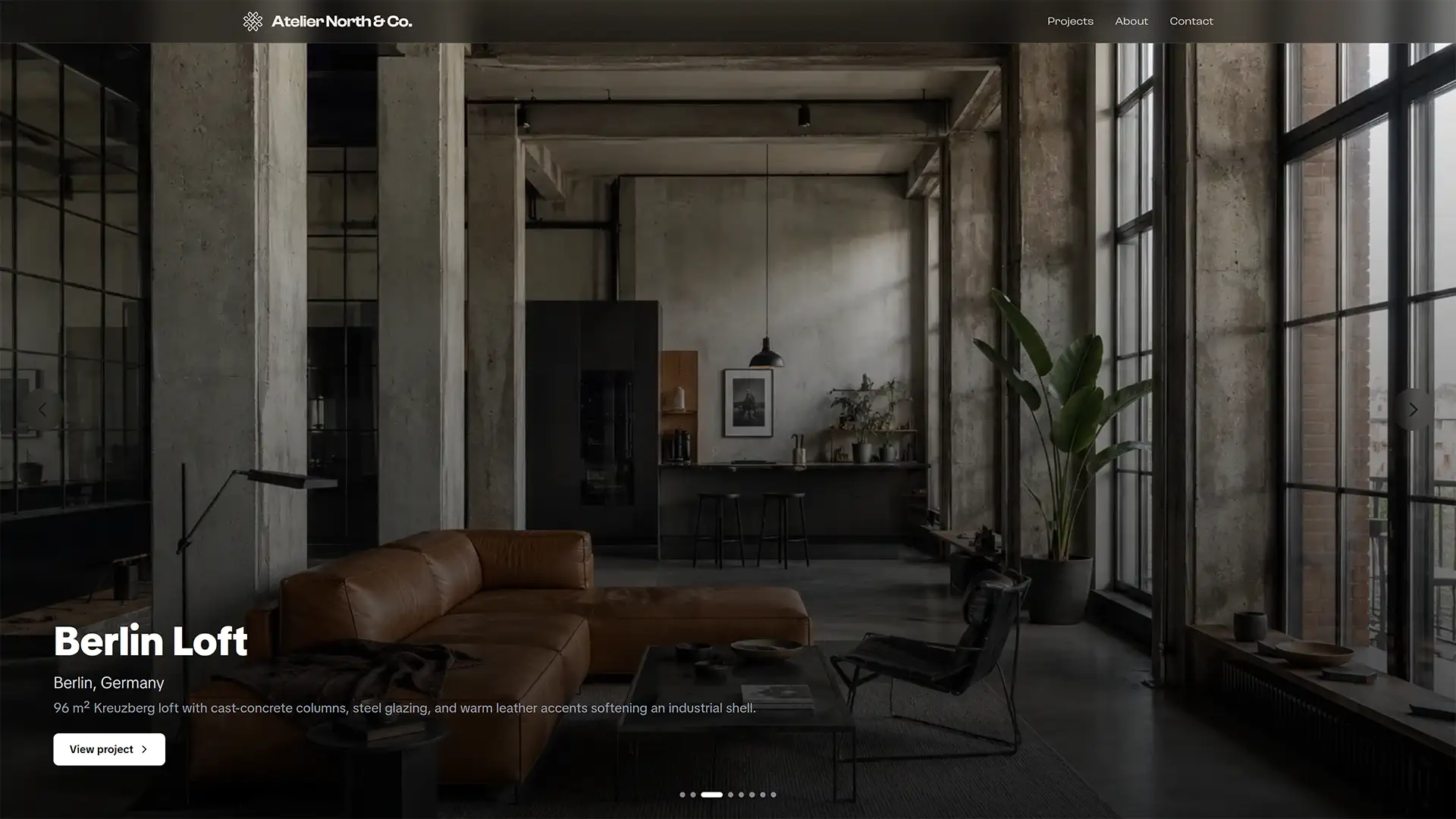
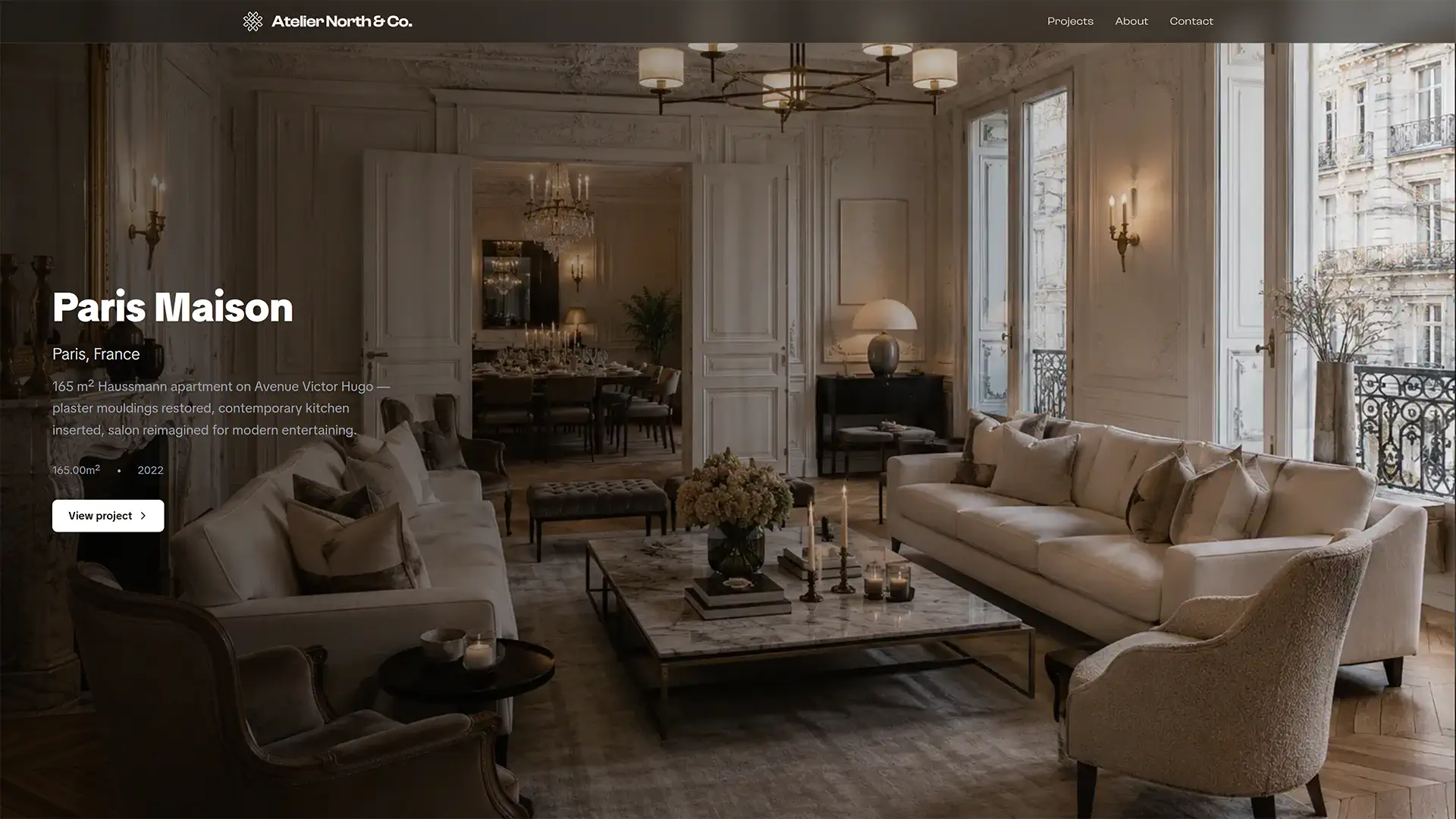
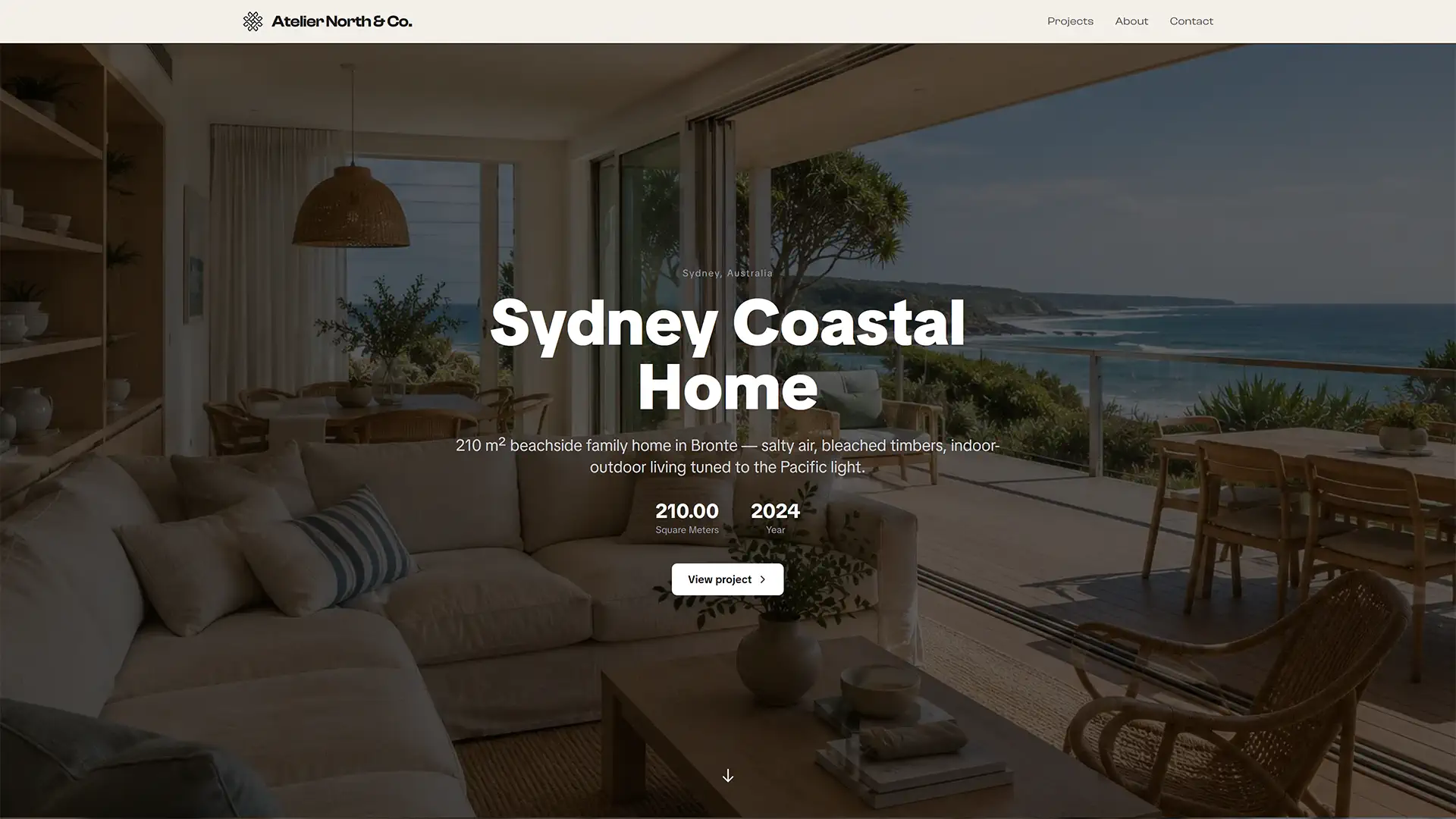
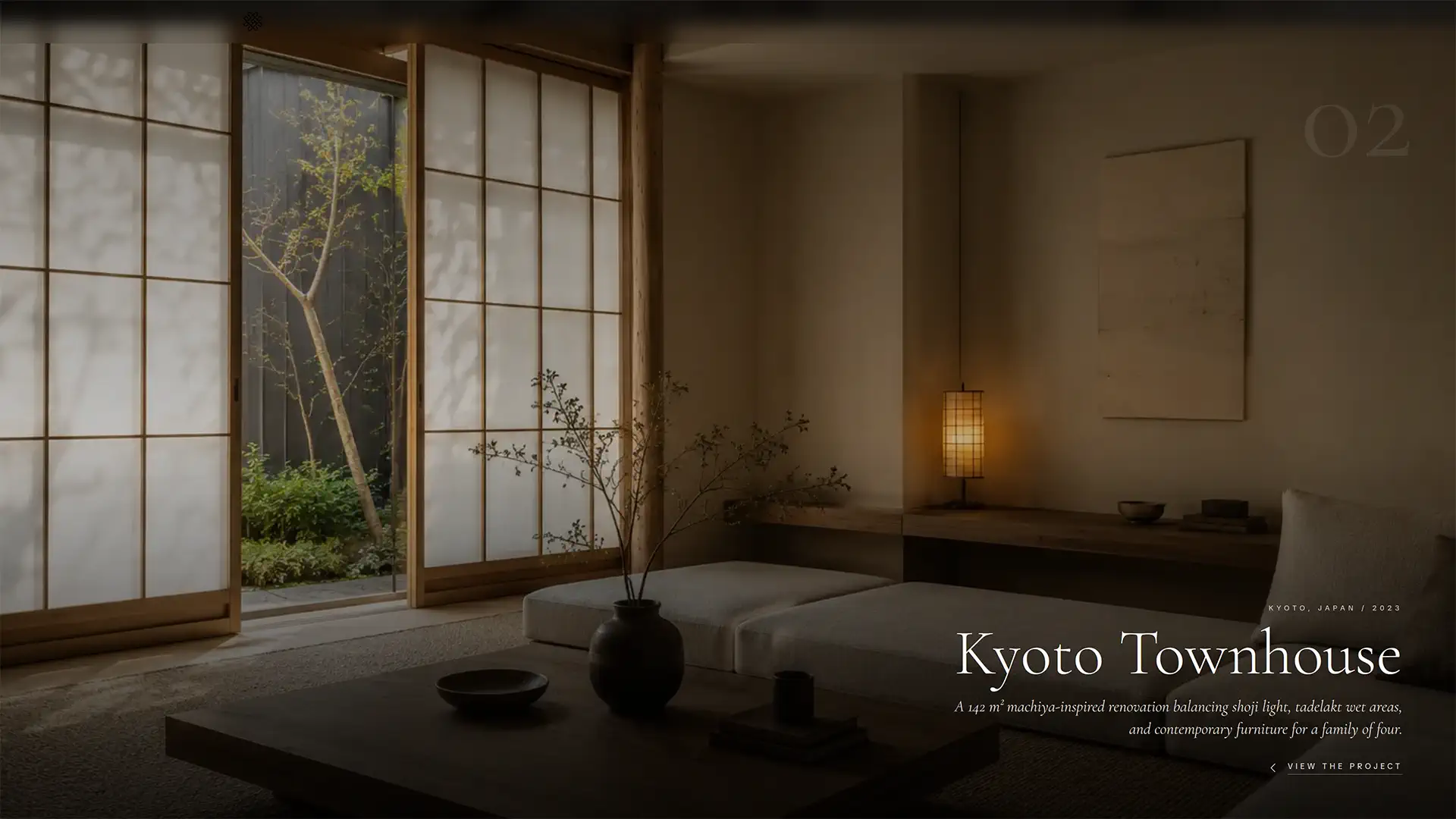
- Cinematic full-bleed. One large, edge-to-edge image at a time. Suited to dramatic, high-contrast
spaces — luxury and hospitality — that deserve to dominate the screen.
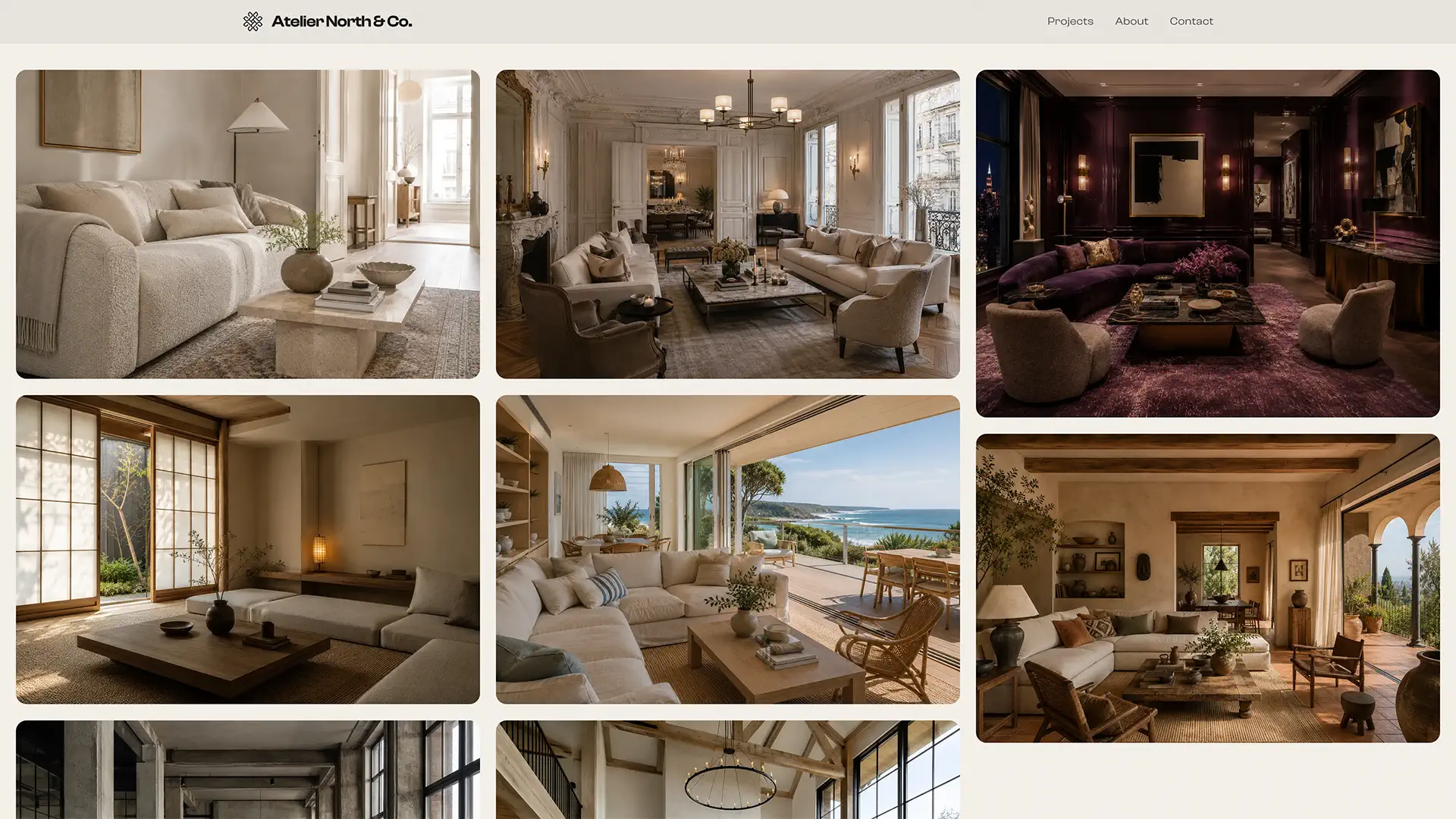
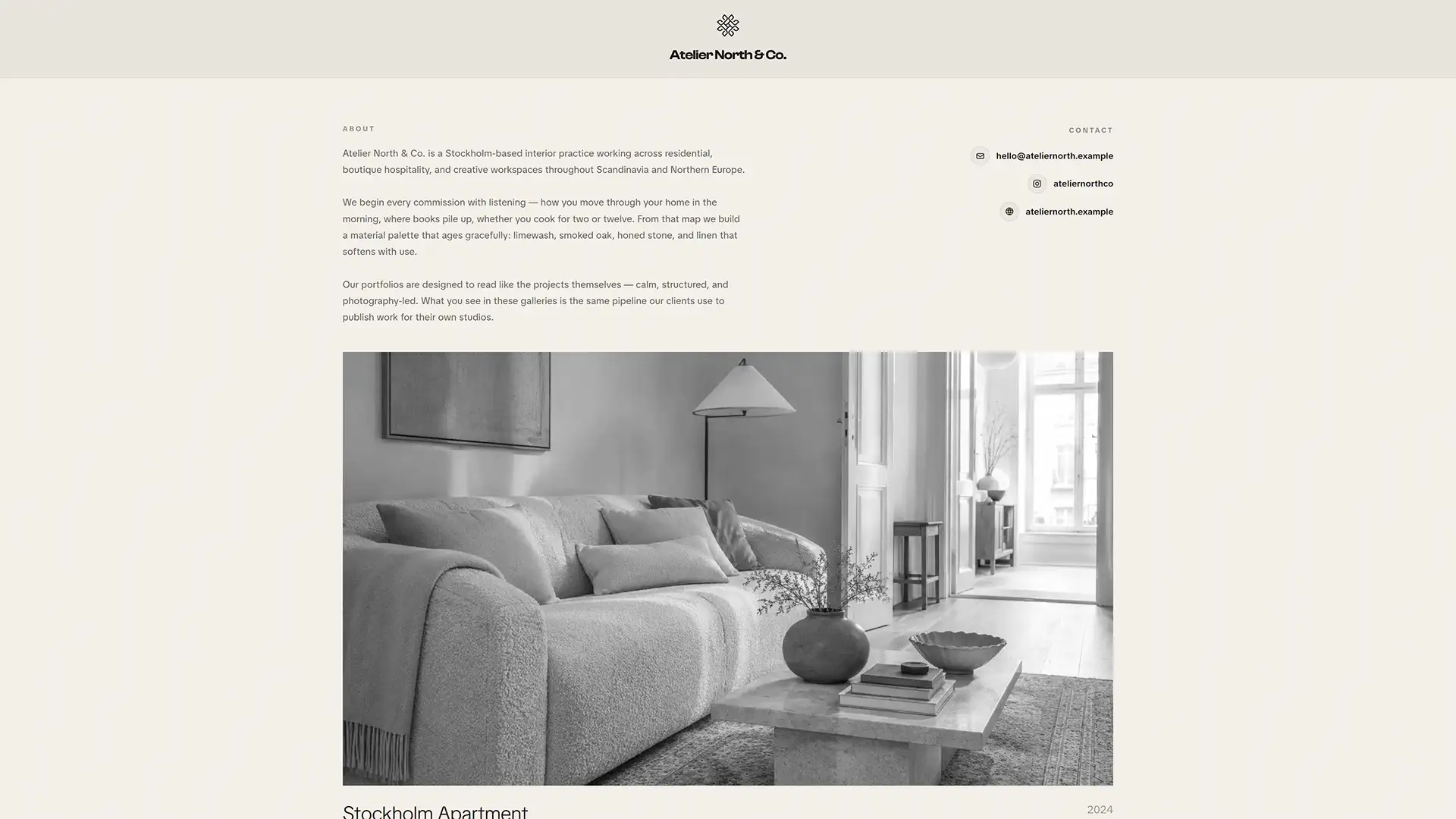
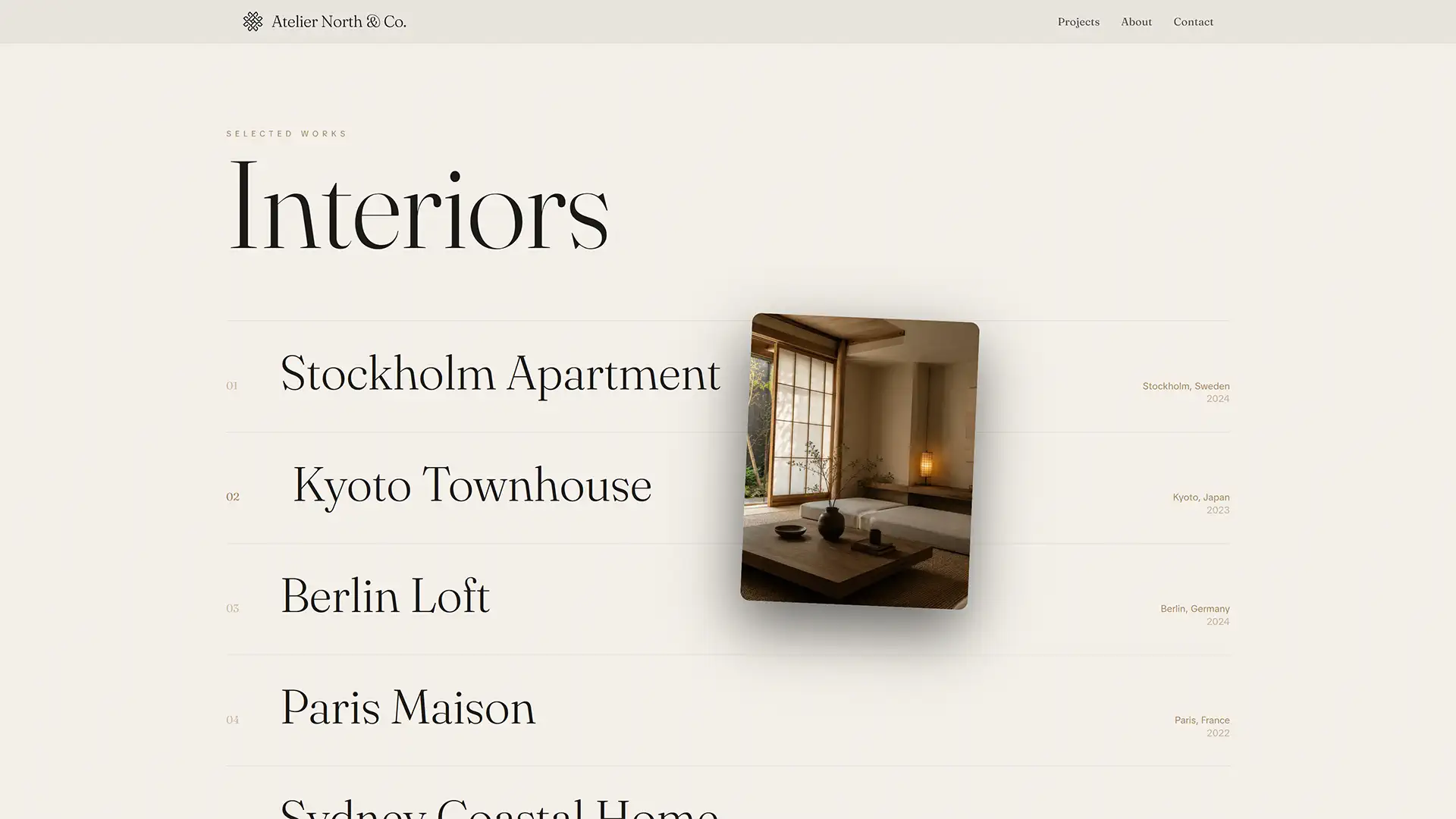
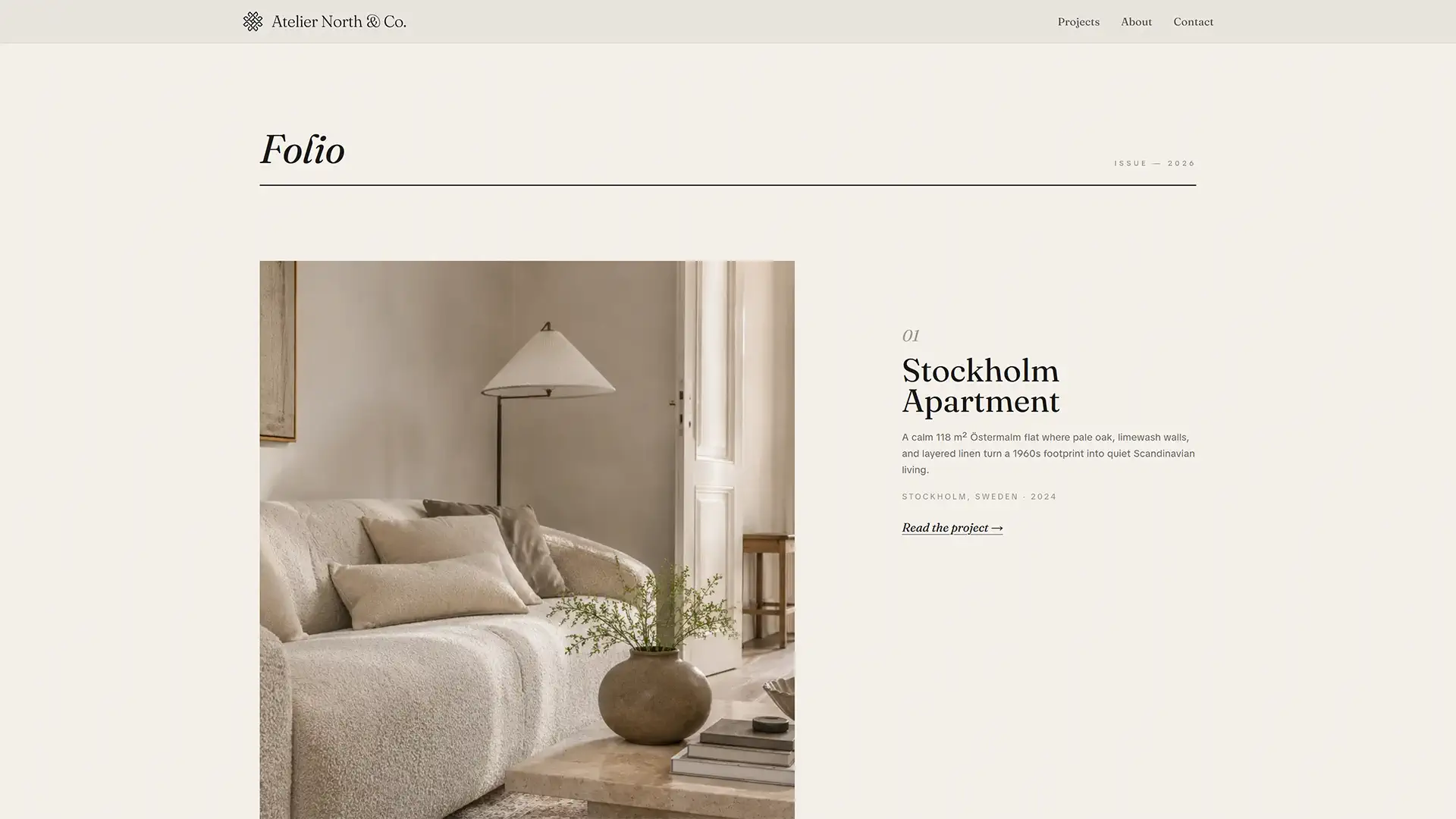
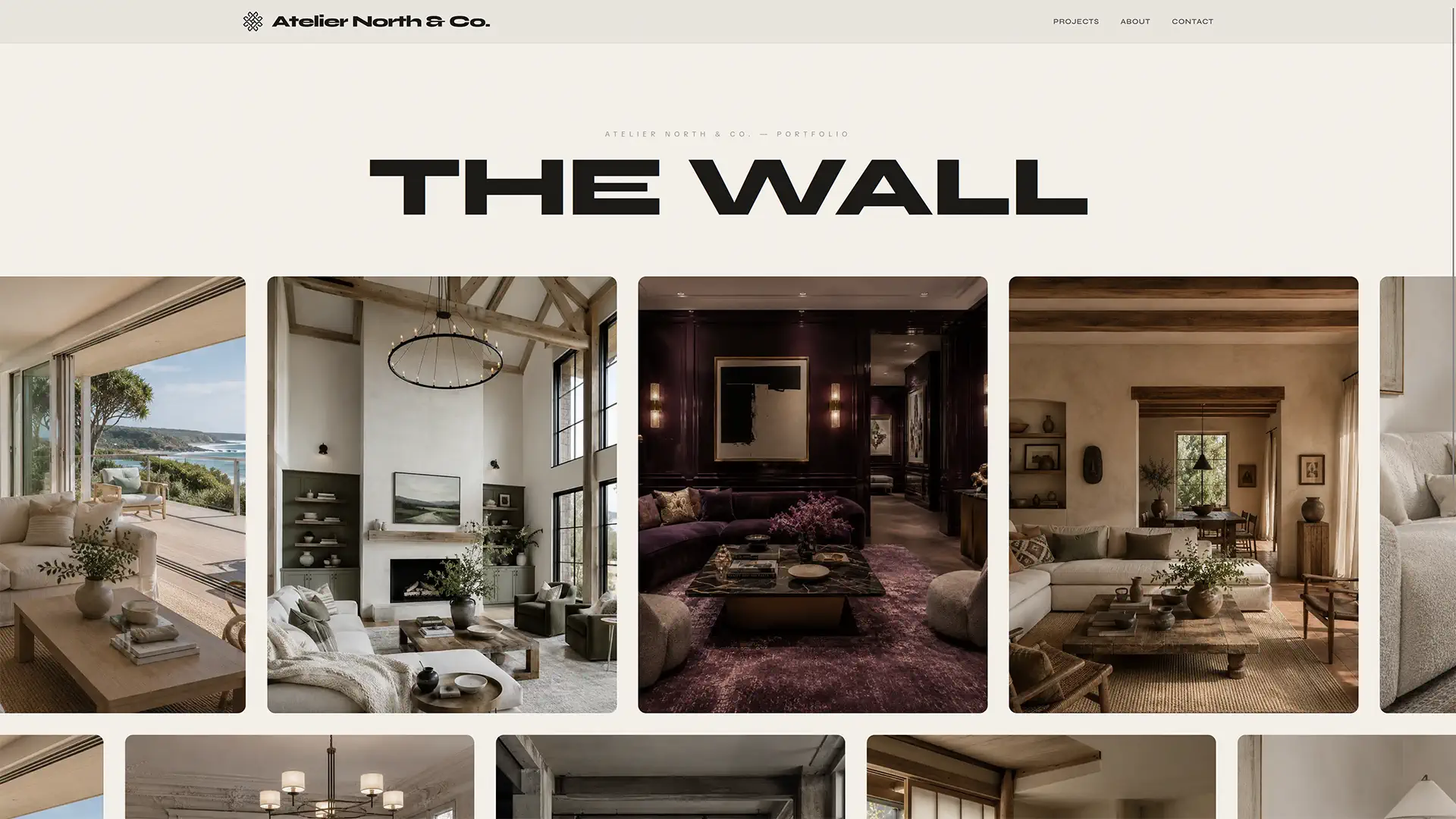
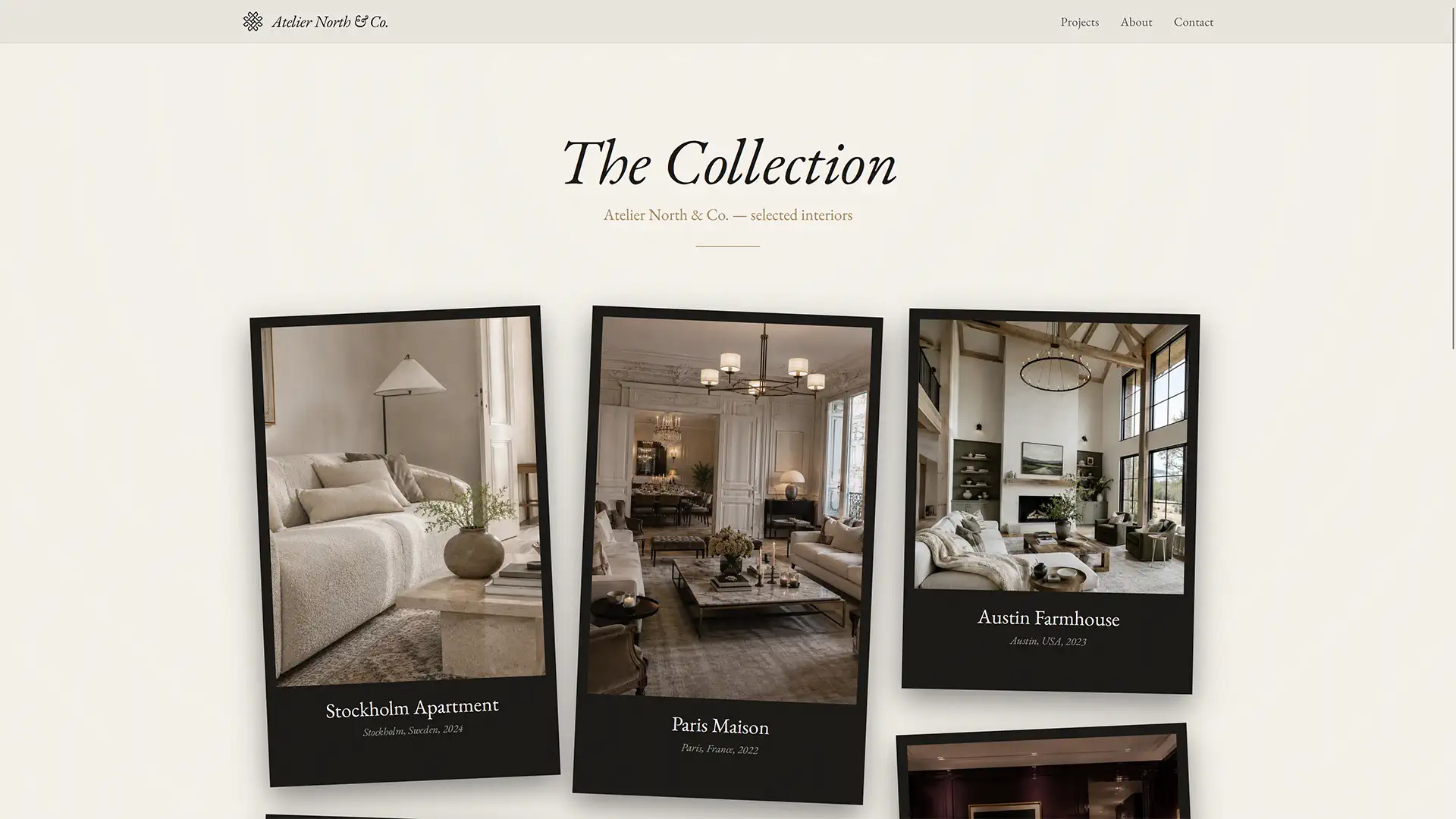
- Editorial / magazine. Mixed image sizes with generous typography, for a curated, story-led feel.
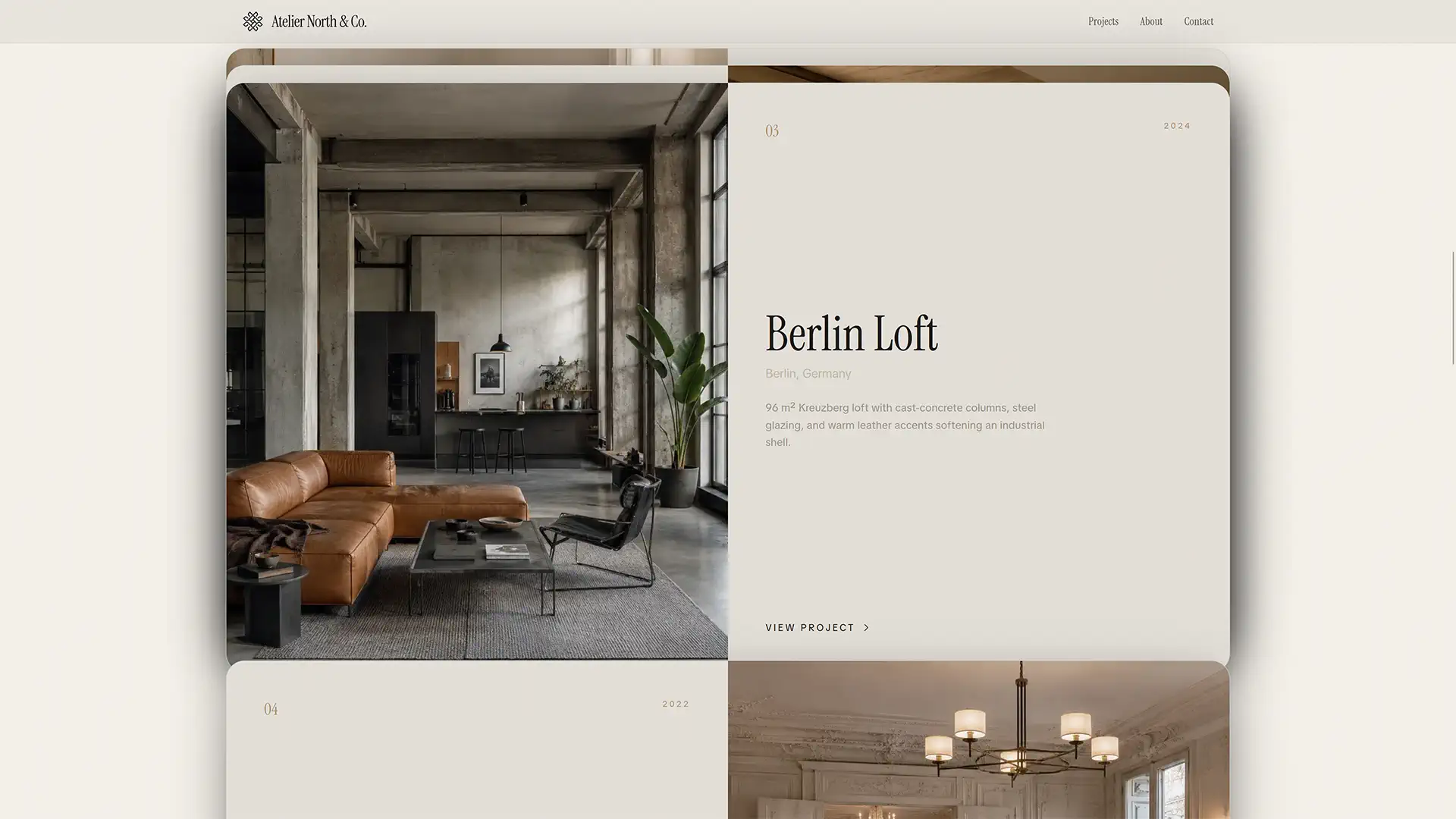
- Single-column scroll. A paced, one-moment-after-another journey that reads beautifully on mobile
and suits storytelling-led portfolios.
As you look through the demos, notice which structure flatters work like yours — that is the layout to
start from.
How to use these examples
Treat the demos as a working reference, not a museum. Open two or three that appeal to you and ask:
What makes this feel professional? How is the work ordered? How much is shown, and how is it
described? Then, rather than starting from a blank canvas, pick the layout closest to your vision and
make it yours — every example here is a real, publishable template in the
interior design website builder. Drop in your own projects,
photography and narratives, and the structure that makes these examples work is already handled for
you. When your draft is ready, run it against the free
interior design portfolio checklist before you
publish.
Browse the live examples
The portfolios below are live galleries you can explore in full. Open any of them, see how the
principles above play out in practice, and then build your own.