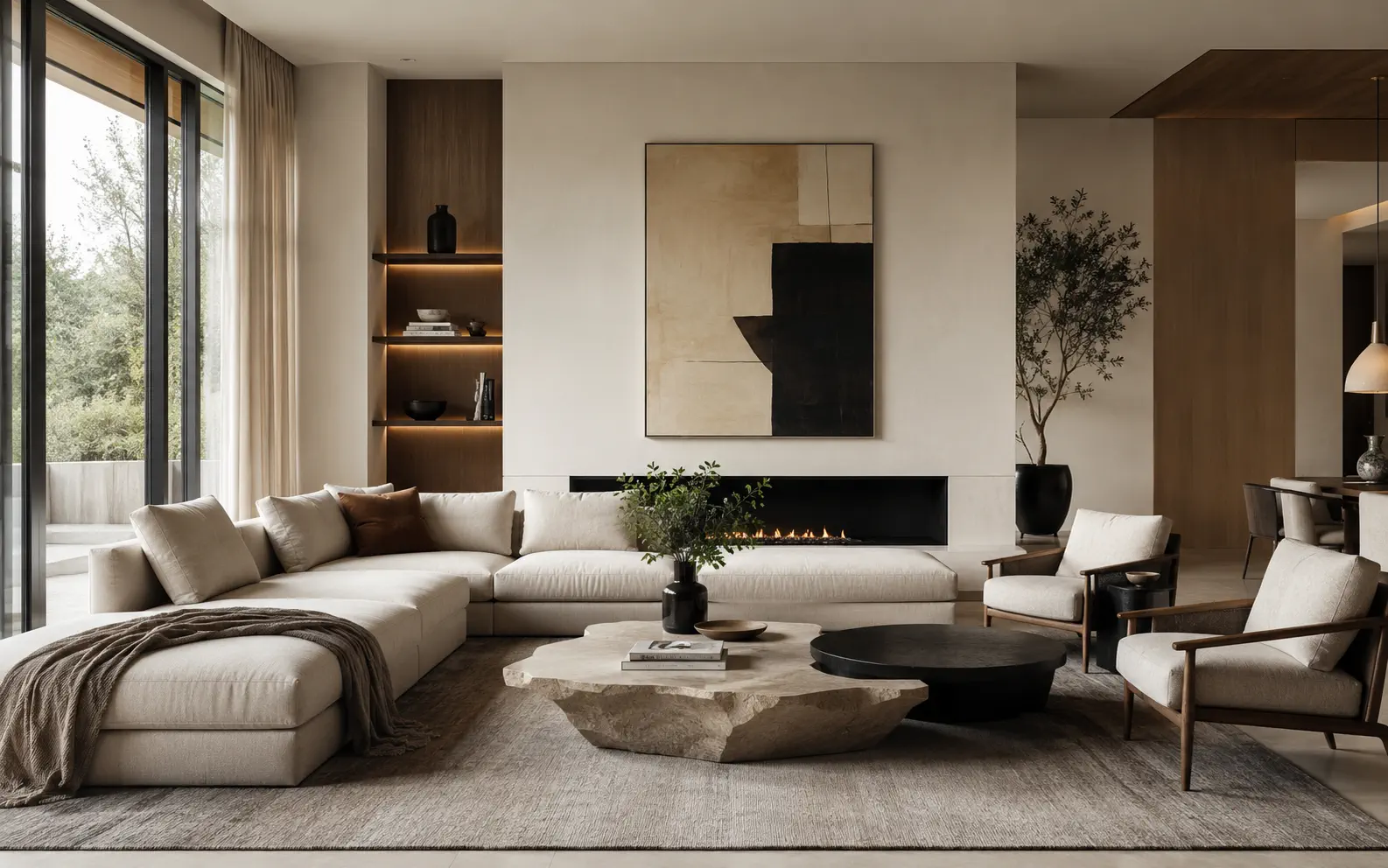
The contemporary interior design style is the most commonly misunderstood look in design, because it is the only one with no fixed rulebook. Contemporary simply means of the moment — it describes what is current, so it shifts over time rather than referring to a single historic period. That makes it fluid, comfortable and endlessly adaptable, and it also explains why it is so often confused with modern design. This guide explains what contemporary interior design actually is today, how it differs from modern, and how to create a contemporary space that feels fresh rather than dated.
If you are comparing several looks before committing, the overview of the types of interior design styles puts contemporary alongside its neighbours, and the free interior design styles guide gives you a printable side-by-side reference.
What is contemporary interior design?
Contemporary interior design is the style of the present. Rather than reproducing a defined historical aesthetic, it absorbs what is current in materials, silhouettes and colour, which means a contemporary room from a decade ago looks noticeably different from one designed today. What stays constant is the approach: clean but not stark, comfortable but not fussy, and confident about space and light.
Today's contemporary interiors typically feel calm and uncluttered, with soft neutral backdrops, sculptural furniture, a mix of natural and refined materials, and one or two pieces that act as quiet statements. The emphasis is on how a space feels to live in — warmth and comfort are welcome, which is what distinguishes current contemporary work from the cooler minimalism of earlier years.
Contemporary vs modern interior design
This is the single most useful distinction to understand, and it trips up almost everyone.
Modern design refers to a specific historical movement — roughly the early-to-mid twentieth century — with its own established vocabulary: strict clean lines, functional forms, minimal ornamentation, and materials like steel, glass and moulded plywood. It is fixed. A modern room designed today follows the same rules it followed decades ago.
Contemporary design is not fixed at all. It is whatever is current, so it borrows freely — a little mid-century here, a natural material there, a curve where modern would have used a straight line. In practice, contemporary interiors tend to be softer, warmer and more eclectic than strictly modern ones, with more texture and more comfort.
The short version: modern is a period, contemporary is now. That is why the two overlap visually but are not interchangeable.
The defining features of contemporary style
Contemporary rooms today share a recognisable set of traits:
- A calm neutral base with colour used deliberately rather than everywhere.
- Clean but softened lines — sculptural curves alongside straight edges.
- Uncluttered space, with negative space treated as part of the composition.
- Mixed materials — natural stone, timber and textiles combined with metal and glass.
- Statement lighting, often used as sculpture as much as illumination.
- A few strong focal pieces rather than many competing ones.
- Comfort, in generous seating and tactile fabrics.
The feeling to aim for is effortless: current, considered and easy to live in.
Palette, materials and textures
Contemporary palettes lean neutral and tonal — warm whites, greys, taupes, soft beiges and black used sparingly for definition — layered so the room reads calm rather than flat. Accent colour appears in controlled doses: a single deep tone on an armchair, art or a rug. Because the palette is restrained, texture carries the interest: boucle and linen, oak and walnut, veined marble, matte ceramics, brushed metal and glass sitting together in one space.
Mixing materials is characteristic of contemporary work, but the mix is curated. Two or three material families, repeated thoughtfully around a room, produce that quietly expensive look; a dozen competing finishes produce noise. Matte and honed finishes currently read as more contemporary than high shine.
Furniture, lighting and layout
Contemporary furniture is defined by shape. Look for low, generous seating, rounded and sculptural silhouettes, slim legs or plinth bases, and pieces that could stand alone as objects. Comfort is not sacrificed for form — deep sofas and soft upholstery are firmly part of the current language.
Lighting is a signature element: an oversized pendant, a sculptural floor lamp or a linear fixture often becomes the focal point of the room, layered with softer ambient and task lighting. Layouts favour openness and flow, with furniture floated to define zones rather than pushed against every wall. Leave deliberate empty space — in contemporary design, restraint is what makes the good pieces read.
How to create a contemporary look
Start with a neutral, tonal envelope — walls, floors and large upholstery in quiet colours — then build up in layers. Choose one or two sculptural focal pieces (a curved sofa, a striking light, a large artwork) and let everything else support them. Bring in three or four textures so the neutrals feel rich, and add a single accent colour with intent rather than sprinkling several.
Then edit. Contemporary interiors succeed on what they leave out: clear surfaces, generous circulation and a few beautiful things beat a room full of good intentions. Getting the fundamentals right — proportion, balance, light and texture — matters more than any single purchase, and those building blocks are covered in the guide to the elements of interior design.
Common contemporary mistakes
The most frequent error is confusing contemporary with cold: an all-grey, hard-surfaced room with no texture reads as unfinished rather than current. Warmth through timber, textiles and layered lighting is what makes contemporary spaces feel inviting. The second mistake is chasing every trend — because contemporary follows the present, it is easy to fill a room with whatever is fashionable this season and end up with something incoherent that dates quickly. Anchor the space in good proportion, quality materials and a restrained palette, then let one or two current pieces do the talking.
For designers, contemporary is a valuable style to master precisely because it is what most clients mean when they say "modern but not cold". Documenting that work consistently is what builds a persuasive portfolio — you can build a designer website and get started free to publish it.
Frequently asked questions
What is contemporary interior design style?
Contemporary interior design is the style of the present — it describes what is current rather than a fixed historical period, so it evolves over time. Today it typically means calm neutral palettes, clean but softened lines, sculptural furniture, mixed natural and refined materials, statement lighting and uncluttered, comfortable spaces.
What is the difference between contemporary and modern interior design?
Modern design is a specific historical movement from roughly the early-to-mid twentieth century, with fixed rules: strict clean lines, functional forms, minimal ornamentation, and materials like steel, glass and moulded plywood. Contemporary design is simply what is current, so it borrows freely and changes over time — in practice it is softer, warmer and more eclectic than strictly modern design.
What colours are used in contemporary interiors?
Contemporary palettes are neutral and tonal — warm whites, greys, taupes and soft beiges, with black used sparingly for definition. Accent colour is applied deliberately in one or two places, such as an armchair, rug or artwork, rather than spread across the whole room. Because colour is restrained, texture does most of the visual work.
How do I stop a contemporary room from feeling cold?
Add warmth through material and light rather than colour alone: natural timber, layered textiles like boucle and linen, matte ceramics, and several sources of warm layered lighting. An all-grey, hard-surfaced room with no texture is the most common contemporary mistake — texture and warm lighting are what make the style feel inviting.