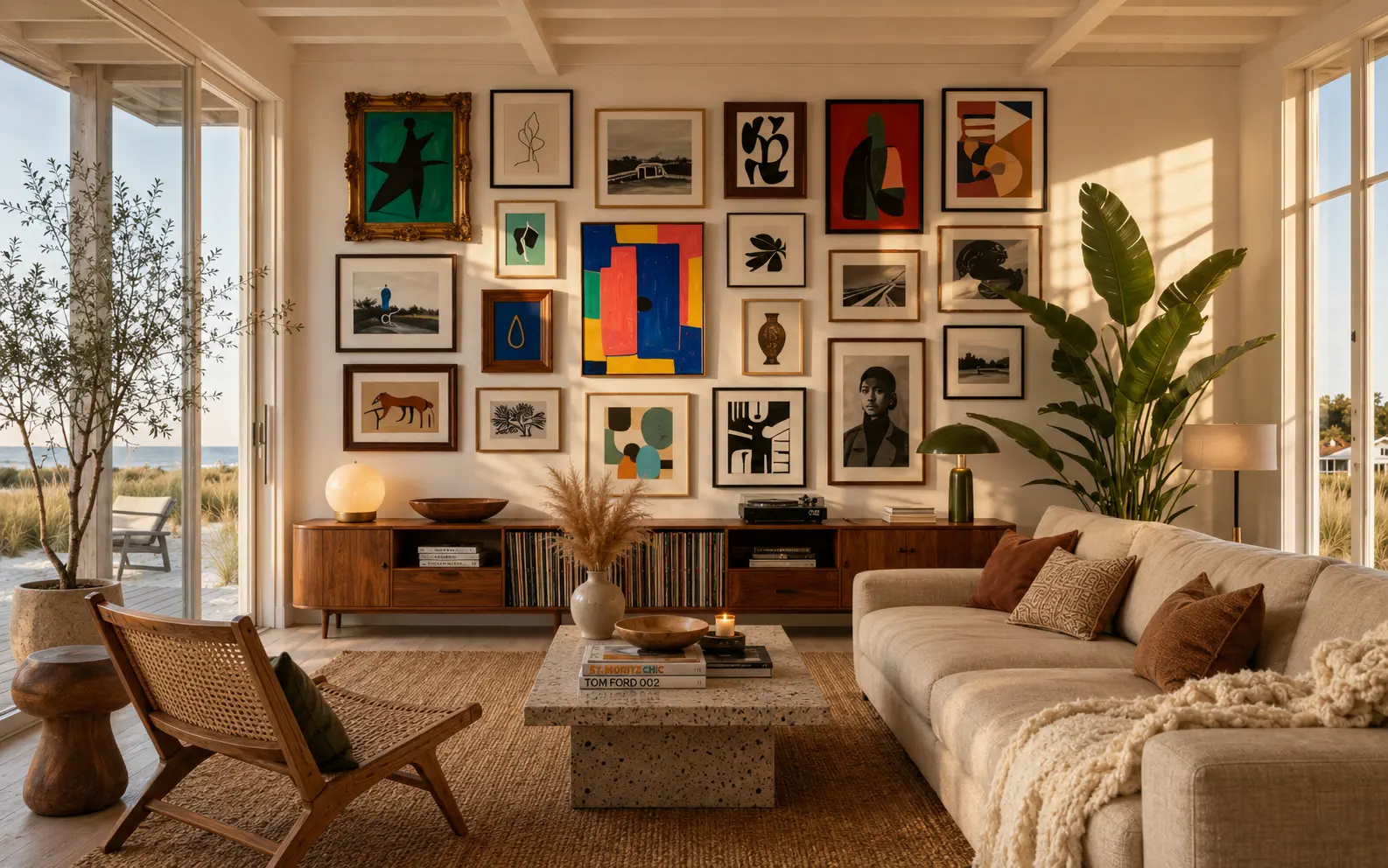
Learning how to start an interior design business is the moment a talented designer becomes a business owner — and the two are not the same skill. Plenty of gifted decorators never earn what their talent deserves because they treat the business side as an afterthought. This guide is the opposite of that: a complete, practical roadmap that takes you from "I want to do this for a living" to a registered, profitable practice with paying clients. It covers choosing your niche, pricing your work, registering and protecting the business, building the portfolio and online presence that win trust, and landing those crucial first projects. Whether you are going full-time or starting as a side hustle, the sequence below is the one that works.
Two common variations have their own dedicated guides, and this pillar links to them where relevant: if you are worried about credentials, read how to start an interior design business without a degree, and if you are starting from scratch, see how to start an interior design business with no experience. For the career and craft side — the skills and qualifications themselves — pair this with how to become an interior designer.
Is starting an interior design business worth it?
Interior design is one of the more accessible creative businesses to launch. In most places the work of decorating, styling, e-design and space planning is open to anyone who can deliver it, startup costs are modest compared with product businesses, and you can begin part-time around an existing job. Demand is steady — homeowners renovate, businesses fit out offices and hospitality spaces, and remote e-design has opened clients far beyond your postcode.
The trade-off is that design skill alone does not pay the bills. Running the business means selling, scoping, pricing, contracts, sourcing, project management and marketing. The designers who thrive are the ones who respect those disciplines as much as the mood-boarding. Get them right and this is a career you can run for decades, scale into a studio, or keep deliberately small and highly profitable.
Step 1: Choose your niche and services
The fastest way to stall is to offer "interior design for anyone." Specialising makes your marketing sharper, your pricing stronger and your reputation easier to build. Decide on two things.
Who you serve. Residential (homeowners, renovations, new builds), commercial (offices, retail, hospitality, restaurants), or a specific slice such as small-space apartments, holiday lets, or family homes. Commercial work is larger and more lucrative but sales cycles are longer and some projects touch building code — which belongs to licensed professionals you partner with.
What you sell. Common service models include:
- Full-service design — concept to installation, the highest fee and the most involved.
- Design-only / e-design — you deliver the scheme, plans and shopping list; the client executes. Low overhead, highly scalable, location-independent.
- Consultation / styling — hourly or per-room advice, a great entry offer.
- Staging — preparing homes for sale, often repeatable and referral-rich.
You do not need every service on day one. Pick one or two you can deliver brilliantly, and expand later. For inspiration on positioning and offers, our list of interior design business ideas is a useful starting point.
Step 2: Get your skills and portfolio ready
Before you sell, you need proof you can deliver. If you are still building competence, work through how to become an interior designer first, then come back to the business setup.
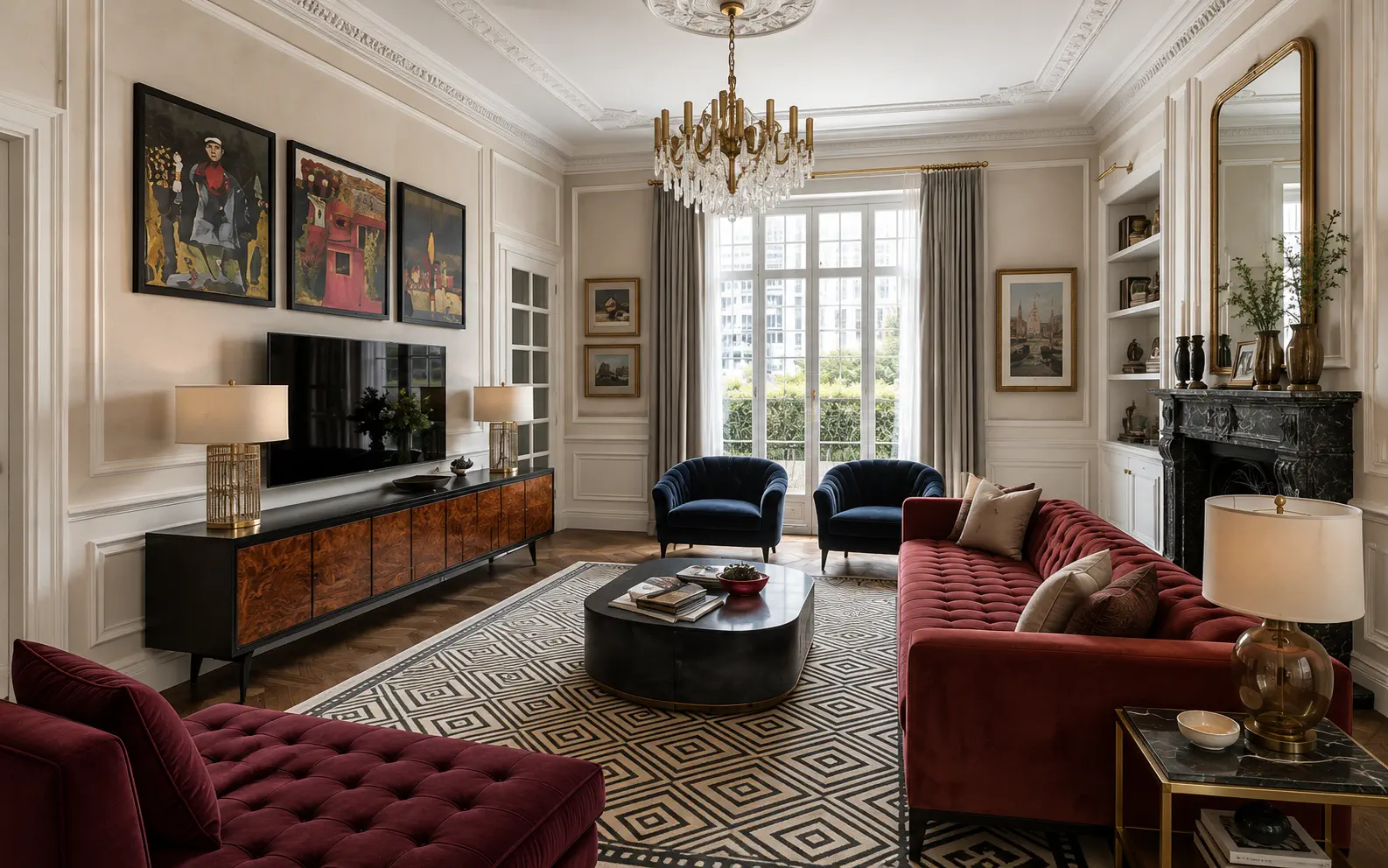
Your portfolio is the single most important sales asset you will ever own. Clients do not buy your qualifications; they buy the evidence of your taste and competence. Before launch you want three to five projects presented as short case studies — the brief, your concept, the process, and the finished result. These can be real client work, pilot projects for friends and family, or fully realised speculative schemes, labelled honestly.
Build it properly using our pillar on how to make an interior design portfolio, and study the standard to aim for in the interior design portfolio overview. Crucially, your portfolio should live on its own professional website, not buried in a PDF or a social feed — a hosted, shareable gallery is what turns a browser into an enquiry. You can publish yours online free and have a real link to put on every proposal, business card and profile.
Step 3: Write a simple business plan
You do not need a 40-page document for a bank. You need a short, honest plan that forces you to think through the essentials on a few pages:
- Your offer and niche — who you serve and what you sell.
- Your market — who else serves these clients, and how you are different.
- Pricing and revenue — your model and a realistic first-year income target.
- Costs — startup and monthly running costs (covered below).
- Marketing — how the first clients will actually find you.
- Goals — concrete milestones for the first 3, 6 and 12 months.
Writing it down turns vague ambition into a checklist you can execute. For the money side specifically, work alongside interior design business startup costs so your numbers are grounded in reality rather than optimism.
Step 4: Choose a business name and brand
Your name and brand are the first impression before a client ever sees your work. Aim for a name that is
memorable, easy to spell and say, not tied so tightly to one location or service that it limits growth,
and — critically — available as a matching domain and social handle. Check business-name registers and
trademark databases in your country before you commit, and secure the .com and handles the same day.
Around the name, build a minimal but consistent identity: a simple logo, a colour palette, and one or two fonts you use everywhere. Consistency reads as professionalism. Resist the urge to over-design the brand — clean and coherent beats clever and chaotic, and it signals the same restraint clients want in their homes.
Step 5: Register and protect your business
This is the step nervous beginners skip and later regret. It is inexpensive, makes you look legitimate, and protects you the moment money changes hands. The essentials:
- Legal structure — register the simplest appropriate structure (sole trader / sole proprietor, LLC, or the local equivalent). An LLC-type structure separates personal and business liability and is a common choice as you grow. Confirm the right option for your country and take basic tax advice.
- Business bank account — never mix personal and business money. A separate account makes bookkeeping, tax and professionalism dramatically easier.
- Licences and permits — most decorating and design services need no special licence, but check local rules. A few jurisdictions restrict the title "interior designer" or require registration for certain commercial work.
- Insurance — professional/indemnity and general liability cover are essential once you advise clients or set foot on site. They are cheap relative to the risk.
- Contracts — use a written agreement for every single project (see Step 9).
Do the boring paperwork early and it never becomes an emergency.
Step 6: Understand your startup and running costs
One of the reasons interior design is attractive is how lean it can be. Many designers start from a laptop and a phone. Typical startup costs include business registration and insurance, a website and domain, design and moodboard software, basic branding, and a small marketing budget. You can begin for a modest sum and reinvest as revenue arrives.
Separate one-off startup costs from ongoing monthly costs (software subscriptions, insurance, marketing, any samples or subscriptions) so you know your break-even number — the revenue you need each month just to stand still. For a detailed breakdown with realistic figures, follow interior design business startup costs. Knowing these numbers is also what lets you price correctly rather than guessing.
Step 7: Set your pricing
Pricing is where new designers most often undercharge and quietly go out of business. The common models, often combined, are:
- Flat / fixed fee — one price for a defined scope. Clients love the predictability; it rewards you for efficiency.
- Hourly — good for consultations and open-ended work.
- Per room / per square foot — simple to quote for residential.
- Cost-plus — you add a percentage to furnishings and products you procure.
- Percentage of project — a fee based on total project cost, common in larger work.
Whatever you choose, your prices must cover your time, your overheads and a real profit — not just your hours. Model it deliberately with our interior design rate calculator so your numbers are built on costs and target income, not on what you nervously guess a client will accept. Raising prices as your portfolio and demand grow is one of the main levers of a healthy design business.
Step 8: Build your online presence
Today your website is your storefront, portfolio and salesperson working around the clock. At minimum you need a professional site that leads with your portfolio, explains your services and process, shows social proof, and makes it effortless to enquire. A polished, image-led gallery matters far more here than for most businesses — you are selling visual taste, so the presentation is the pitch.
This is exactly what our platform is built for: instead of wrestling with generic website builders or templates that all look alike, you get a fast, image-first interior design website builder designed for real project galleries, with the option to export polished project PDFs for proposals. You can create your site and publish your portfolio free and have a credible web presence live in a day rather than a month.
Alongside the site, claim the profiles your clients actually use — Instagram and Pinterest for residential, LinkedIn and Houzz-style directories for commercial — and keep them consistent with your brand. You do not need to be everywhere; you need to be excellent in one or two places.
Step 9: Create your client-facing documents
Professional paperwork is what separates a hobbyist from a business, and it protects your income. Build a small toolkit you reuse on every project:
- Client questionnaire — to scope the project and qualify the client before you quote. Start with our free interior design client questionnaire template.
- Proposal — the document that sells the project and its price. Learn the craft in how to write an interior design proposal and use the free interior design proposal template.
- Contract — the agreement that protects you legally on every job. Never work without one; use our interior design contract template or, for smaller jobs, a lighter letter of agreement.
Set these up once and every future project starts from a professional, consistent base.
Step 10: Market your business and win your first clients
With the foundations in place, the priority becomes a steady flow of enquiries. You do not need a huge budget — you need a consistent, deliberate plan. Build one using our free interior design firm marketing plan, then focus on the channels that work fastest for new designers:
- Your network — tell everyone you know, specifically and repeatedly. Early clients almost always come from personal connections and referrals.
- A strong portfolio online — so anyone you meet or who hears about you can immediately see proof of your work.
- Social proof — collect a testimonial and photos from every project and feature them.
- Local visibility — partner with realtors, contractors, showrooms and furniture stores who serve your ideal clients.
- Content and social — post real projects and process consistently to build an audience over time.
For the complete playbook, work through how to get interior design clients. The most important mindset shift: treat your portfolio as your primary marketing tool, and make sure it is always live, polished and easy to share.
Step 11: Set up simple systems to run day to day
As soon as work arrives, light systems keep you sane and professional. You do not need enterprise software on day one — you need a reliable way to handle each of these:
- Leads and enquiries — a simple way to track who has asked, and follow up.
- Projects — a checklist or tool to manage tasks, deadlines and client communication.
- Sourcing and specs — organised product selections and purchase orders.
- Money — invoicing, deposits, expenses and a bookkeeping habit from day one.
- Files and photos — organised project folders, and photography of finished work for your portfolio.
Start lean with tools you already have, and upgrade only when a real bottleneck appears. Every finished project should feed straight back into your portfolio, which keeps your marketing compounding without extra effort.
Step 12: Grow and scale
Once you have a repeatable process and a full pipeline, growth becomes a series of choices rather than a scramble. The main levers are:
- Raise your prices as demand and your portfolio strengthen — the fastest route to higher profit.
- Specialise further into the room type, client type or style you become known for, so referrals compound.
- Add scalable offers such as e-design packages or digital products that are not capped by your hours.
- Build a team — subcontractors, an assistant, then employees — when demand consistently exceeds your capacity.
Keep your portfolio and testimonials fresh with your best new work, and the business gets easier to market every year.
How much can an interior design business earn?
Earnings vary enormously, and it helps to be realistic before you commit. In the early months, part-time or side-hustle designers might take on one small project at a time while building a reputation. Established solo designers running full-service residential work can earn a comfortable professional income, and studios with a team and commercial clients can scale well beyond that. The variables that matter most are your niche (commercial and full-service pay more than one-off consultations), your pricing discipline, your location, and how full your pipeline is.
The important insight is that your income is not fixed by the profession — it is largely set by your own decisions. Two designers with identical talent can earn wildly different amounts depending on whether they price for profit, specialise, and market consistently. E-design and package-based offers are particularly powerful because they are not strictly capped by your hours: you can serve several clients in the time a single full-service project would take. Treat income as something you engineer through positioning and pricing, not something you passively receive.
A worked pricing example
To see why pricing discipline matters, walk through a simple flat-fee living-room redesign. Suppose the project realistically takes you 20 hours across consultation, concept, sourcing, specification and presentation. If you want to earn the equivalent of a solid professional rate — say a target of a certain amount per working hour after costs — you cannot simply multiply your desired take-home by 20. You must also cover overheads (software, insurance, website, admin time that is not billable) and build in profit for the business itself.
A common beginner error is to quote a "friendly" round number that feels approachable, then discover it barely covers the unbillable hours spent emailing, revising and sourcing. The fix is to price the whole scope — including the invisible work — and to add a margin on top of your costs. When you present it as a single confident flat fee tied to a clearly defined deliverable, clients focus on the value and outcome rather than the hourly maths. Model every offer this way with the interior design rate calculator before you send a proposal, so every project is profitable by design rather than by luck.
Running your first project from enquiry to install
Having a repeatable process makes you look seasoned even on your first paid job, and it prevents the scope creep and confusion that sink beginners. A reliable end-to-end flow looks like this:
- Enquiry — a prospect reaches out through your website, referral or social profile.
- Qualify and scope — send your client questionnaire to understand the brief, budget and timeline before you quote.
- Consultation — a paid or discovery call/visit to confirm fit and gather detail.
- Proposal — present the scope, deliverables and price clearly; see how to write an interior design proposal.
- Contract and deposit — sign an interior design contract and take a deposit before any design work begins.
- Concept and design — develop the scheme: layout, palette, materials and furniture selections.
- Sourcing and specification — finalise products, prices and lead times.
- Procurement and install — order, coordinate deliveries and trades, and install.
- Reveal and wrap-up — hand over, resolve any snags, and collect final payment.
- Photos and testimonial — photograph the finished space and request a review, then add both to your portfolio.
That final step is what makes each project pay dividends long after it ends: it feeds your marketing. Every completed job should make your portfolio stronger and your next sale easier.
Getting paid: deposits, invoicing and cash flow
Cash flow, not profit on paper, is what keeps a small business alive. Protect it with a few firm habits. Always take a deposit before starting design work, and bill the rest against clear milestones rather than all at the end. For furnishings and products you procure on a client's behalf, collect the money up front or require the client to pay suppliers directly — never float large purchases out of your own pocket, because a single delayed reimbursement can crater a small practice.
Invoice promptly and clearly, state your payment terms in the contract, and follow up on late payments without embarrassment — it is business, not a favour. Keep business and personal money strictly separate, record every expense as you go, and set aside a portion of each payment for tax. These unglamorous habits are exactly what let talented designers stay in business long enough for their reputation to compound.
Your first 90 days: a launch checklist
If the steps above feel like a lot, sequence them across a realistic first quarter:
- Weeks 1–2 — foundations. Decide your niche and services, choose and register your business name, set up a business bank account, and sort insurance.
- Weeks 3–4 — proof and presence. Finalise three to five portfolio projects and publish your portfolio and website free, and set up your key social profiles.
- Month 2 — systems and pricing. Set your pricing with the rate calculator, and prepare your questionnaire, proposal and contract templates so you are ready to sell.
- Month 3 — marketing and first clients. Execute your marketing plan, tell your network, approach trade partners, and convert your first enquiries into signed projects.
By the end of 90 days you can realistically have a registered, presentable, sellable business with your first clients in the pipeline — provided you execute rather than perfect.
Common mistakes to avoid
- Undercharging. Pricing to feel "affordable" instead of to cover costs and profit is the number one killer. Model your rates properly.
- No contract. Working on a handshake invites scope creep, late payment and disputes.
- A weak or hidden portfolio. If prospects cannot easily see proof of your work online, you lose jobs you were qualified to win.
- Trying to serve everyone. Vague positioning makes marketing expensive and forgettable.
- Neglecting marketing until work dries up. Market consistently, especially when you are busy.
Your first steps, starting today
Starting an interior design business comes down to deciding who you serve, proving you can deliver with a strong portfolio, setting the legal and financial basics in place, pricing for profit, and marketing consistently to win your first clients. None of it requires permission or perfection — it requires starting. The single highest-leverage move you can make this week is to get your work online where clients can find and trust it. Build and publish your portfolio free and turn your design talent into a real, growing business.
Frequently asked questions
How do I start an interior design business?
Choose a clear niche and service model, get your skills and portfolio ready, write a simple business plan, pick a name and brand, register the business and get insurance, work out your startup costs and pricing, build a professional website with your portfolio, prepare your client documents (questionnaire, proposal, contract), and then market consistently to win your first clients. Starting part-time around another job is completely valid.
How much does it cost to start an interior design business?
It can be lean — many designers start from a laptop and phone. Typical startup costs are business registration, insurance, a website and domain, design and moodboard software, basic branding and a small marketing budget. Separate one-off startup costs from monthly running costs so you know your break-even number. See our detailed guide on interior design business startup costs for realistic figures.
Do I need a licence or degree to start an interior design business?
In most places, no. Decorating, styling, e-design and space planning are generally open to anyone who can deliver them, and clients judge your portfolio far more than your credentials. A degree or licence matters mainly for certain commercial or code-regulated work. Always confirm your local rules, as a few areas restrict the specific title "interior designer".
How do I get my first interior design clients?
Start with your personal network and referrals, make sure your portfolio is live and easy to share online, collect a testimonial and photos from every project, and partner with local realtors, contractors and showrooms. Build a simple, consistent marketing plan rather than relying on luck. Our guide on how to get interior design clients covers the full playbook.
How do I price my interior design services?
Common models are flat fee, hourly, per room or per square foot, cost-plus, and percentage of project — often combined. Whatever you choose, your prices must cover your time, overheads and a real profit, not just your hours. Use an interior design rate calculator to base your rates on actual costs and a target income rather than guessing.