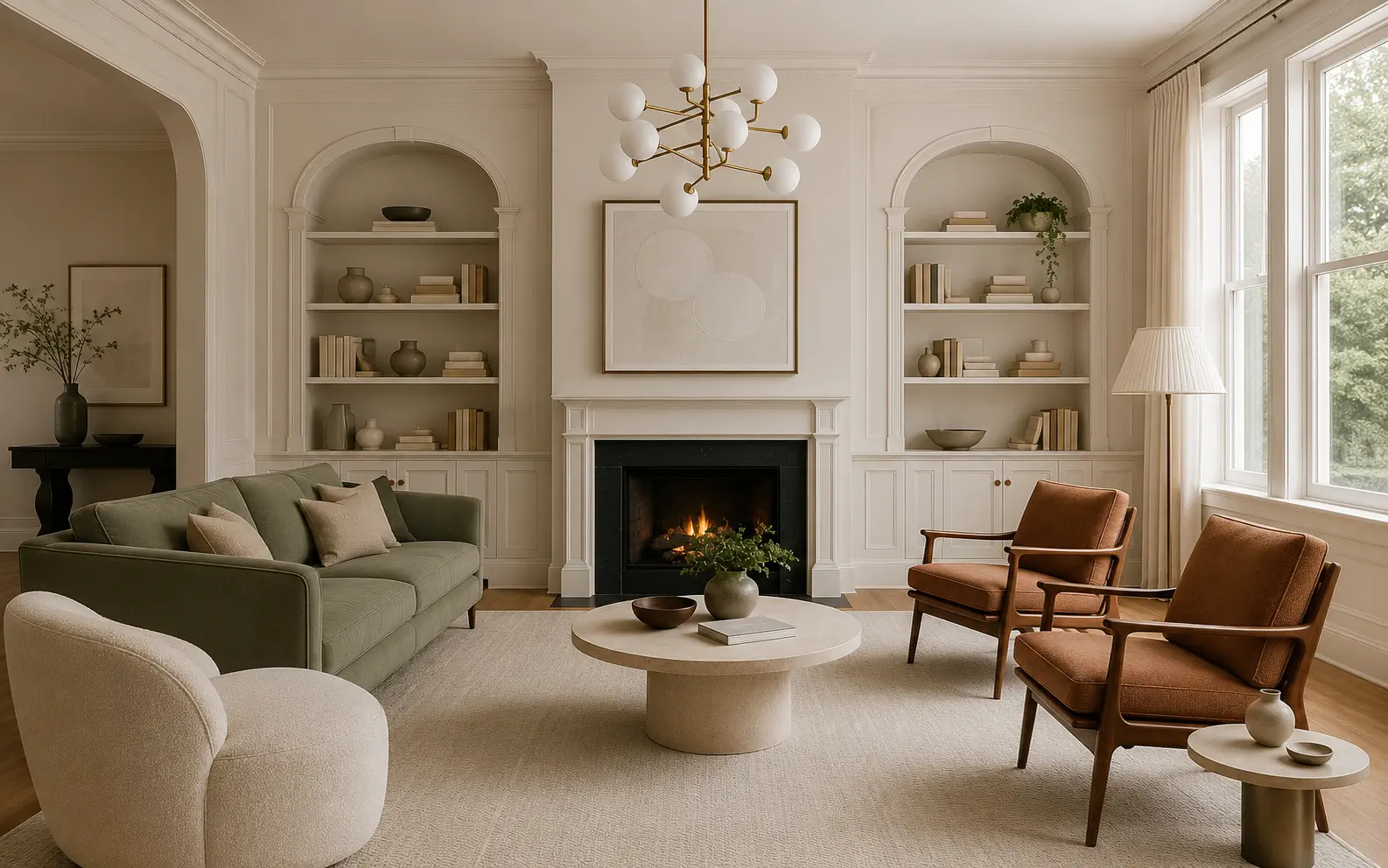
Looking for interior design business ideas that actually fit your skills, budget and lifestyle? "Interior designer" is not one business — it is dozens. You can trade time for fees, sell digital products while you sleep, serve homeowners or commercial clients, specialise by room, style or client type, or build something fully online with almost no overhead. This list of 50 ideas is organised by model so you can quickly find the ones that match how you want to work. Skim, shortlist three, and then pressure-test them against real demand and your finances.
Whichever idea you pick, the fundamentals are the same: a focused niche, a strong portfolio and legitimate business setup. If you are just beginning, read how to start an interior design business with no experience and, if relevant, how to start one without a degree alongside this list.
Service-based businesses (trade time for fees)
Classic, dependable models where you sell your expertise directly.
- Full-service residential interior design — concept to installation for homeowners. The bread-and-butter model.
- Interior decorating — furnishings, colour and styling without structural work. Lower barrier, fast to launch.
- Space planning specialist — layouts and floor plans for awkward or small spaces.
- Colour consultancy — paint palettes and material schemes as a standalone paid service.
- Home staging — styling properties to sell faster, working with realtors and sellers.
- Renovation design consultant — guiding homeowners through remodels alongside their contractor.
- Kitchen and bath design — the two highest-value rooms, ideal for a focused practice.
- Furniture selection and sourcing — curating and procuring pieces for busy clients.
- Move-in and unpacking styling — designing and setting up a home after a relocation.
- Downsizing and rightsizing design — helping retirees or empty-nesters reimagine smaller homes.
Niche and specialist businesses (win by focus)
Narrowing your focus is the fastest way for a newer designer to stand out. A specialist is easier to market, refer and remember than a generalist.
- Small-space and apartment design — for city dwellers and studios.
- Rental-friendly design — reversible, landlord-safe transformations for renters.
- Airbnb and short-let styling — designing spaces that photograph well and earn more per night.
- Nursery and kids' room design — a joyful, repeat-friendly niche.
- Home office and work-from-home spaces — booming since remote work normalised.
- Ageing-in-place and accessible design — functional, beautiful homes for changing needs.
- Pet-friendly interiors — durable, stylish spaces for animal owners.
- Biophilic and wellness design — nature, light and calm as the organising idea.
- Sustainable and eco interior design — low-impact materials and circular sourcing.
- Style-specialist practice — own a single aesthetic such as Japandi, mid-century or maximalism.
If you are unsure which aesthetic is naturally yours, the interior design style quiz is a quick way to find out, and our guide to the types of interior design styles maps the options.
Commercial and B2B businesses (bigger budgets, longer projects)
Commercial work often means larger fees, repeat clients and referral networks — with a steeper learning curve.
- Small-office and workspace design — for startups and growing teams.
- Retail and boutique interiors — spaces designed to sell.
- Café, restaurant and hospitality design — high-impact, photogenic, brand-driven.
- Salon, spa and clinic interiors — a specialised, loyal niche.
- Short-term rental portfolio design — recurring work for property investors.
- Model-home and developer staging — volume work with builders and developers.
- Real-estate partnership staging — an ongoing pipeline via agents.
- Set and event design — interiors for shoots, launches and pop-ups.
- Faith, community and non-profit spaces — mission-driven interior work.
- Fit-out consultancy — advising commercial tenants on space and finishes.
Online and digital businesses (location-independent)
Low overhead, wide reach, and often the fastest path to a first paying client from anywhere.
- E-design (virtual interior design) — deliver full schemes remotely via moodboards, plans and shopping lists. The single most scalable service model.
- One-hour design consultations — paid video calls solving a specific room problem.
- Room-in-a-box packages — a fixed-price digital scheme plus a curated shopping list.
- Design-by-the-question service — quick paid answers to layout or colour dilemmas.
- Subscription design — a monthly retainer for ongoing advice and refreshes.
- Design content creation — building an audience on Instagram, Pinterest, TikTok or YouTube, then monetising through brand deals and your own services.
- Interior design blogging and affiliate income — content plus affiliate links and ads.
- Online courses and workshops — teach DIYers and aspiring designers.
- Membership community — paid access to templates, feedback and group coaching.
- Design consulting for other designers — mentoring newer designers on business and pricing.
E-design deserves special attention: it removes travel, scales beyond your local market and lets you serve clients while you build a name. A strong online interior design portfolio is the engine that makes every one of these digital models work.
Product and passive-income businesses (sell while you sleep)
Turn your expertise into assets that earn without your hourly presence.
- Digital templates and printables — moodboard kits, budget trackers, and client forms.
- Sell design presets and canvases — reusable schemes and layout templates.
- Furniture or homeware line — design and sell your own products or curated collections.
- Print-on-demand art and decor — wall art, prints and textiles with no inventory.
- Digital style guides and lookbooks — paid downloadable guides by room or style.
- Licensing your designs — royalties from manufacturers using your patterns or products.
- Stock styling and photography — sell interior imagery to brands and media.
- Affiliate shop / curated storefront — earn commission on furnishings you recommend.
- Paid newsletter — a subscription publication on trends, sources and tips.
- Sell a signature system or toolkit — package your process into a product other designers buy.
How to choose the right idea for you
Fifty options is inspiring and paralysing in equal measure. Filter them down with four honest questions:
- What are you good at, and what do you enjoy? The best model plays to your strengths — visual styling, technical planning, teaching, or building an audience.
- How do you want to work? Trading hours for fees, running an online product business, or a hybrid of both leads to very different daily lives.
- What can you start with today? Service and e-design models need almost no capital; product lines and physical staging need more. Our guide to interior design business startup costs breaks down what each really requires.
- Is there real demand where you are? Validate with a few conversations and a look at what local or online competitors charge before you commit.
Many successful designers combine models — for example, full-service residential work funded by e-design packages and topped up with digital-template sales. Start with one clear offer, prove it, then layer on a second income stream once the first is running.
Turning an idea into a business
An idea is only the starting point. To turn any of these into income, you still need the same foundations: pick a niche, build a portfolio of three to five strong projects (follow our pillar on how to make an interior design portfolio), set up the business legally, price your work to profit, and put a consistent client-getting system in place — see how to get interior design clients for the full playbook.
Whichever of these interior design business ideas you choose, your portfolio is what converts interest into paying clients. Build yours free, publish your best work, and give your new business something real to point people to.
Frequently asked questions
What is the most profitable interior design business idea?
It depends on your strengths, but the most scalable low-overhead model is e-design (virtual interior design), because it removes travel and serves clients anywhere. High-value niches such as kitchen and bath design, commercial and hospitality interiors, and developer or real-estate staging can command larger fees. Many designers combine a service model with digital products for the best mix of income and freedom.
What interior design business can I start with little money?
Service and online models need almost no capital: e-design, one-hour consultations, colour consultancy, decorating, home staging (using clients' own or rented pieces) and content-based businesses. You mainly need design software, a portfolio and legitimate business setup. Product lines, physical inventory and staging with owned furniture require more upfront investment.
Do I need a degree or licence to start these businesses?
For decorating, styling, e-design, space planning and most of these ideas, no — in most places these services are unregulated. Work affecting structure, electrical or building code requires licensed professionals, and a few jurisdictions restrict the title "interior designer." Always check your local rules and refer out regulated work.
How do I choose between so many interior design business ideas?
Filter by four questions: what you are good at and enjoy, how you want to work (services vs products vs hybrid), what you can afford to start today, and whether there is real demand where you are. Shortlist two or three, validate demand with a few conversations, then commit to one clear offer before layering on additional income streams.