
You do not need a built penthouse to have an impressive student interior design portfolio. As a student, your portfolio is judged on process, spatial thinking and visual communication — not the size of your client list. This guide shows exactly what to include, how to present academic work like real case studies, and how to publish something tutors, internship reviewers and first employers take seriously. For the fundamentals that apply to every portfolio, see our pillar on the interior design portfolio.
Why a student portfolio is judged differently
It helps to know what reviewers are actually looking for, because it is not what you might assume. Tutors, internship managers and first employers do not expect a roster of completed clients — they know you are a student. What they are assessing is your potential: can you think spatially, can you develop an idea from concept to resolution, and can you communicate it clearly? In other words, a student portfolio is judged on process and promise far more than on polish and client list.
That is genuinely good news, because it means the things you do have — studio briefs, sketches, iterations, models, mood boards — are exactly the things reviewers want to see. A graduate who presents three studio projects with visible thinking and clean communication will out-compete one who hides the process behind a few glossy final renders. So do not apologise for being a student. Lean into the strengths the format rewards: show how you work, not just what you made.
What to include when you have no client work
Student portfolios draw from a wider pool than you might think. Strong material includes:
- Studio and coursework projects — your core content.
- Concept and competition entries — they show ambition and ideas.
- Personal spaces — a redesign of your own room or flat, presented properly.
- Styling and moodboard work — proof of taste and material sensibility.
- Live or volunteer briefs — anything real, however small.
The goal is to demonstrate range and skill, not to pretend you have a decade of clients.
If you feel short on material, you can create some deliberately. Set yourself a self-directed brief — redesign a local café, reimagine a friend's flat, or respond to a published design competition — and treat it exactly like a real commission. Speculative projects are completely legitimate in a student portfolio, and because you set the brief, you can choose one that fills a gap in your range or shows off a skill you want employers to notice. A weekend spent producing one strong self-initiated project is often worth more than digging up another mediocre assignment.
What if your projects are concepts, not built?
Most student work never gets built, and that is completely fine — reviewers expect it. The key is to present concepts confidently rather than apologetically. Lead with your best renders or physical model photos, support them with clear plans and sections, and let the narrative carry the spatial idea. Quality of communication matters far more than whether a wall was ever erected. A beautifully presented concept that explains its reasoning beats a built project shown in three blurry phone snaps. Where you have them, hand-sketches and process shots actually help here: they prove the idea is yours and show how it developed.
Treat studio briefs like client work
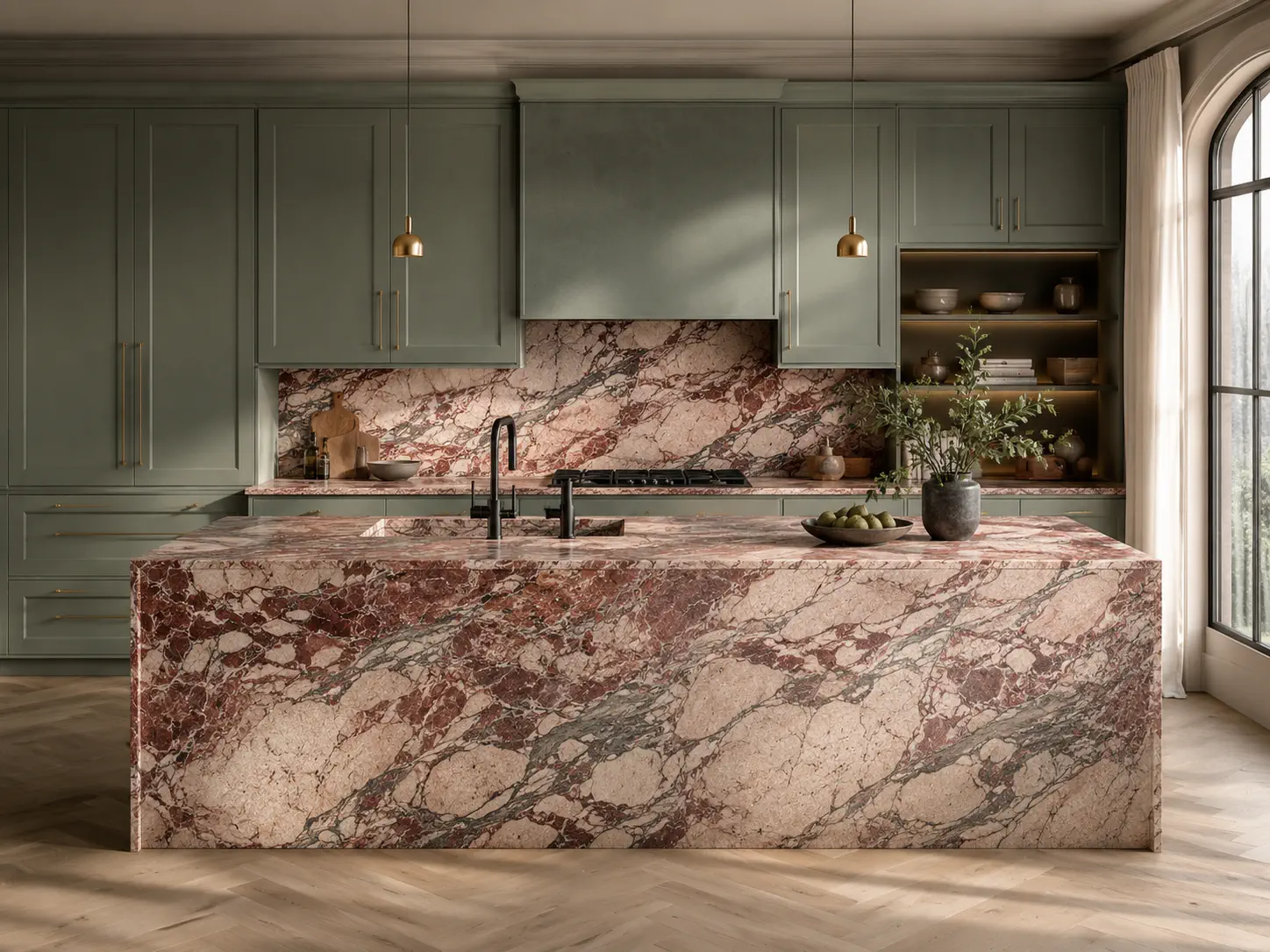
The single biggest upgrade you can make: stop presenting academic projects as academic projects. Rename Studio Project 3 as Compact Urban Apartment — 42 m². Write a short client-style brief, state the constraints, and walk through your design response. Presented this way, coursework reads as professional practice.
Here is the shift in practice. Instead of: "Studio Project 3 — a residential interior using the principles covered in the module," write: "Compact Urban Apartment, 42 m². Brief: design a flexible home for a young remote worker on a modest budget. Challenge: a single north-facing room had to serve as office, living and sleeping space. Response: a fold-away workstation, a zoned lighting scheme and a pale palette to maximise daylight." Same project, completely different impression. The first reads as homework; the second reads as the work of someone who already thinks like a practising designer. Apply that reframing to every project and your portfolio matures instantly — without a single new render.
Structure each project consistently
Use the same block structure for every project so the portfolio feels cohesive:
- A strong hero image (your best render or photo).
- Project meta — location, year, area in m².
- Two to three short paragraphs of narrative.
- A floor plan or layout diagram.
- A material palette or furniture board.
- A gallery of detail shots.
Show your process
Students often hide the work that makes them most hireable. Tutors and employers want to see sketches, iterations, moodboards and the reasoning behind decisions — it proves you can think, not just render. Include a "concept to resolution" sequence on at least one project.
Order projects for impact
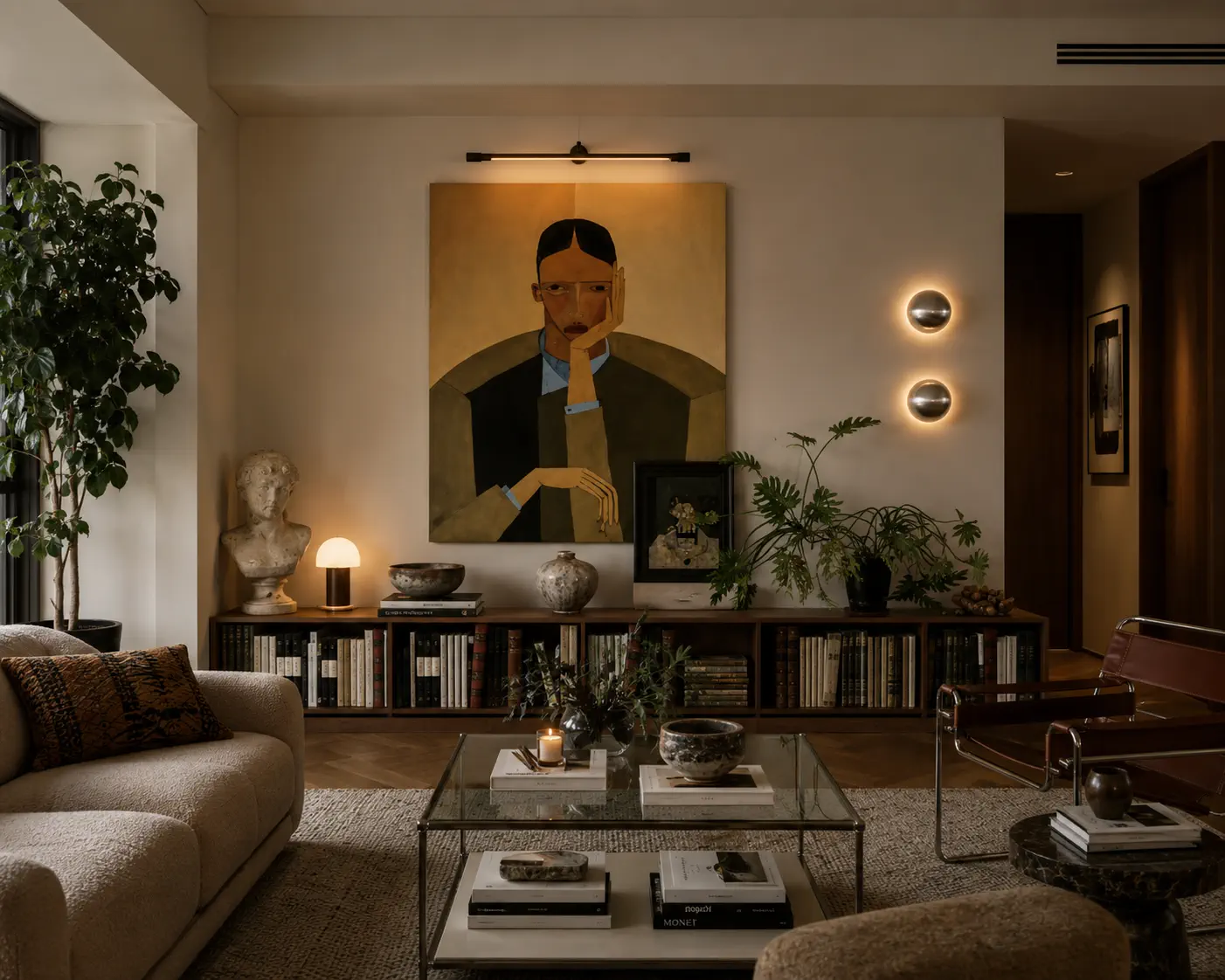
Lead with your strongest project and end with one that demonstrates technical skill — plans, sections or lighting studies — even if the styling is simpler. The middle is for range. Three to six excellent projects beat ten uneven ones.
Digital or PDF: what students should use
Most students default to a single PDF and stop there. A PDF is genuinely useful — some applications and grad-school submissions require one — but on its own it is invisible. It does not appear in a search, it cannot be found after a career fair, and it is awkward to update every time you finish a new project. The stronger setup is both: an online portfolio as your permanent, findable home, and a PDF you export from it for the specific applications that ask for a file. That way a recruiter who jots down your name can find your work weeks later, and you still have a polished attachment when one is required.
Common student portfolio mistakes
A few mistakes show up again and again in student work — and each is easy to fix:
- Generic project titles. Studio Project 3 tells a reviewer nothing. Name and frame every project like real practice.
- Hiding the process. The sketches and iterations you are tempted to leave out are exactly what prove you can think. Show them.
- Too many projects. A folder of every assignment dilutes your best work. Cut to three to six strong projects.
- Inconsistent presentation. Different layouts and image treatments per project make the whole thing feel scrappy. Use one consistent structure.
- PDF only. A file on your laptop cannot be discovered. Publish online as well.
- No contact details. Make it effortless for a reviewer to reach you — name, email and a link on every page.
Publish online before you graduate
Most students share a PDF and nothing else. A simple online portfolio on a clean URL
(yourname.interiorportfolio.com) means recruiters can find you after a career fair, and your work
keeps working for you while you sleep. You can still export a PDF for applications that require one.
Where your student portfolio will help you
A strong portfolio is not just for graduation — it earns its keep at several points:
- Internships and placements. A polished online portfolio sets you apart from classmates who send a PDF, and lets a studio see your thinking before they even reply.
- First job applications. Recruiters increasingly expect a link, not an attachment. A live URL in your CV and email signature does quiet work for you around the clock.
- Graduate school. Many programmes ask for a portfolio; a coherent, well-presented one signals readiness for advanced study.
- Freelance and side projects. Even small paid work — styling a friend's flat, a local café — becomes easier to land when you have a credible place to point people.
Build it once, keep it current, and it becomes the single asset that opens all of these doors.
A simple structure you can copy
If a blank page is the hard part, start from this proven order and adapt it to your work:
- A short, confident intro — your name, what you are studying or specialising in, and a single line on the kind of designer you want to be.
- Your strongest project first — fully presented as a case study, with a hero image, brief, process and outcome.
- Two to four more projects — arranged to show range (a different room type, style or scale in each), each with the same consistent block structure.
- A process spread — sketches, iterations and moodboards from at least one project, proving how you think.
- A closing project that shows technical skill — plans, sections or a lighting study.
- About and contact — a friendly photo, a couple of sentences, and an unmissable way to reach you.
This structure works because it leads with strength, demonstrates range in the middle, foregrounds process (your biggest advantage as a student), and finishes on competence — then makes it easy to get in touch. Fill it with your best three-to-six projects and you have a portfolio that holds its own.
How to stand out from other graduates
Most graduating portfolios look broadly similar — the same studio briefs, the same render styles, the same competition entries. A few deliberate choices help yours rise above the pile. First, develop a clear point of view: rather than showing you can do everything, hint at the kind of designer you are becoming, whether that is calm residential interiors, bold hospitality concepts or sustainability-led work. A focused portfolio is more memorable than a scattered one. Second, foreground your process more than your peers do — reviewers see endless final renders, so visible thinking stands out. Third, present everything with obsessive consistency, because polished presentation is the single easiest way to look a cut above when the underlying projects are similar. Finally, write well: clear, confident project narratives are rare among students and immediately signal professionalism.
Treat it as the start of a living portfolio
Your student portfolio is version one, not a final artefact. The habit to build now is treating it as something that grows with you. As you take on internships, freelance jobs or your first role, swap your weakest student project for stronger real work, and gradually let professional projects take the lead. Because you will keep updating it, build it somewhere that makes updating painless — an online portfolio you can edit in minutes beats a PDF you have to redesign and re-export every time. Designers who maintain a living portfolio from their student days carry a real advantage into their careers: they always have current, credible work ready to show the moment an opportunity appears.
The interior design website builder is free to start and gives you real gallery templates, so you spend your time on the work rather than wrestling with web design. When you are ready, follow the step-by-step build guide and check your draft against the free portfolio checklist.
Frequently asked questions
What should a student interior design portfolio include?
Studio and coursework projects, concept or competition entries, personal redesigns, styling and moodboard work, and any live or volunteer briefs. Present each as a short case study with a hero image, project meta, narrative, a plan and a material board.
How do I make a portfolio with no professional experience?
Treat academic projects like client work: give them real-sounding titles, write a brief and constraints, and walk through your design response. Showing your process — sketches, iterations and reasoning — is what proves your skill to tutors and employers.
How many projects should a student portfolio have?
Three to six excellent projects are enough. Lead with your strongest, finish with one that shows technical skill such as plans or lighting studies, and use the middle to demonstrate range.
Should a student portfolio be online or a PDF?
Publish online on a clean URL so recruiters can find you, and export a PDF when an application specifically requires a single attachment. An online portfolio keeps working for you long after a career fair ends.