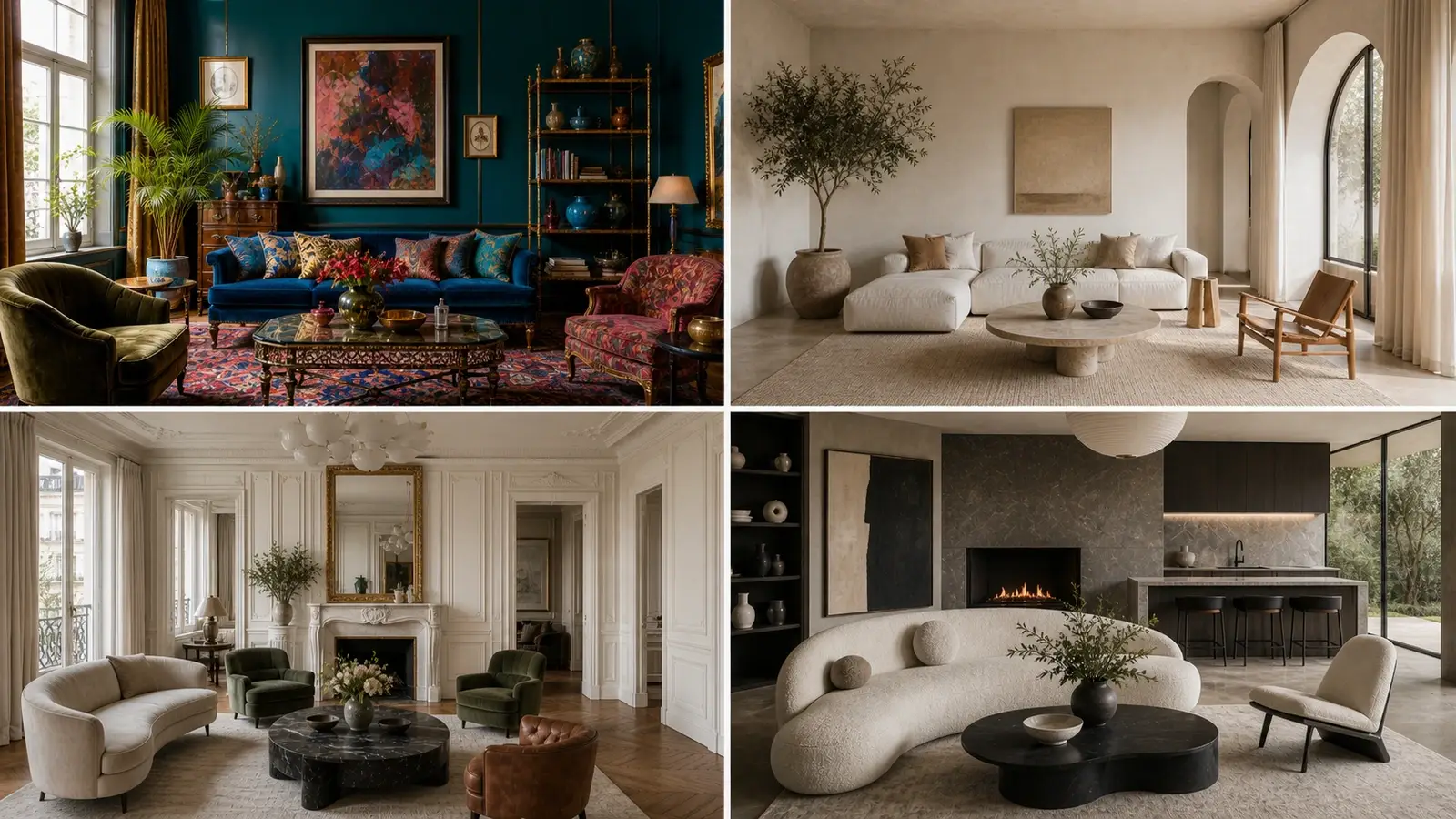
Instagram remains the design world's shop window, and curating who you follow is one of the easiest ways to train your eye. This is a guide to the best interior design Instagram accounts — organised by what each type of account is actually good for, rather than as a random ranking. Whether you are a homeowner gathering ideas or a designer studying how the best in the field present their work, the top interior design Instagram accounts fall into a handful of clear categories, and following two or three from each gives you a far more useful feed than following fifty of the same kind.
A note on finding them: handles change, and accounts come and go. Rather than listing @names that may be out of date, this guide names the studios, publications and account types worth searching for — search the name in Instagram and you will find the current account in seconds.
Why Instagram still matters for interior design
Design is visual and Instagram is visual, which is why the platform has become the industry's default portfolio-in-public. For homeowners it is where taste gets formed: people browse for months, save what they love, and arrive at a designer already knowing roughly what they want. For designers it is where credibility is displayed continuously rather than only when a client asks for references.
For anyone learning, though, its real value is repetition. Seeing thousands of well-resolved rooms trains your eye faster than any single course: you start noticing how professionals handle scale, layer lighting, mix textures and finish a corner. A well-curated feed is essentially a free daily design education — which is why who you follow matters more than how much you scroll.
Leading interior designers to follow
The single most useful category. Following working designers shows you complete projects, real constraints, process, and how a practice presents itself commercially.
Names consistently worth studying include Kelly Wearstler for maximalist, pattern-rich and boldly material-led interiors; Studio McGee for approachable, light modern-transitional family homes and exceptionally consistent styling; Amber Interiors for warm, layered California style with a strong vintage sensibility; Nate Berkus for classic, liveable interiors with an unshowy elegance; Athena Calderone (EyeSwoon) for sculptural, tonal, quietly luxurious spaces; Jean Stoffer Design for beautifully resolved kitchens and traditional-meets-modern detailing; and Sarah Sherman Samuel for playful contemporary work with confident colour and joinery.
Follow a deliberate spread rather than only the aesthetic you already like. Following one maximalist, one minimalist and one traditionalist teaches you far more than three accounts that look the same.
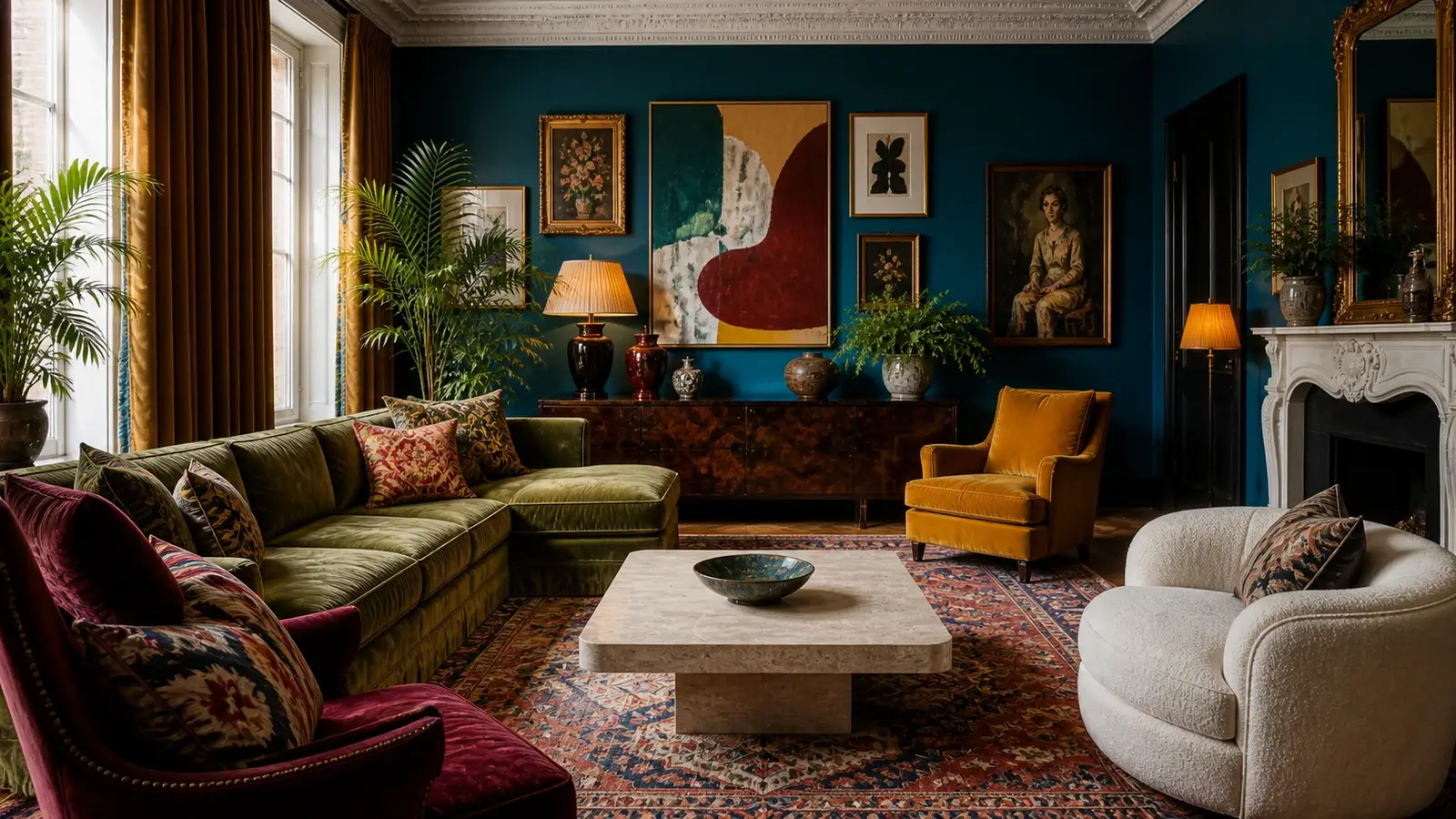
Magazines and interiors publications
Publications do the curation for you, pulling the best work from hundreds of designers and giving you a wider view of where the field is going than any single studio can.
Worth following: Architectural Digest for high-end homes and celebrity projects, Elle Decor and House Beautiful for accessible design and trend coverage, House & Garden and Homes & Gardens for a classic British sensibility, Est Living for contemporary Australian architecture and interiors, and The World of Interiors for the most idiosyncratic, decorative and historically rich end of the spectrum.
The advantage of publications is breadth; the disadvantage is that you see finished perfection with none of the process. Balance them with working designers who show the messy middle.
Architecture and design media
Interiors do not exist independently of the buildings that contain them, and architecture accounts sharpen your understanding of space, light and proportion — the things that matter most and are hardest to fake.
Dezeen and ArchDaily cover contemporary architecture and interiors globally, including plenty of commercial and hospitality work worth studying if you have ambitions in commercial interior design. Yellowtrace and Design Milk sit at the intersection of architecture, interiors and product, and are good for spotting materials and details before they become mainstream.
Sourcing, vintage and styling accounts
This category is the practical one: where the stuff comes from and how it is arranged.
Follow vintage and antique dealers — searching for local dealers in your area is often more useful than the famous international ones — for a constant education in period furniture, quality and pricing. Follow independent makers and ceramicists to find pieces nobody else is using. Follow stylists and prop stylists to learn how a room is finished for camera, which is directly useful when photographing your own work for a portfolio. And follow a few strong staging accounts to see how spaces are made appealing quickly and cheaply.
Colour, paint and materials accounts
A specialised but high-value category. Paint brands and colour specialists post relentless real-world examples of how a single colour behaves in different light, at different scales, next to different materials — which is exactly the knowledge that takes years to acquire otherwise.
Farrow & Ball is the obvious example for archive colour and dramatic saturated interiors, and most serious paint brands run accounts of a similar quality. Add a couple of stone, tile and timber suppliers to keep material knowledge current. If you are learning to talk confidently about palette and texture, this category and the guide to the elements of interior design do more for you than any amount of general inspiration.
How to build your own following
Studying great accounts naturally raises the question of your own. The short version: show complete projects rather than isolated pretty corners, post before-and-afters (consistently the strongest performing format in this field), let your process and personality appear so people connect with you rather than just the rooms, and stay consistent in aesthetic and voice so your feed reads as one clear point of view.
Consistency beats volume, and a focused feed attracts the clients whose taste matches yours — which is the entire point. For the wider promotional picture, see how to promote my interior design business, and for the strategy that should sit behind it, interior design marketing. When you are ready to point that audience at work you own rather than a feed you rent, you can build a designer website and get started free.
Frequently asked questions
What are the best interior design Instagram accounts to follow?
Follow a spread across categories rather than only one type. For working designers, studios such as Kelly Wearstler, Studio McGee, Amber Interiors, Nate Berkus, Athena Calderone (EyeSwoon), Jean Stoffer Design and Sarah Sherman Samuel are consistently worth studying. Add publications like Architectural Digest, Elle Decor, House & Garden, Est Living and The World of Interiors, architecture media such as Dezeen and ArchDaily, plus vintage dealers, stylists and paint brands.
Is Instagram still worth it for interior designers?
Yes. Design is visual and Instagram has become the industry's portfolio-in-public, where credibility is displayed continuously rather than only when a client asks for references. Homeowners browse for months and arrive already knowing what they want. For designers who are learning, a well-curated feed is also a free daily design education in scale, lighting, texture and detailing.
How many interior design accounts should I follow?
Fewer, but more varied, beats a large number of similar accounts. Following two or three from each category — working designers, publications, architecture media, sourcing and vintage, styling, and colour and materials — produces a far more useful feed than fifty accounts in the same aesthetic. Deliberately include styles you do not naturally like, since contrast teaches you more.
What should interior designers post on Instagram?
Show complete projects rather than isolated corners, post before-and-afters (the strongest performing format in this field), share some process and personality so people connect with you and not only the rooms, and keep your aesthetic and voice consistent so the feed reads as one clear point of view. Consistency matters more than volume, and a focused feed attracts clients whose taste matches yours.