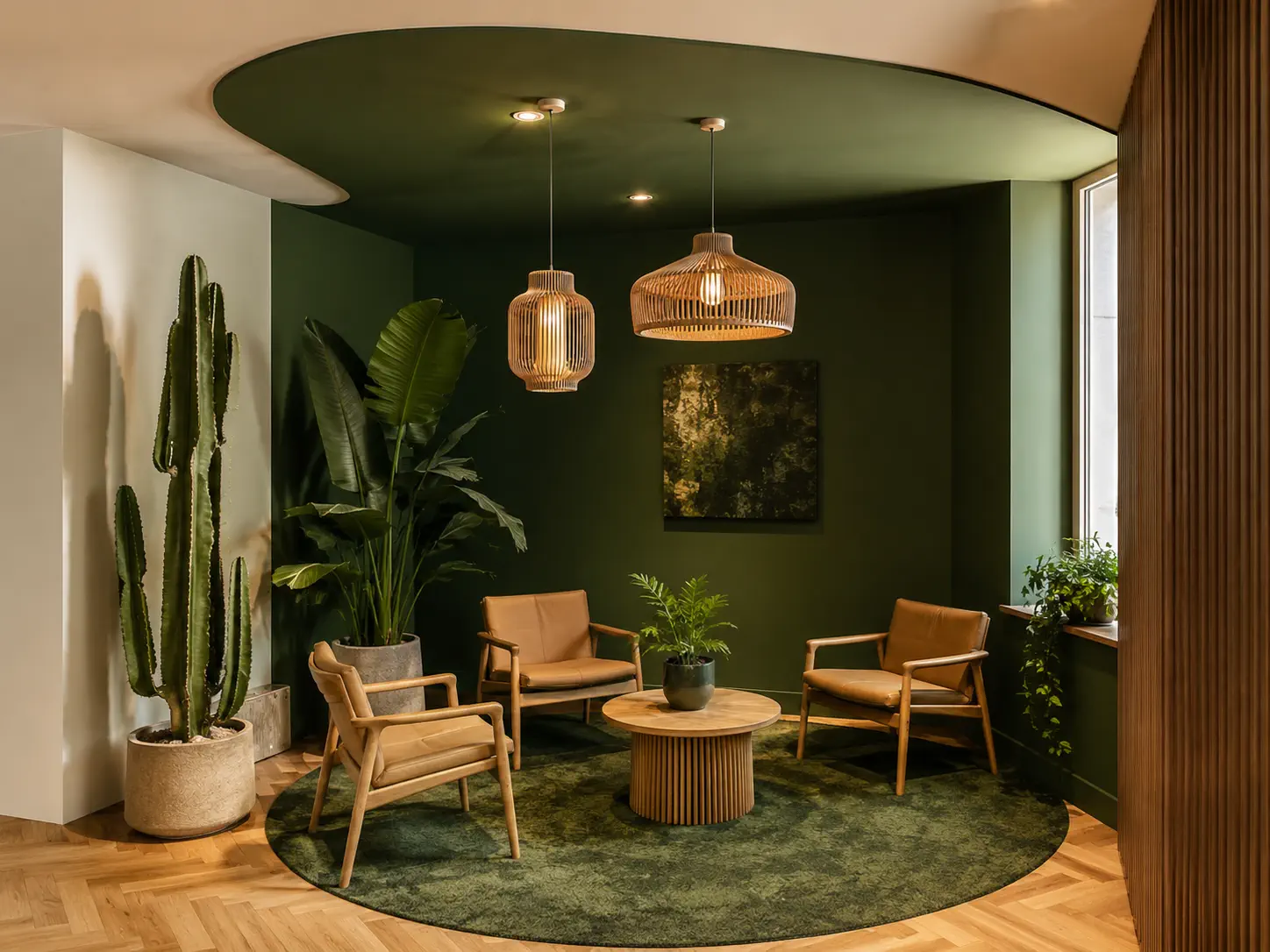
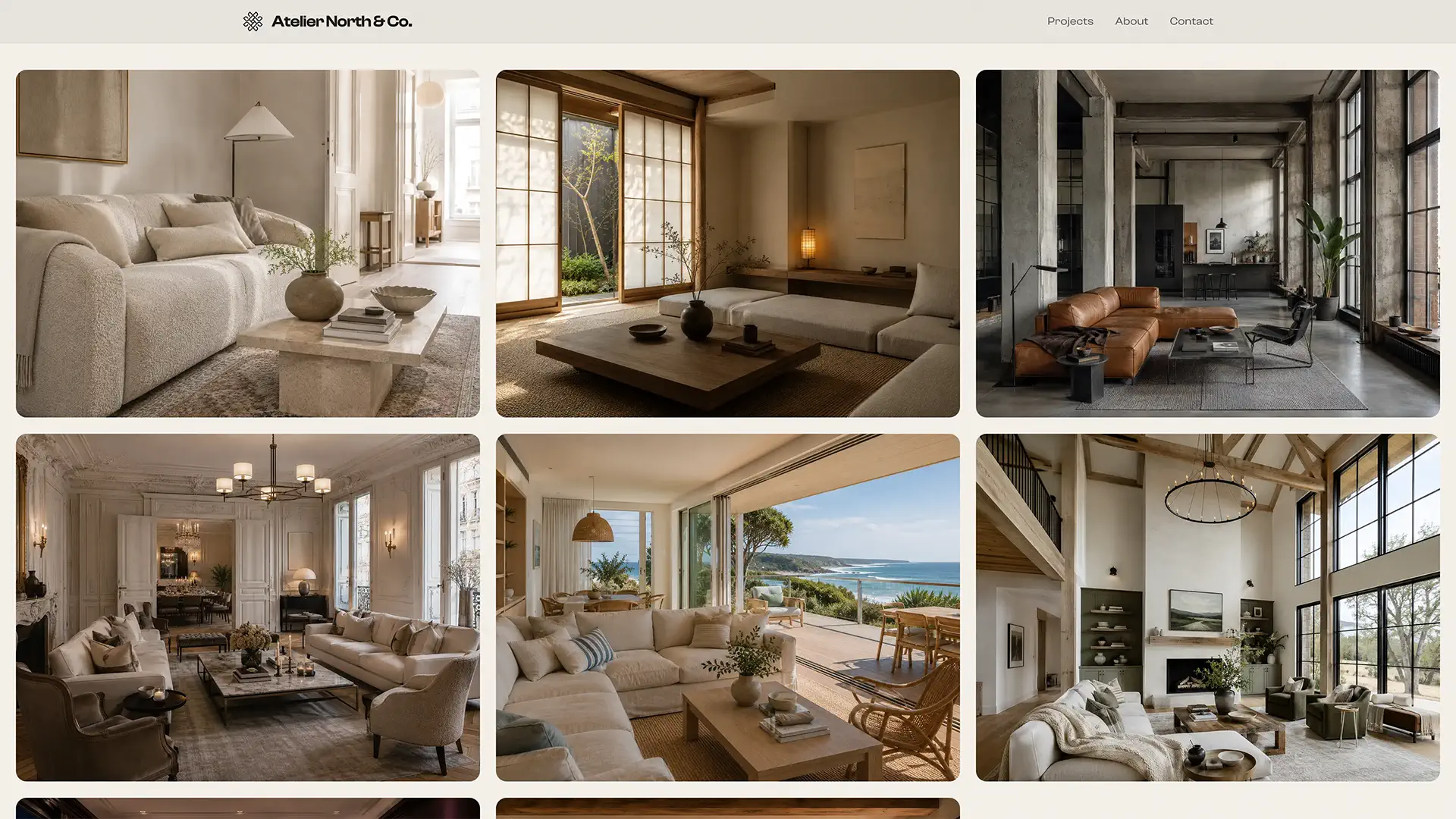
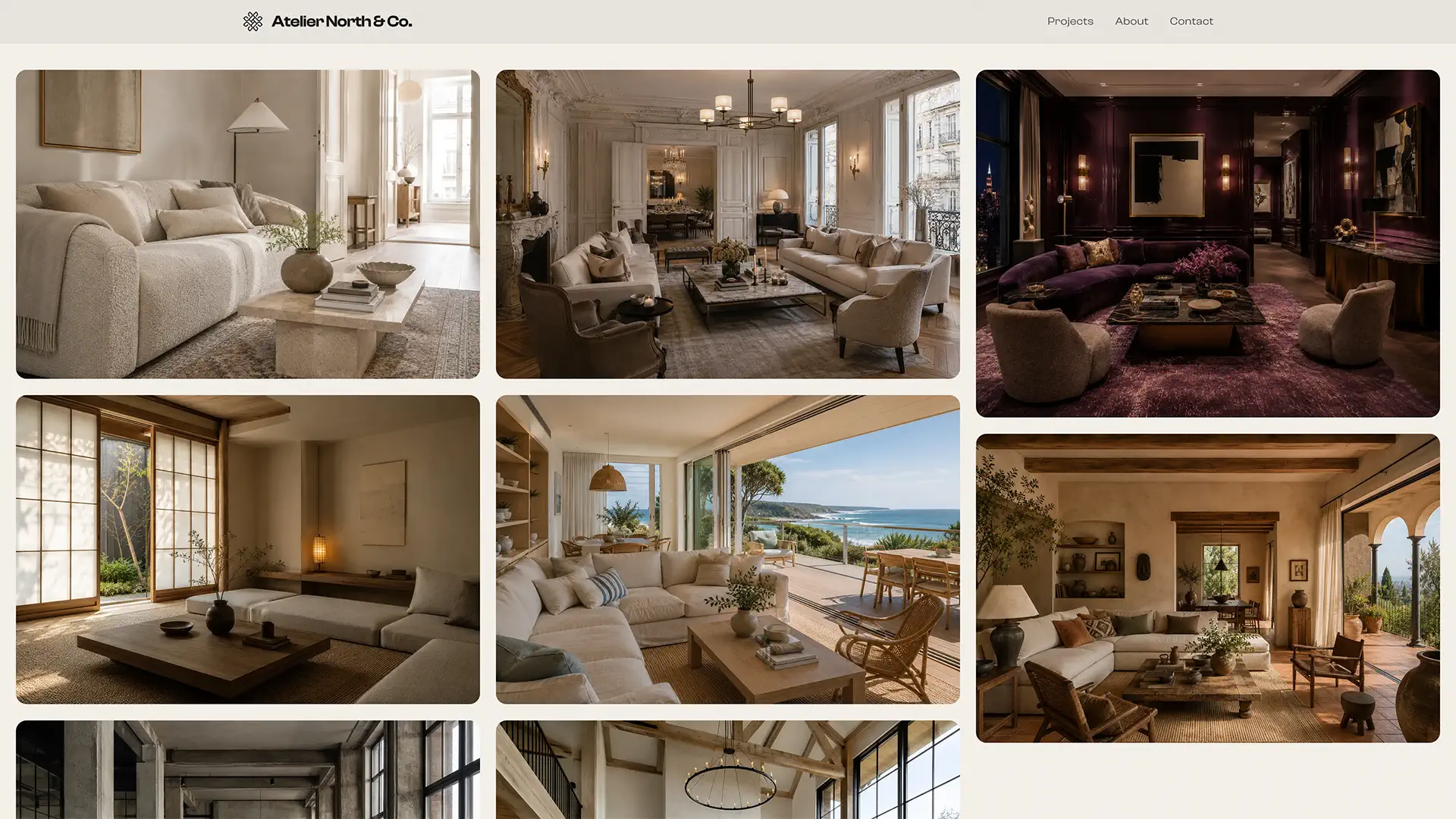
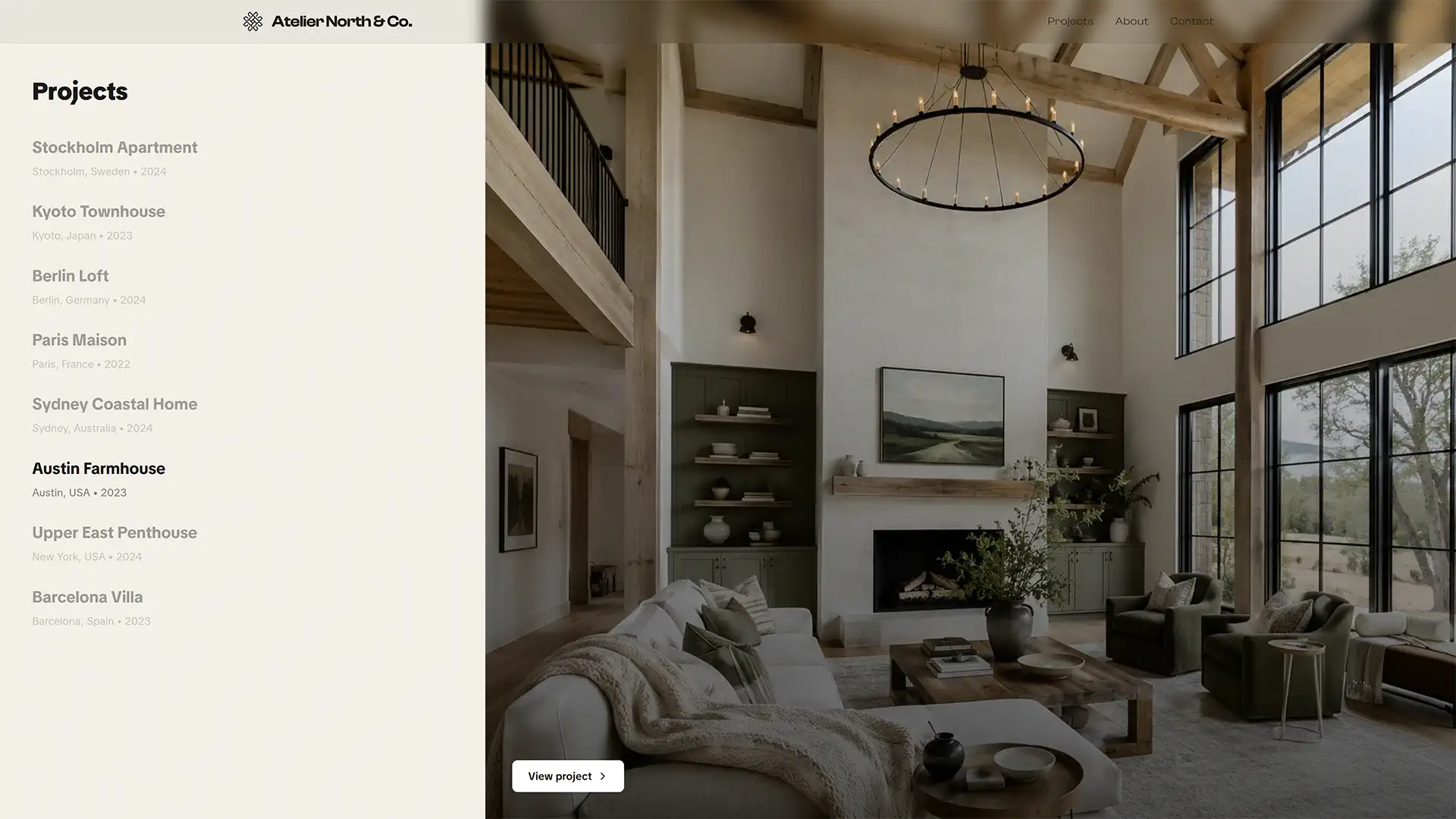
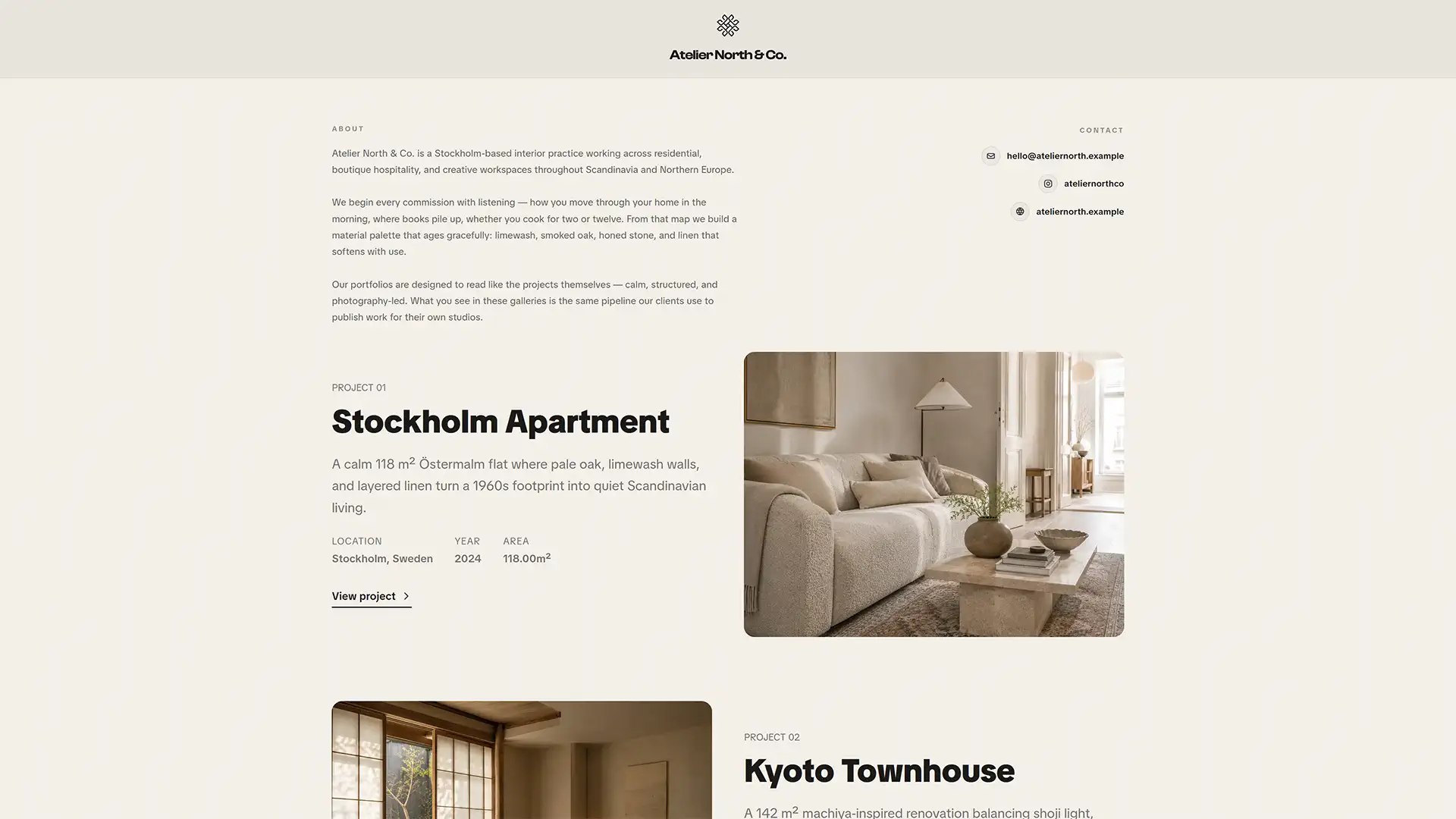
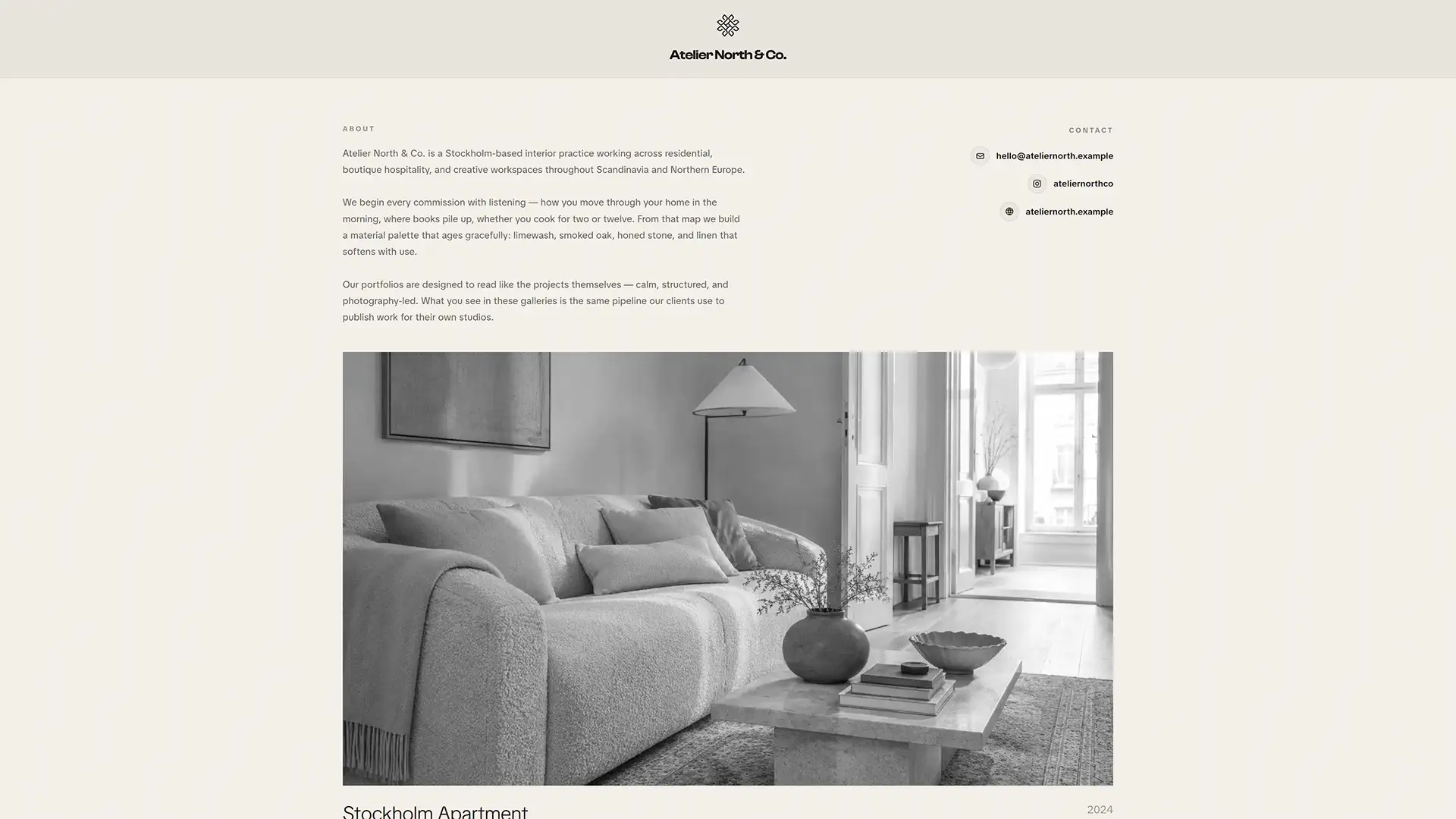
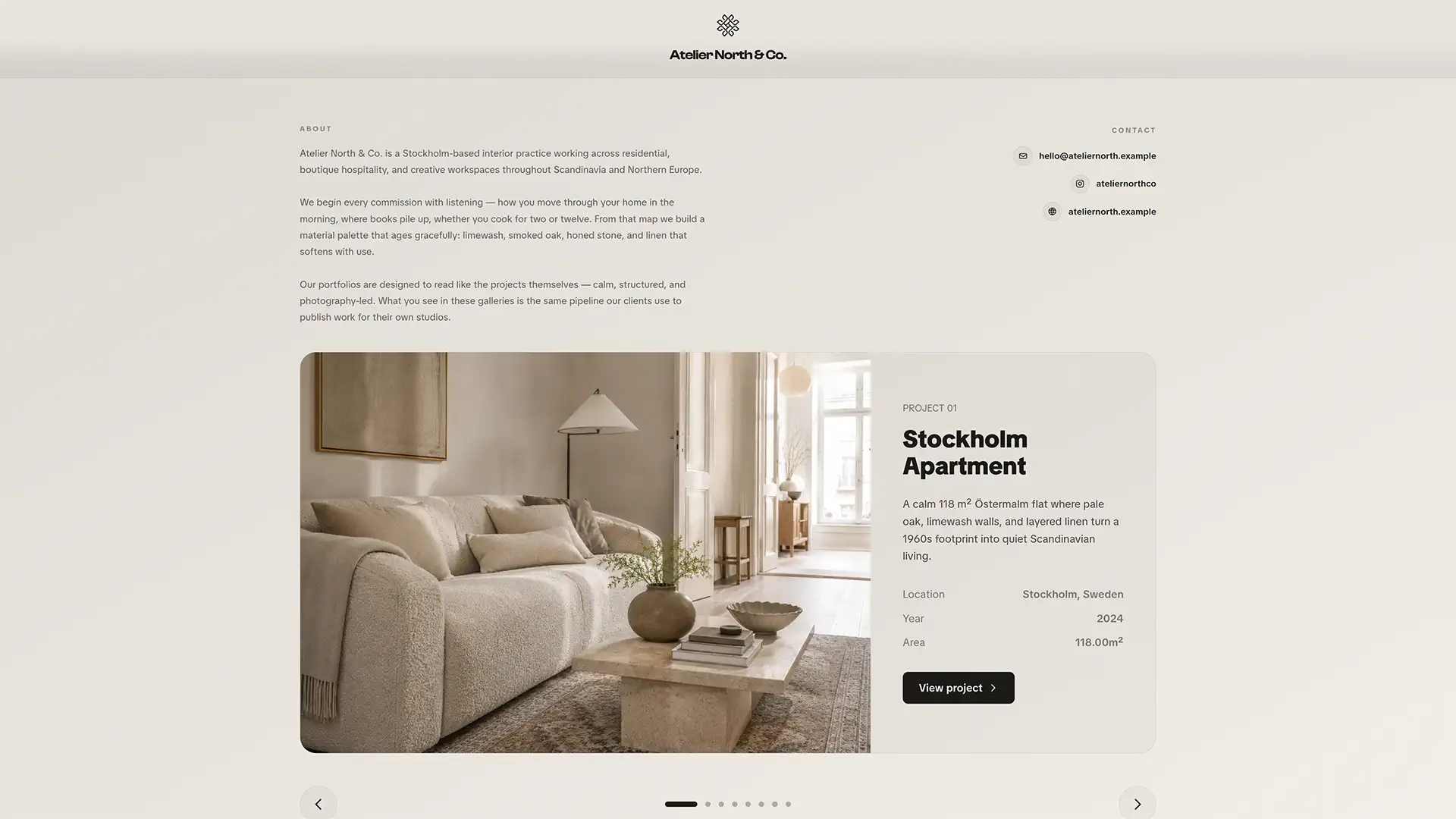
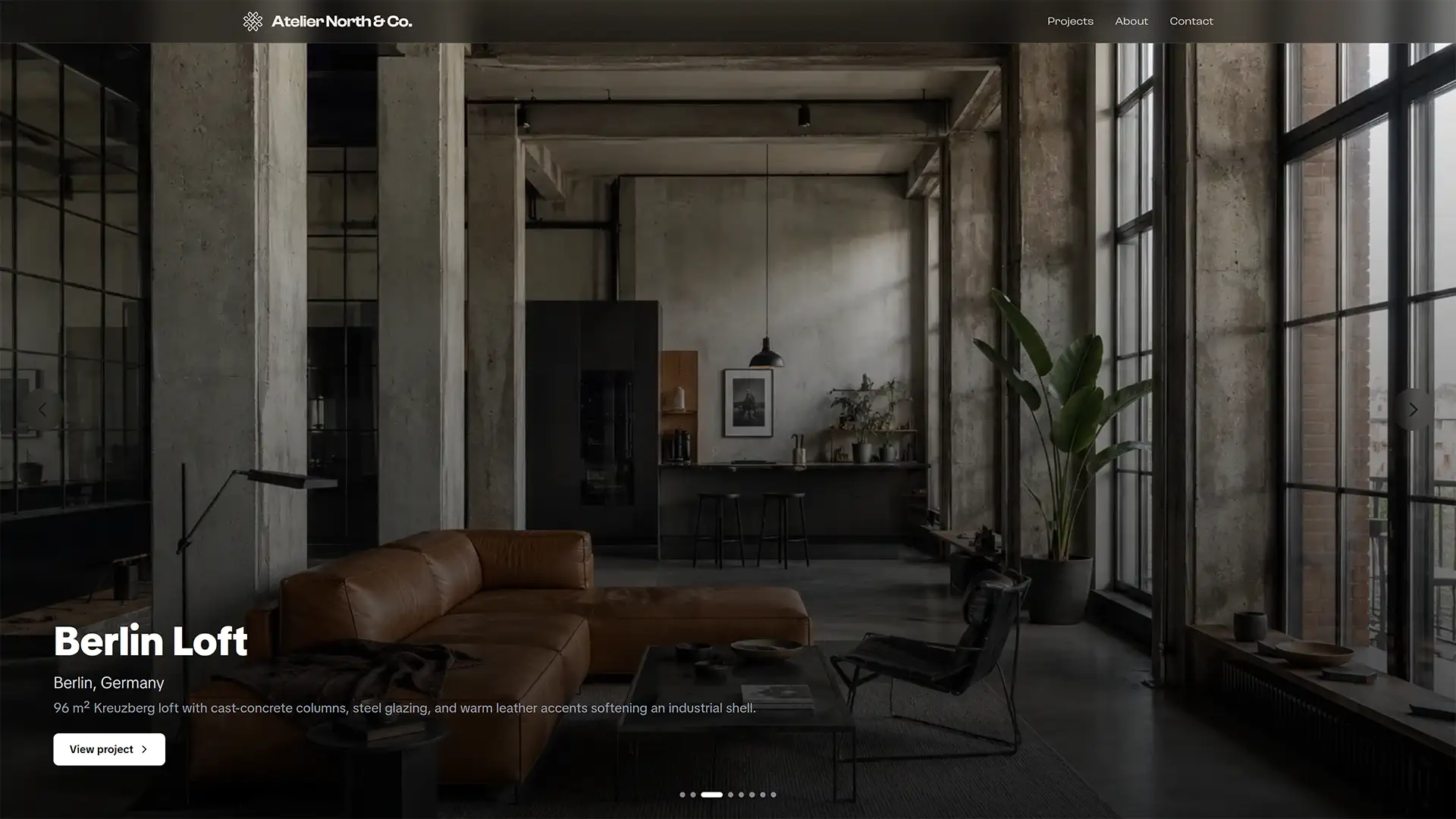
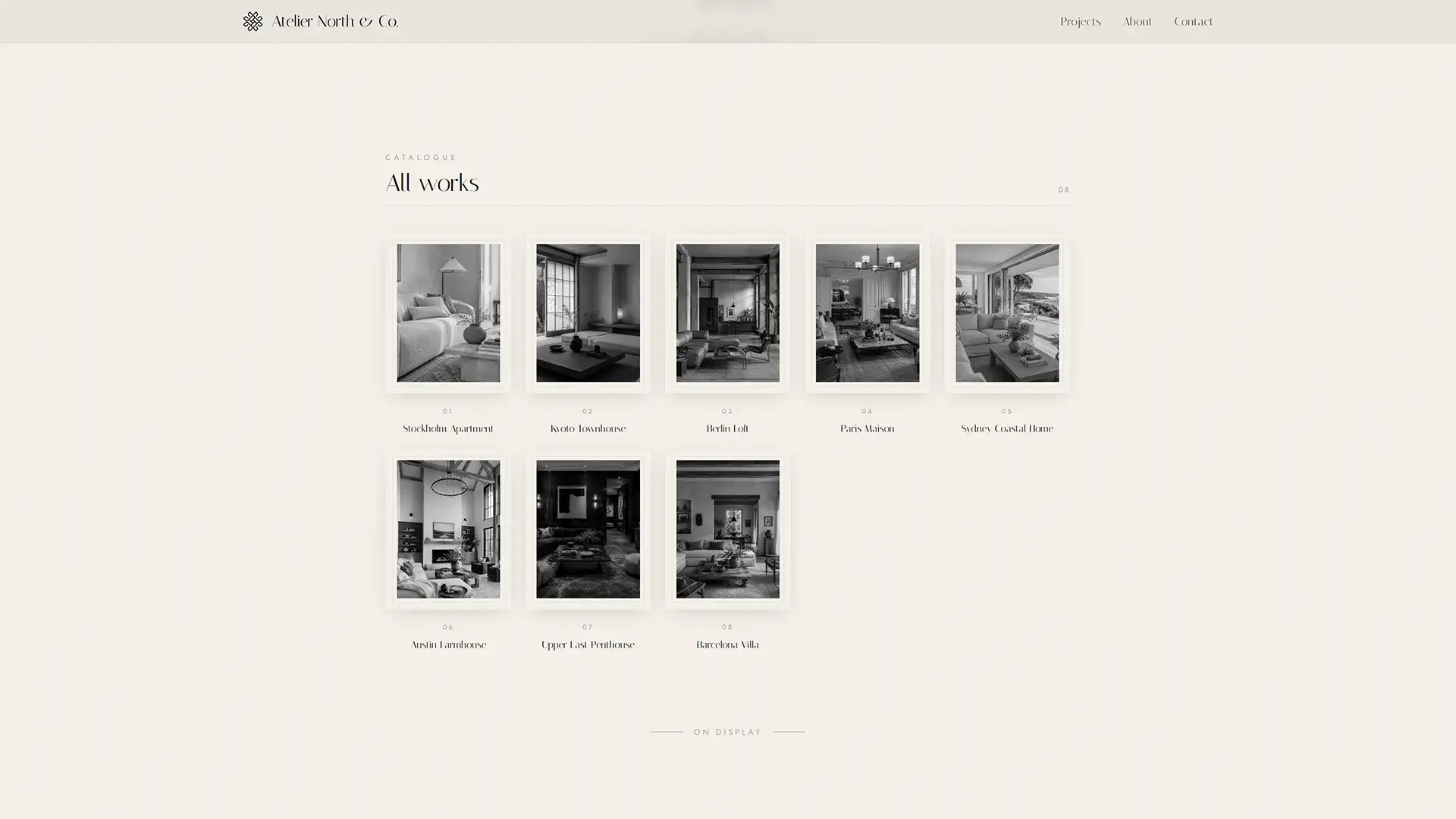
A portfolio shows your work; a website turns that work into enquiries. The interior design website
examples below show the full picture — not just a gallery, but the home page, about, services and
contact that together make a client trust you and reach out. Every example is a real, publishable
template you can launch with your own projects using the
interior design website builder. Before you browse, here is what
separates a website that merely looks nice from one that actually wins work.
What makes a great interior design website
For interior designers the website is held to a higher standard than for almost any other profession,
because the site itself is a demonstration of your eye. A clumsy site quietly contradicts your claim
to be a designer; a confident one reinforces it before a client reads a word. The strongest examples
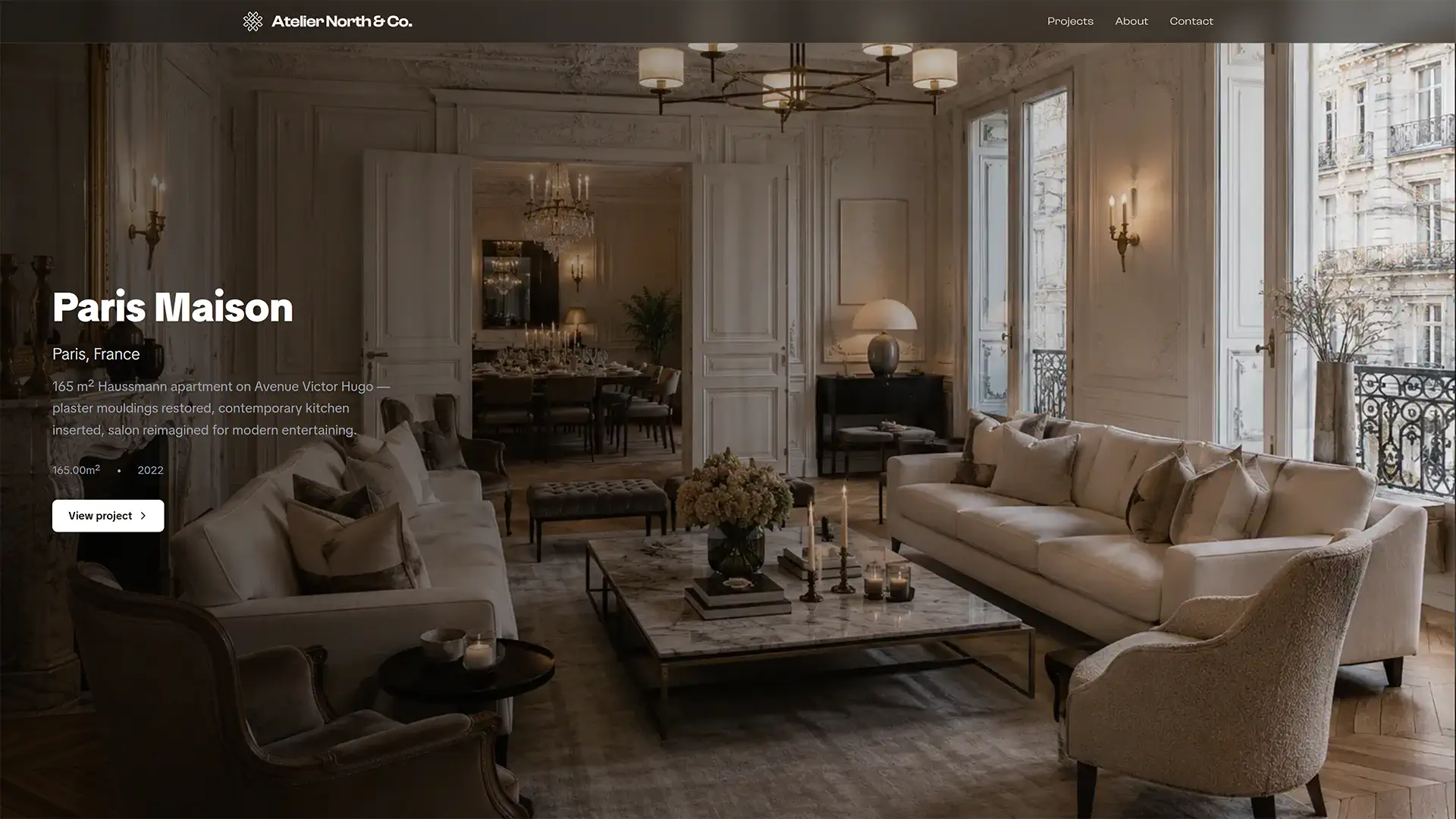
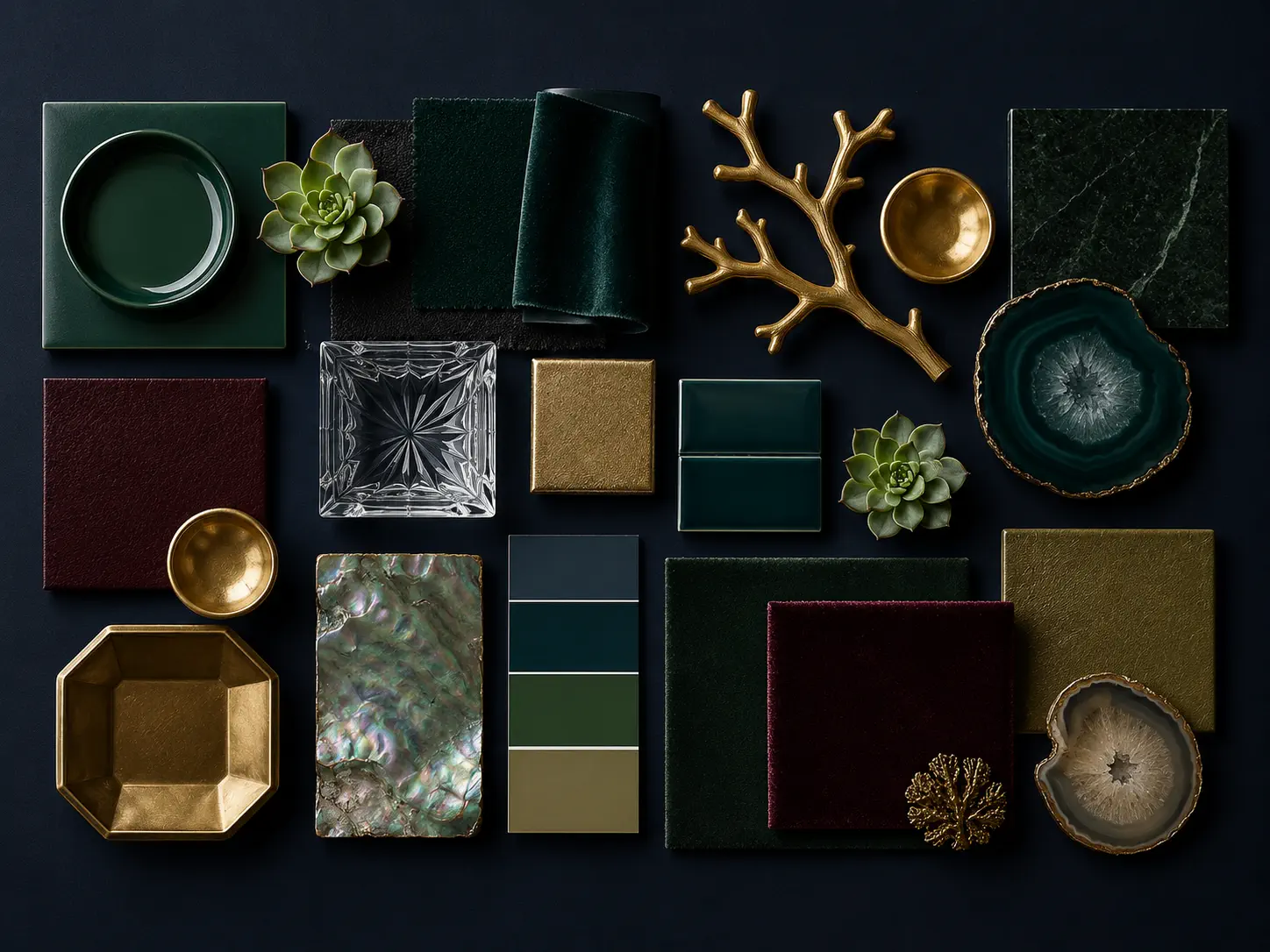
share a few traits: photography given pride of place, a restrained palette and type that let the work
provide the colour, generous whitespace, and a clear path on every page from first impression to
contact. For the full breakdown, see our guide to
website design for interior designers.
The pages a designer website needs
As you explore the examples, notice how each handles the core pages. A focused interior design website
rarely needs more than these:
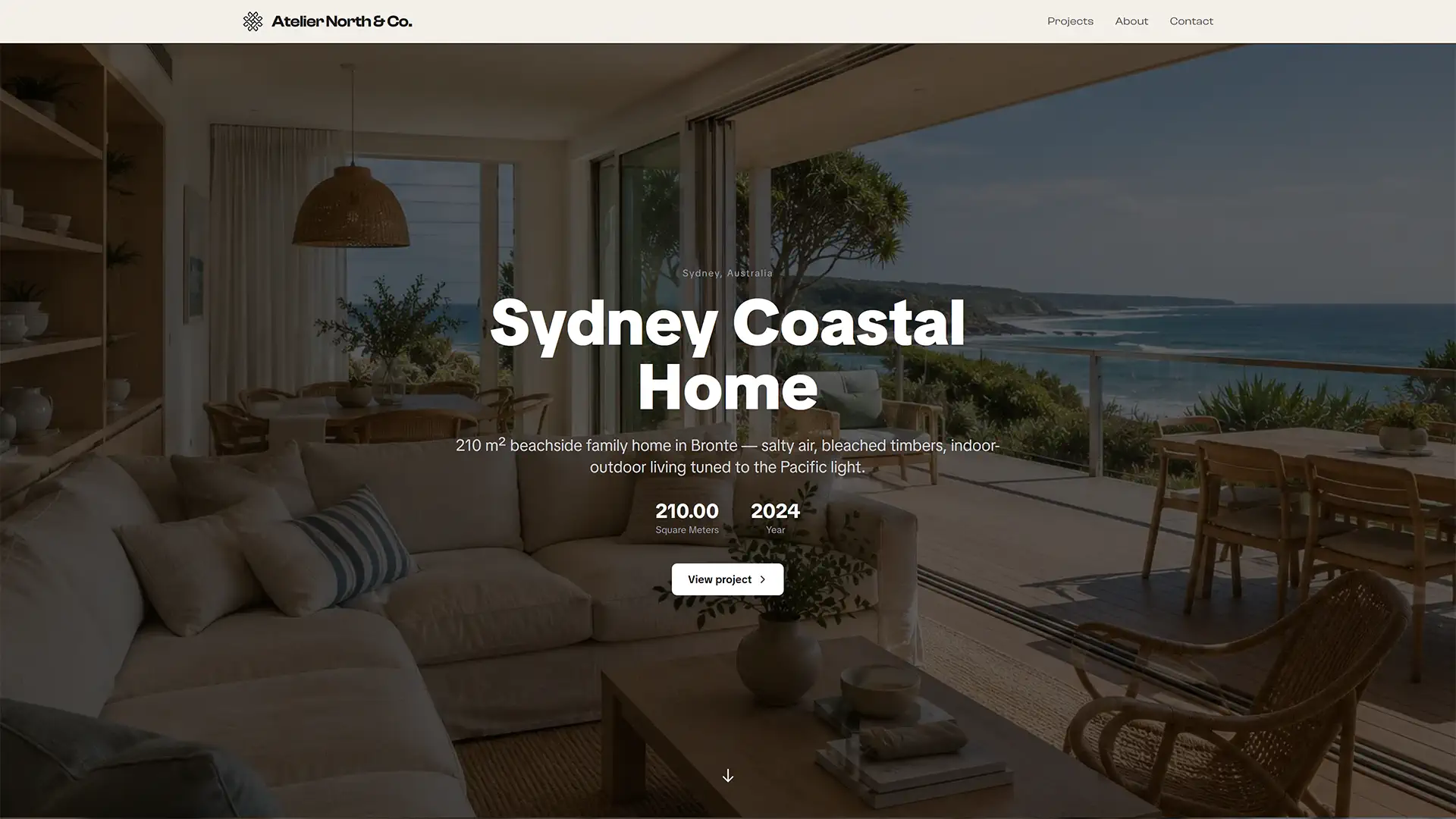
- Home — a strong hero, a one-line statement of what you do and for whom, and an obvious route
into your work.
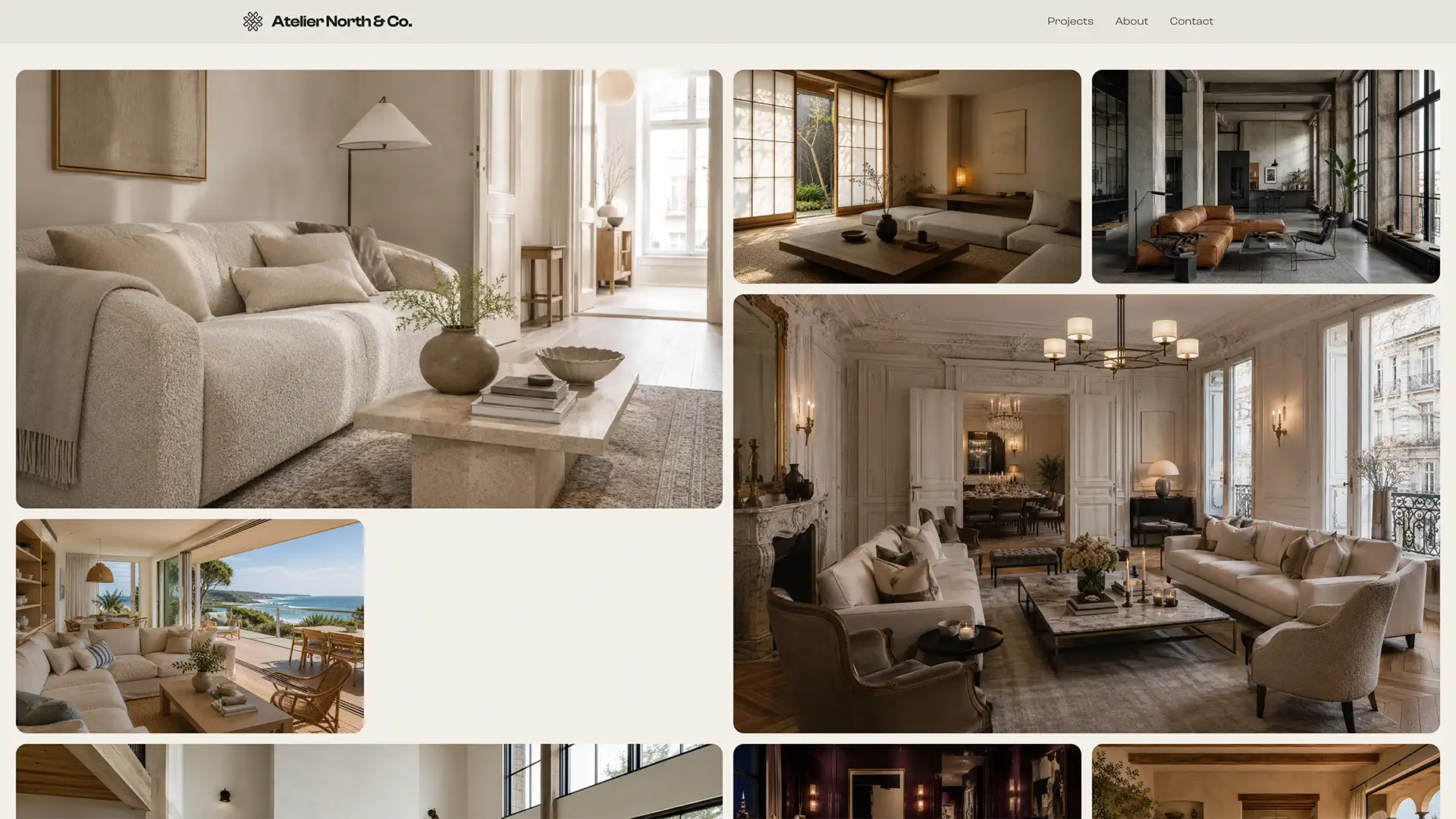
- Portfolio / projects — the heart of the site, each project presented as a short case study.
- About — your story, philosophy, credentials and a warm, professional photo. People hire people.
- Services — what you offer and how you work, so the right clients self-qualify.
- Contact — a simple form wired to your inbox, plus location and response expectations.
The best examples resist the urge to add more. A handful of pages done well beats a sprawling site
every time.
Website examples vs portfolio examples — what's the difference?
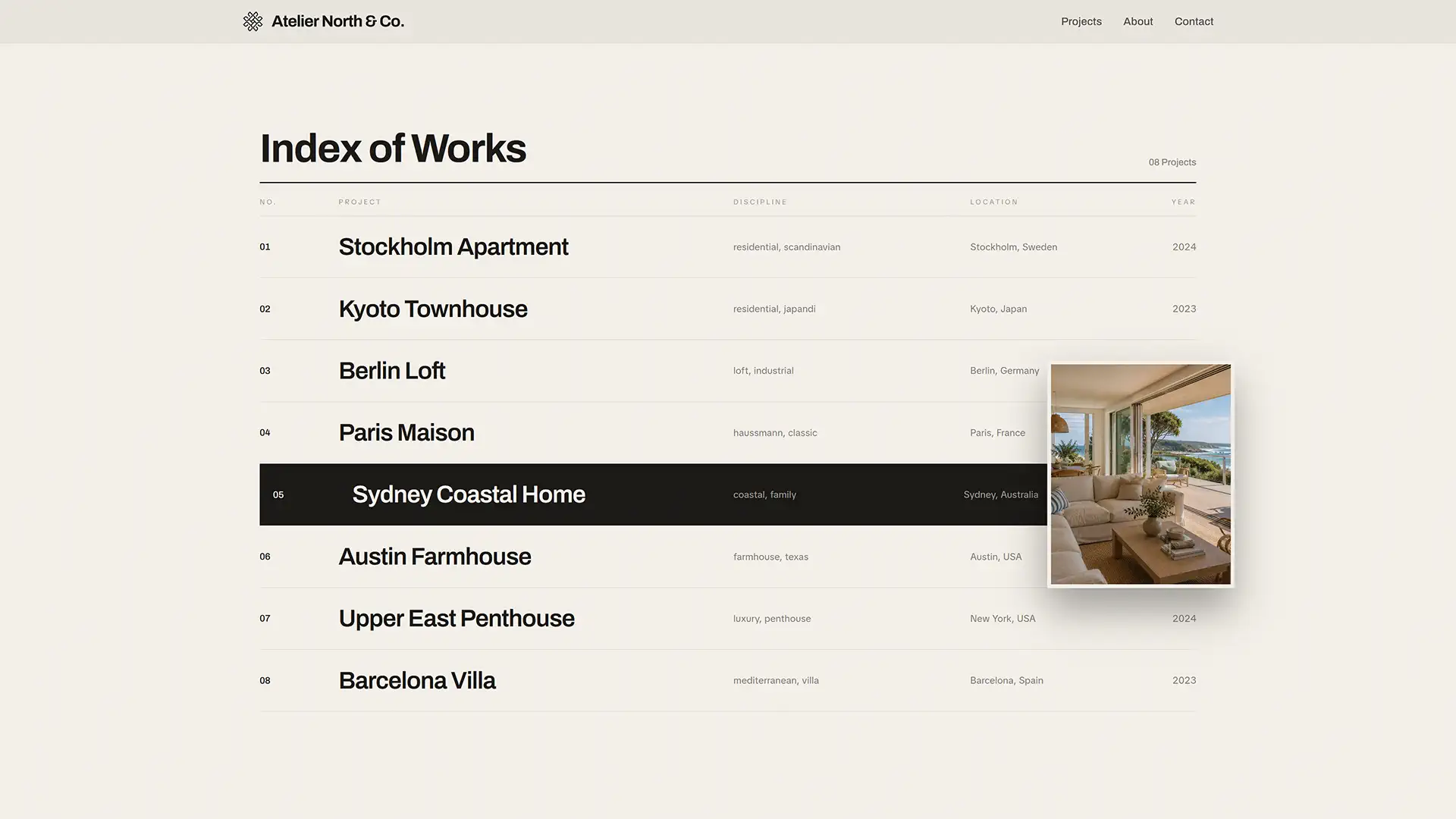
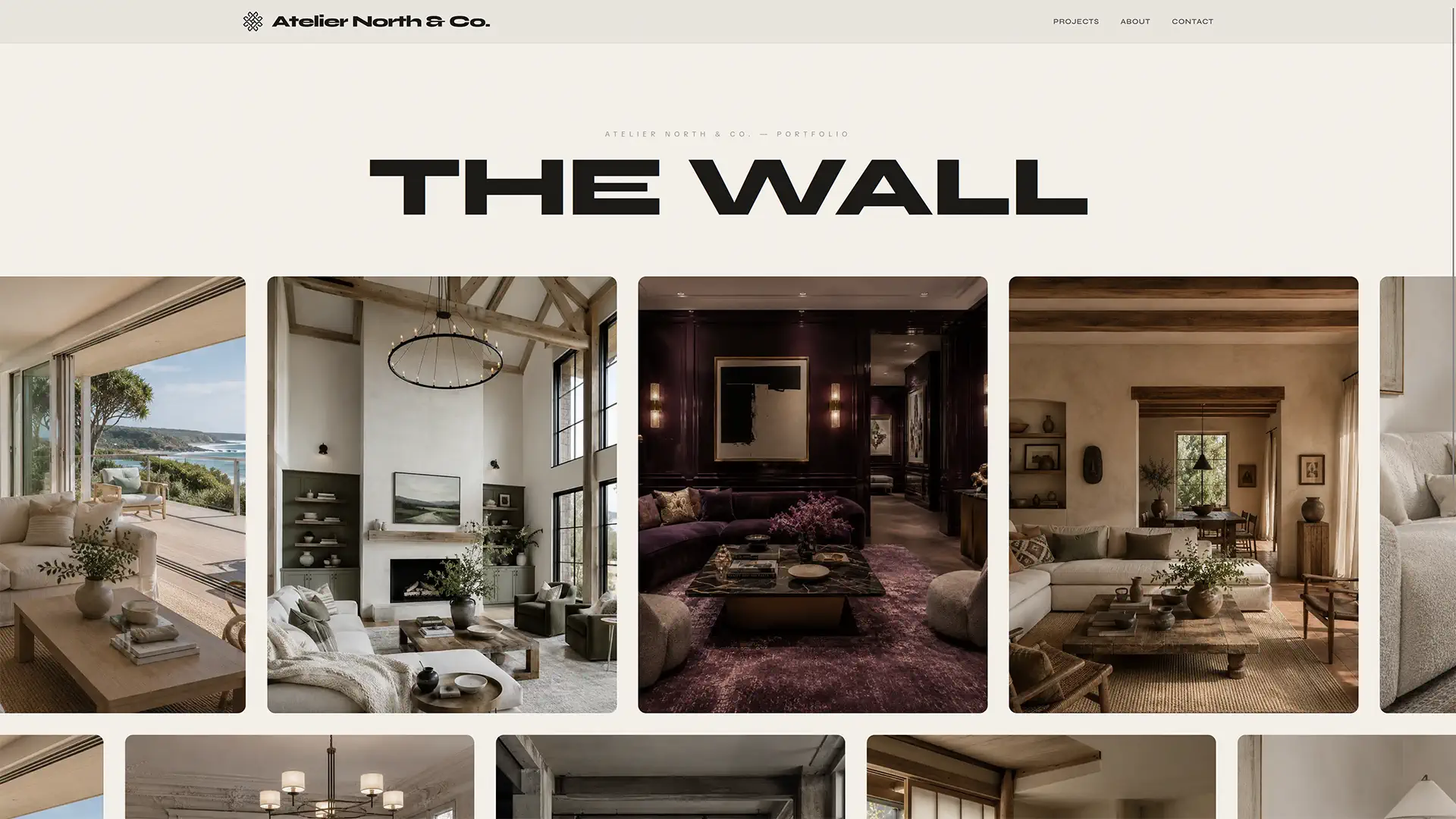
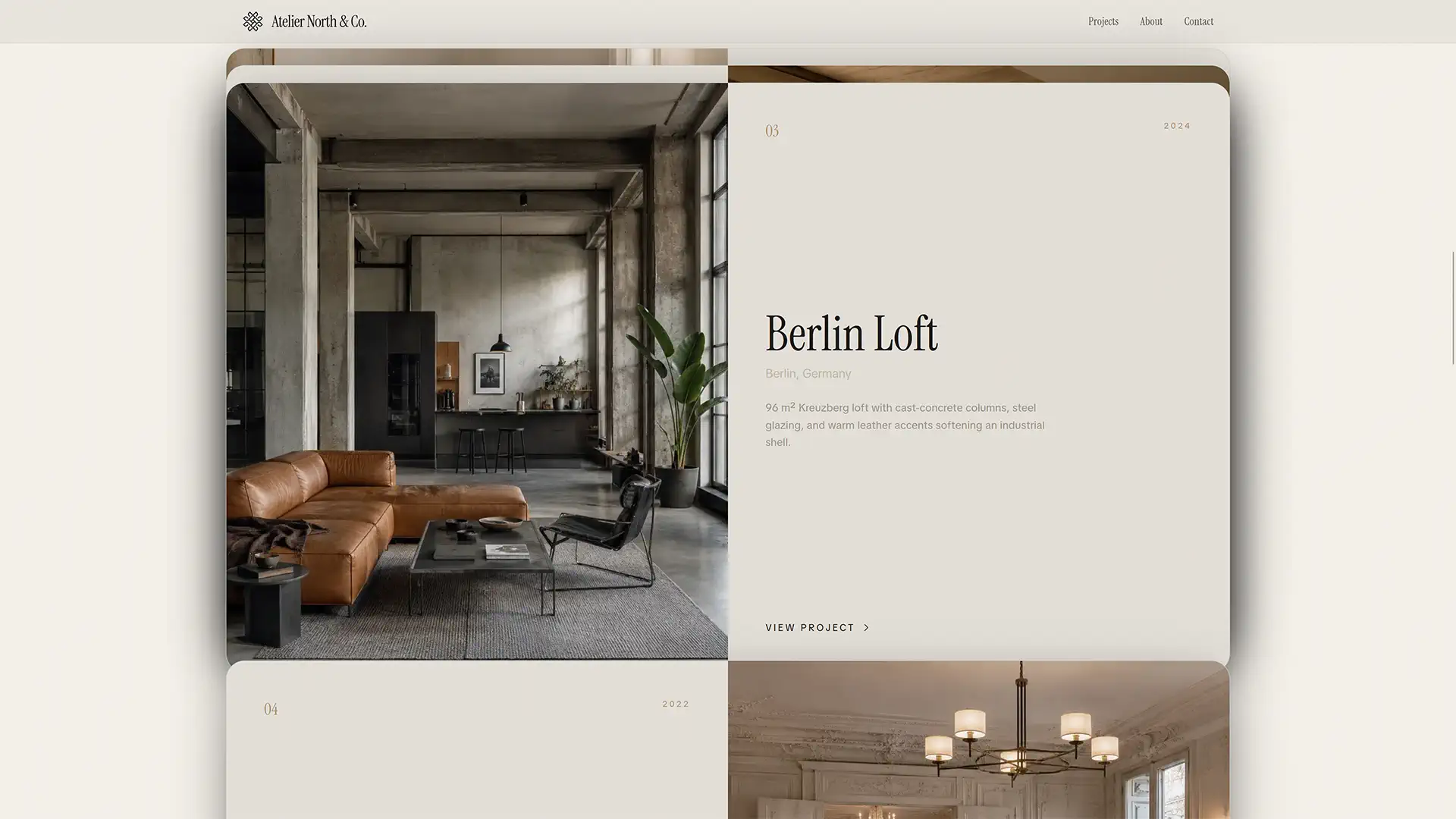
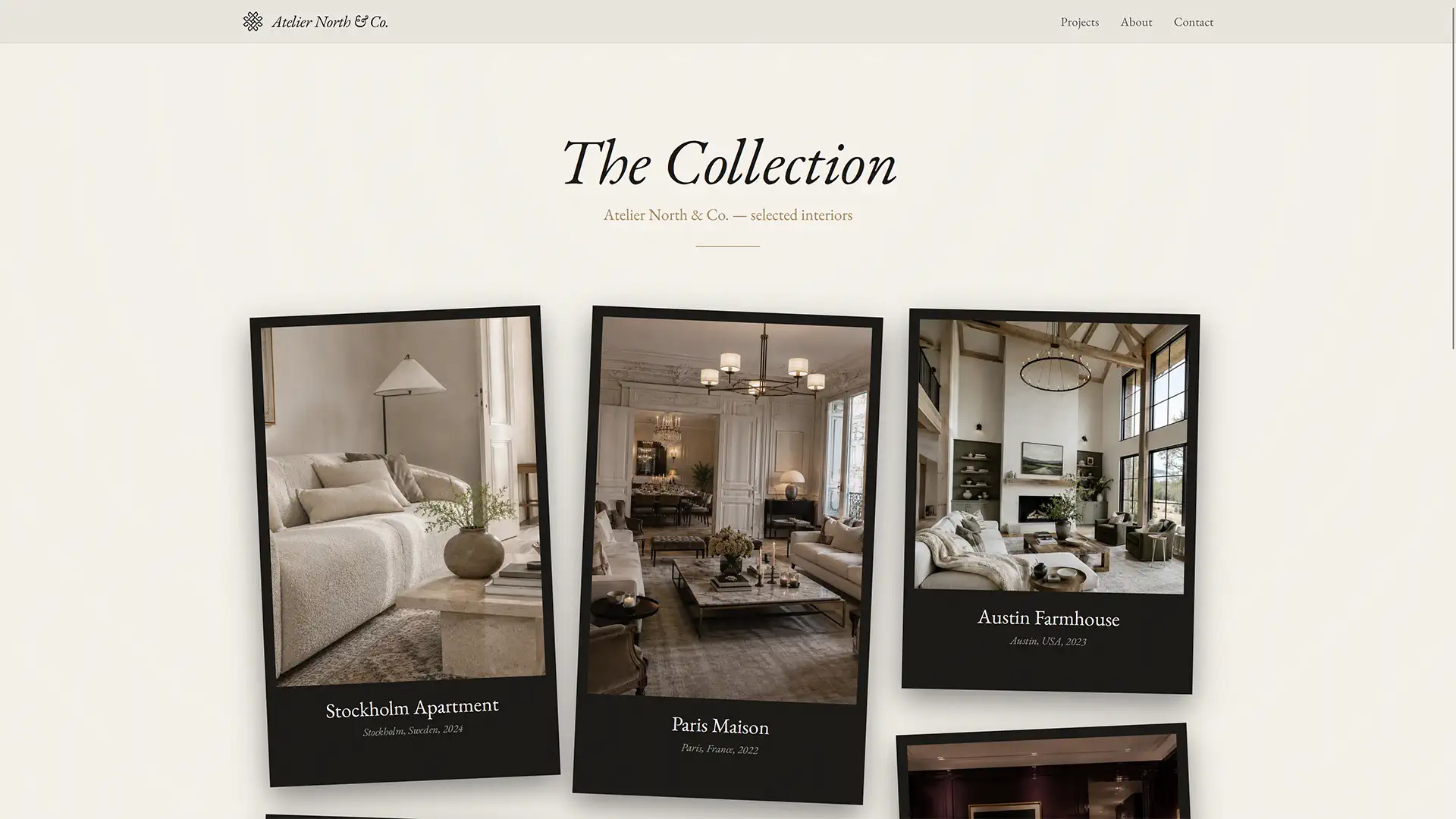
If you are mainly comparing gallery layouts for showcasing projects, the
interior design portfolio examples page is the better starting
point. The examples here go a step further: they show the complete website around that portfolio — the
pages, navigation and calls to action that turn a browsing visitor into an enquiry. Most designers
need both, and on this platform they come together: your portfolio lives inside a full, conversion-ready
website rather than as an isolated gallery.
Design styles to choose from
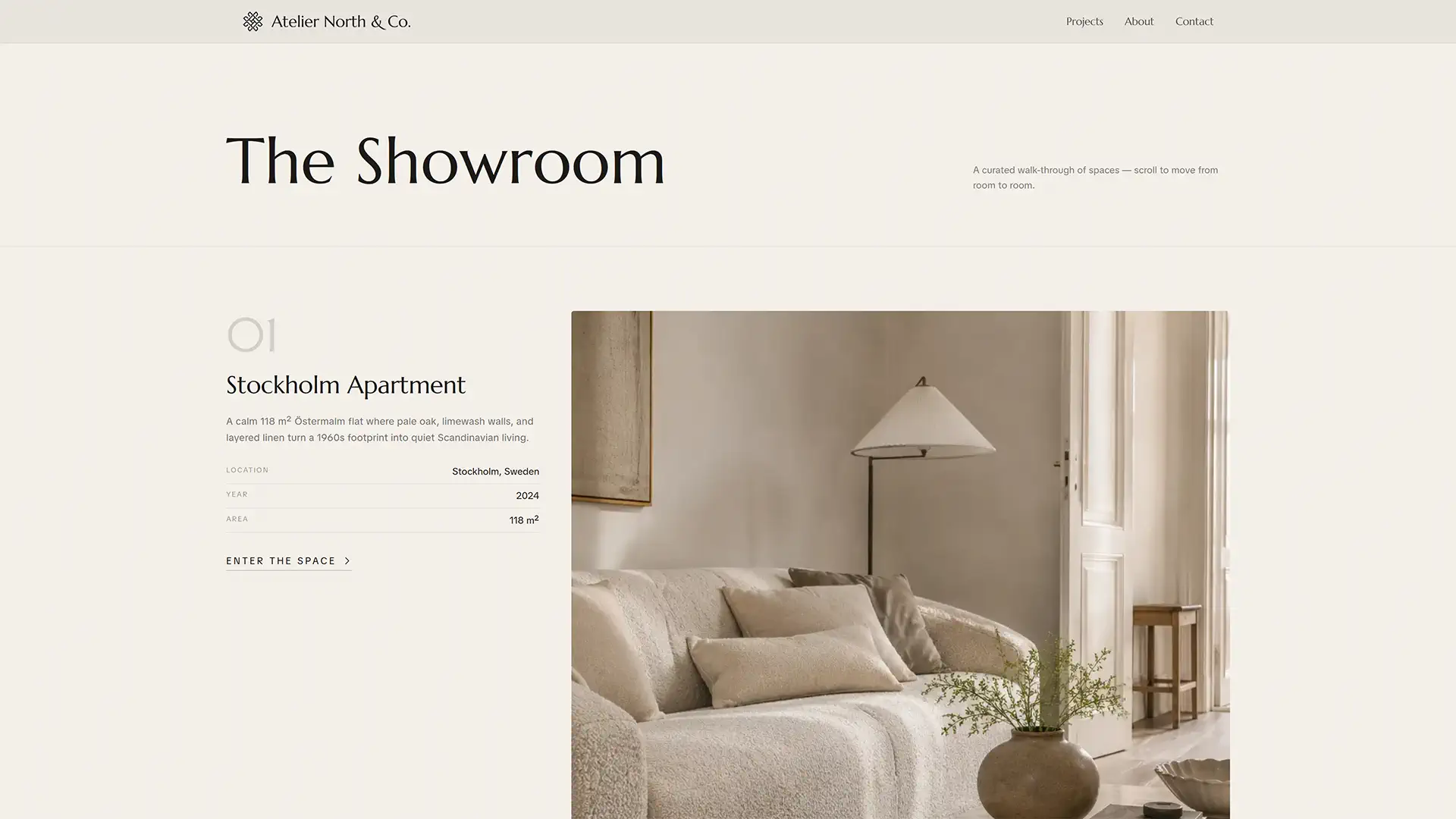
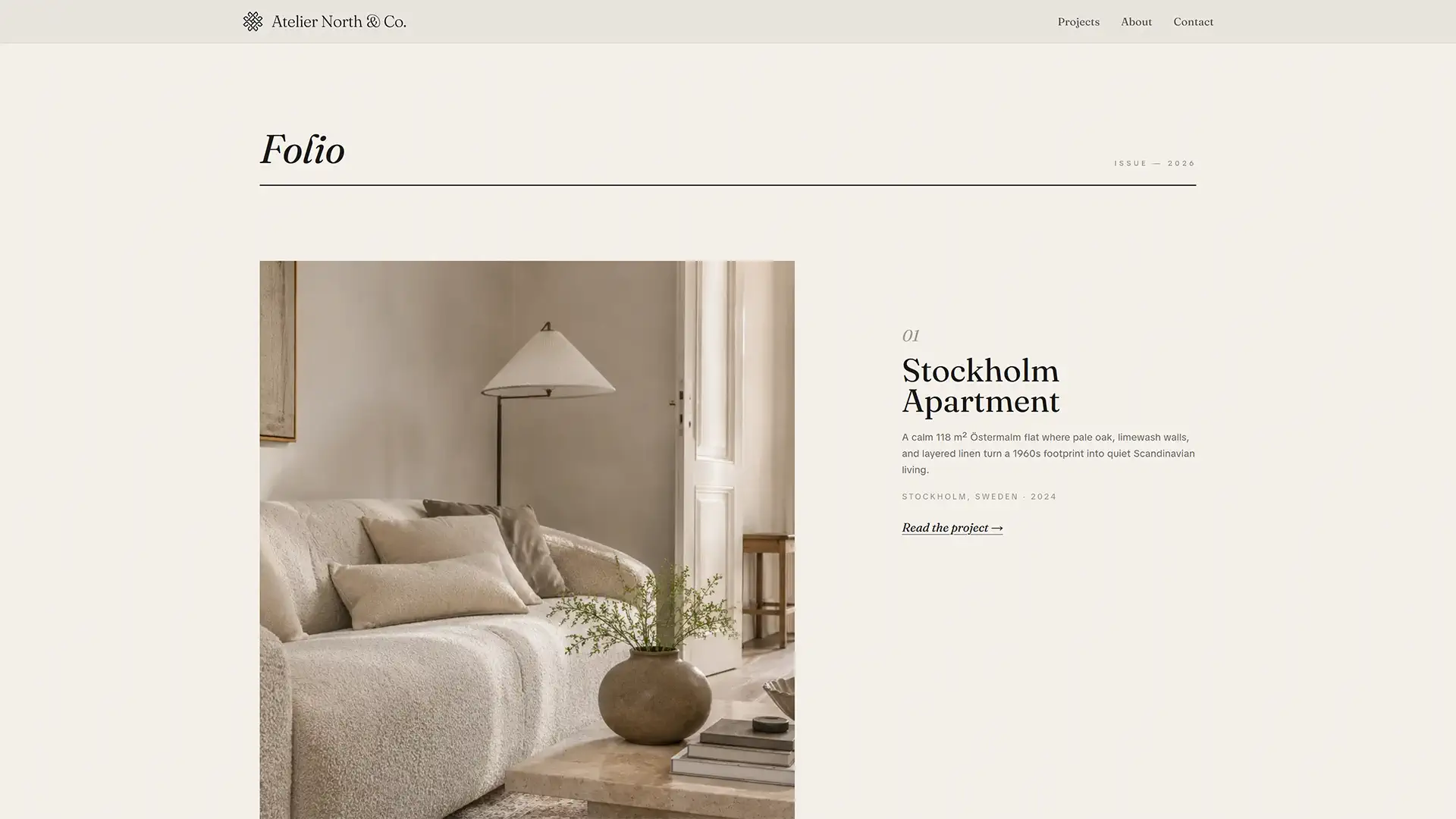
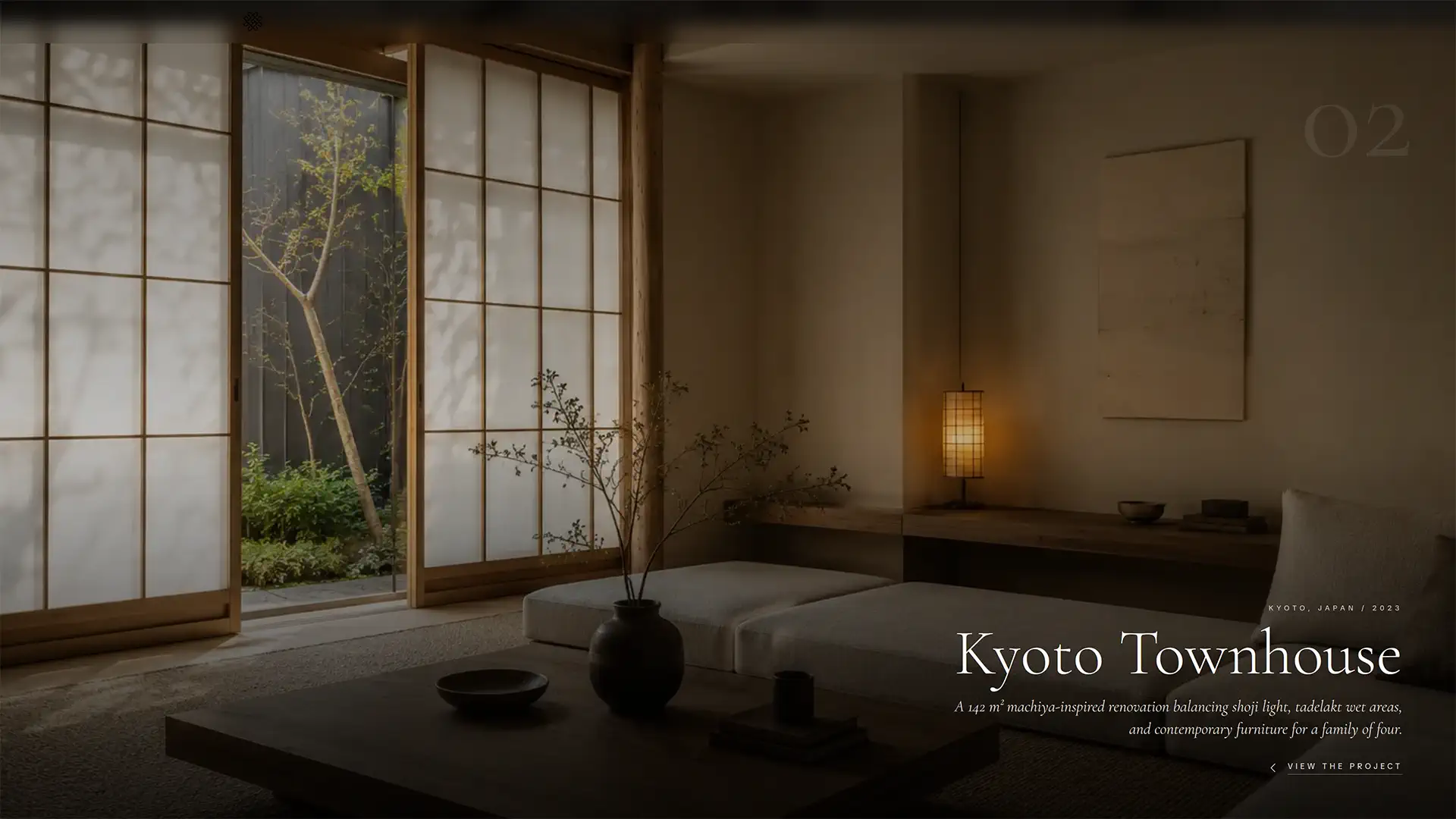
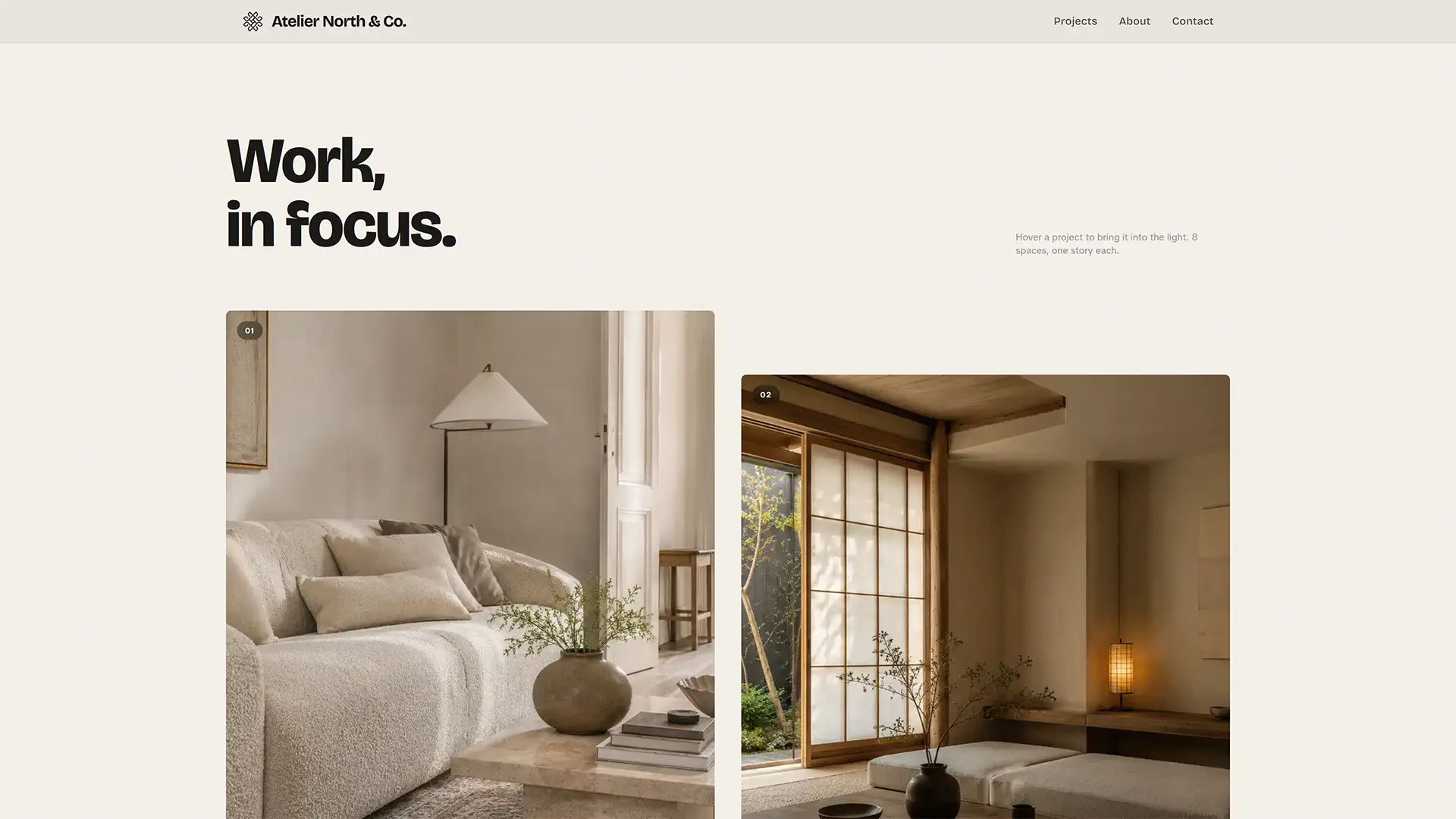
The examples span several layout personalities so you can match one to your work and the clients you
want:
- Modern minimal. Calm, spacious and gallery-like — ideal for contemporary residential work.
- Cinematic. Full-bleed imagery that immerses the visitor — suited to luxury and hospitality.
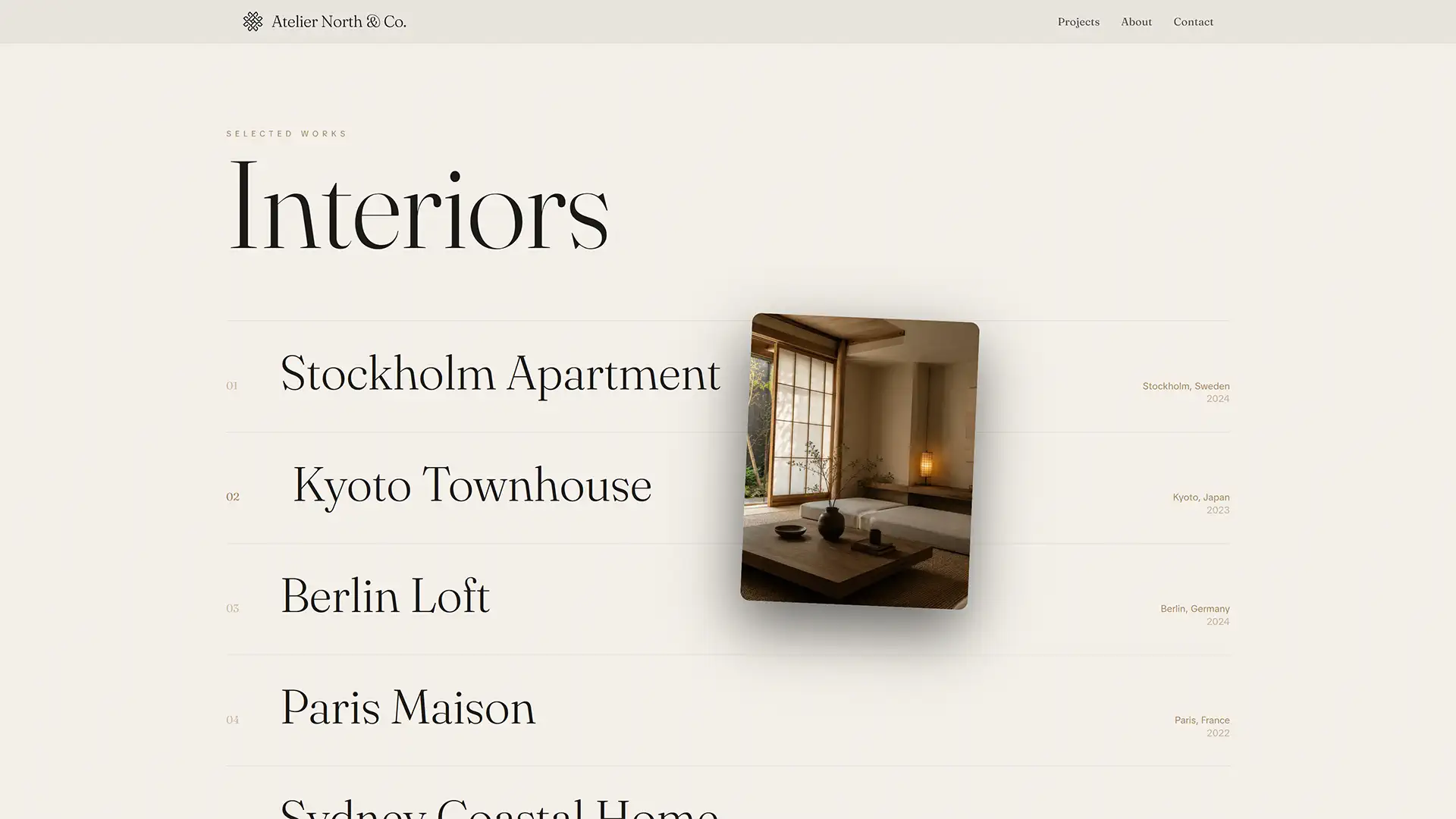
- Editorial. Magazine-style mixed layouts with strong typography, for a curated, story-led brand.
- Classic / refined. Understated elegance for high-end, traditional positioning.
How to use these examples
Open a couple of demos that resonate, and study how they move a visitor from the hero image all the
way to the contact form. Then pick the closest match and make it yours — each example is a live
template in the interior design website builder, so the structure,
responsiveness and SEO foundations are already handled. Add your projects, your branding and your
domain, and you can be live this week rather than waiting weeks for an agency build.
Browse the live website examples
The sites below are live and explorable. See how the principles above work in practice, then build
your own.